
Molecular contamination control for clean environments
Activated Carbon Filters engineered around your air system
For facility managers, cleanroom engineers, procurement teams, and QA specialists, CleanroomLink develops activated carbon filtration solutions for odors, volatile organic compounds (VOCs), and hazardous gases.
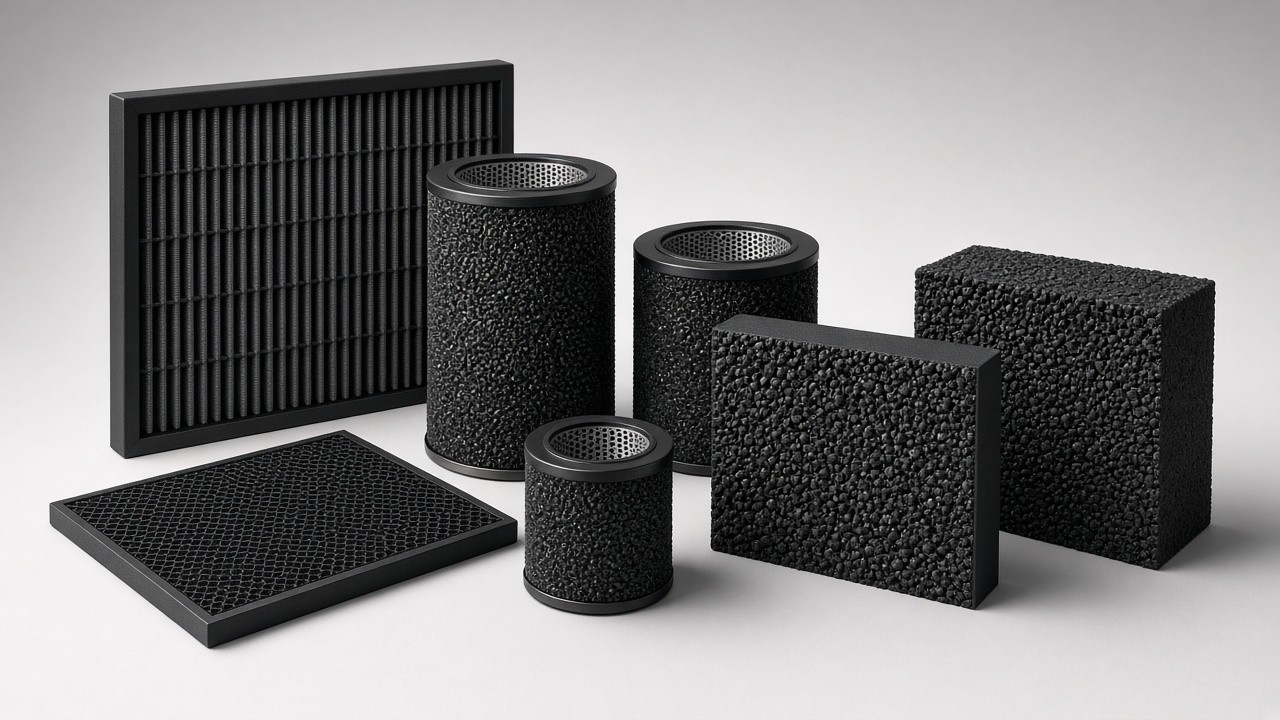
Gas phase
Adsorption-focused air treatment
Custom
System and contaminant matching
RFQ-ready
Documentation-led selection
Who this is for
Built for project teams that need more than particulate filtration
The correct carbon filter depends on the contaminant, air volume, available fan capacity, and installation interface. We help teams define those variables before locking a model.
Facility Managers
Replace existing arrays or upgrade AHUs for stricter molecular contamination requirements.
Cleanroom Engineers
Integrate chemical filtration into new HVAC systems while managing airflow and pressure drop.
Procurement Managers
Consolidate HVAC consumables with a responsive activated carbon filters supplier.
QA and Compliance
Collect traceability, test documentation, and project records for internal or customer audits.
Selection boundary
Who should choose another option?
If your requirement is strictly particulate filtration, without gaseous or chemical adsorption, a HEPA or ULPA product line is usually the more appropriate choice.
Standard carbon filters may also be unsuitable for temperatures above 80°C or highly corrosive acid concentrations beyond standard carbon capacity. In those conditions, consult our engineering team about specialized chemical scrubbing media.
RFQ specification framework
Parameter table for model matching
Use these fields to define a purchase-ready specification. Values marked for confirmation should be finalized during the RFQ stage against your contaminant profile and existing system.
| Parameter | Specification details | RFQ status |
|---|---|---|
| Filter grade | Activated carbon / chemisorption media | Depends on model |
| Filtration efficiency | Based on target gas, concentration, airflow, and contact time | To be confirmed |
| Rated airflow | Matched to AHU or system design | Custom |
| Initial pressure drop | Varies by media depth, density, and configuration | Available on request |
| Recommended final pressure drop | Typically 250–450 Pa | Confirm by system |
| Filter media | Virgin coal or coconut shell carbon; impregnated options | Depends on contaminant |
| Frame material | Galvanized steel, stainless steel, or aluminum | Custom |
| Dimensions | Standard AHU sizes or project-specific dimensions | Confirm in RFQ |
| Sealing method | Gasket or gel seal | Depends on interface |
| Temperature / humidity | Standard guidance: below 60°C and below 70% RH | Confirm application limits |
| Dust-holding capacity | Depends on prefiltration, media configuration, and operating conditions | Available on request |
| Leak testing | In-situ or factory scanning available | Confirm required method |
| Applicable system | AHUs, cleanroom HVAC, process ventilation, and other designed air systems | Confirm installation interface |
Performance priorities
Efficiency, resistance, and airflow must be evaluated together
Residence time
Longer contact time between air and carbon can improve adsorption of trace contaminants. V-bank and deep-bed modules are selected according to the required treatment and available fan capacity.
Resistance and energy
Higher media density can increase pressure drop and energy consumption. Media mesh size, depth, and airflow should be balanced against the system’s operating point.
Capacity and breakthrough
Media is matched to VOCs, acid gases, base gases, or other target contaminants. Service life depends on concentration, humidity, temperature, airflow, and contaminant loading.
Application scenarios
Where molecular filtration supports process stability
Semiconductor manufacturing
Help protect sensitive wafers from airborne molecular contamination.
Pharmaceutical processing
Manage solvents and chemical vapors within controlled production environments.
Food and beverage
Reduce odors and cross-contamination risks in flavor-sensitive areas.
Precision manufacturing
Help protect electronics and equipment from corrosive gases.
Standards and quality verification
Documentation that supports technical review
Quality records should map directly to the fields in your approved specification. Required testing and certificates should be confirmed for each project and model.
ISO 10121
Test methods for gas-phase air-cleaning media and devices.
ASHRAE 145.2
Laboratory testing considerations for gas-phase air-cleaning systems.
Batch traceability
Batch-specific reports may include media activity levels, such as CTC value or butane activity, and pressure-drop verification. Availability is confirmed during the RFQ process.
Packaging
Industrial-grade moisture-proof wrapping helps prevent pre-installation saturation.
MOQ
Flexible according to project scale, from pilot-run quantities to bulk replenishment.
Lead time and logistics
Delivery planning and installation-ready kits are available for project coordination.
FAQ
Project procurement questions
How do we lock the correct specifications?
Submit current AHU airflow data, the contaminant profile, existing filter dimensions, target standards, and operating conditions. The technical team can then prepare a model comparison and proposal.
Can you provide samples for validation?
Sample testing can be arranged for project-level procurement so pressure drop and adsorption performance can be reviewed before full-scale deployment.
How is batch-to-batch quality controlled?
Inspection may include raw-media certification review, frame and seal inspection, and pressure-drop testing on samples from each production batch. The final inspection plan is confirmed for the order.
Can you support continuous supply after approval?
Yes. Replenishment planning can be aligned with approved dimensions, media selection, packaging requirements, estimated consumption, and delivery schedule.
Request pricing and technical support
Send the project variables that determine the right filter
For a precise quote from an Activated Carbon Filters manufacturer or wholesale supplier, include the application environment, target contaminants, dimensions, airflow, required standards, estimated quantity, and delivery timeline.
Email:
Facility:
Technical inquiry
Provide as much of the following as available:
- Application environment, such as semiconductor, pharmaceutical, food processing, or precision manufacturing.
- Target contaminants, including VOCs or specific acid and base gases.
- Required dimensions and airflow in mm/inches and m³/h or CFM.
- Target compliance standards and local regulatory requirements.
- Estimated quantity, sample requirement, and expected delivery timeline.