
ESD Foam for Controlled Manufacturing
ESD Foam Solutions: Precision Protection for EPA Environments
The right ESD foam helps prevent hidden component damage, contamination, and failed EPA audits. CleanroomLink connects verified dissipative materials with the cushioning, cleanroom, fabrication, and documentation requirements of your production line.
EPA-ready
Material selection aligned to controlled areas
Custom cut
Designed around trays, parts, and workstations
Traceable
Documentation and verification available by requirement
Built for the full EPA system
Foam is only one control point. Its resistance, cleanliness, mechanical integrity, packaging, grounding path, and handling process must work together.
Buyer’s Shortlist
Start with the parameters that change the production result
Procurement teams, engineers, quality managers, and factory operators should evaluate ESD foam by its behavior in the application—not by color or a generic “anti-static” label.
Stable electrical behavior
Integrated dissipative properties are preferred over temporary surface treatments that may decline after cleaning, handling, or abrasion. The result is more predictable charge control at the point of contact.
Cleanroom compatibility
Low-outgassing and non-sloughing options help reduce particle exposure around semiconductor, medical device, and other sensitive assemblies in ISO-controlled environments.
Cushioning matched to load
Density, compression behavior, and wear resistance determine whether a part is protected during transit, assembly, storage, or repeated tray handling.
Must-Have Specs
Verify compliance before material approval
These checks help your facility avoid charge accumulation, uncontrolled discharge, and gaps in audit documentation.
-
01
Static decay time
The supplied requirement is dissipation from 5kV to below 50V in less than 2 seconds, or another value defined by your internal specification and applicable test method.
-
02
Surface and volume resistance
Dissipative grades are commonly specified at 106–109 ohms for surface resistance. Volume resistance depends on grade and must be matched to the part, grounding path, and EPA procedure.
-
03
Certification trail
Request a Certificate of Conformance and batch test reports aligned to the required ASTM, EN, GB, or internal standards. Exact documentation should be confirmed during RFQ.
Nice-to-Have Specs
Features that improve process efficiency
-
Custom fabrication
Precision-cut inserts for trays, worktables, and component cavities can reduce manual assembly and improve repeatability.
-
Color coding
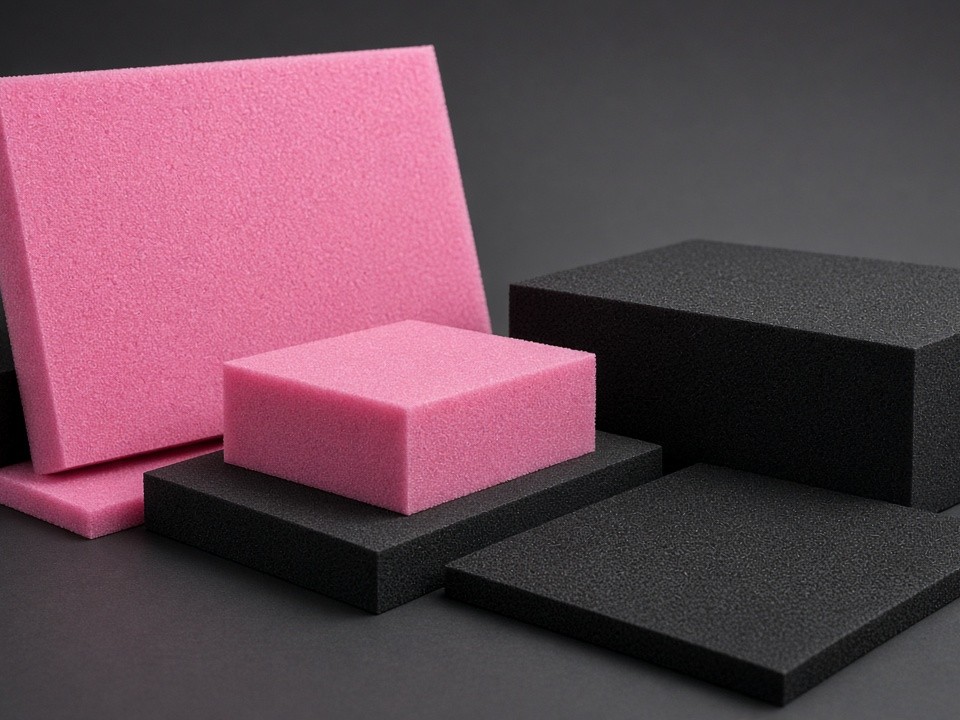
Pink, black, blue, or custom colors can help operators distinguish dissipative, conductive, and non-approved materials at a glance.
-
Chemical compatibility
Where solvents or cleaning agents are used, request verification that the selected foam will not degrade, shed, or lose performance.
Application Risk Analysis
A mismatch can create damage that appears weeks later
The wrong density may allow impact or compression damage. The wrong resistance level may create charge buildup or an excessively rapid discharge. Poor surface durability may pass initial inspection and fail after repeated cleaning. CleanroomLink reviews the part, process, environment, and handling cycle before recommending a material grade.
Electrical mismatch
Charge remains on the foam or transfers unpredictably to sensitive components.
Mechanical mismatch
Insufficient cushioning or compression recovery increases handling and transit risk.
Cleanliness mismatch
Outgassing or particle shedding can undermine otherwise compliant cleanroom processes.
Parameter Table
ESD foam specifications for RFQ review
Values vary by grade, construction, and application. Fields marked for confirmation should be finalized against your drawing, current datasheet, and receiving inspection plan.
| Parameter | Technical specification / RFQ status |
|---|---|
| Material base | PE, PU, or conductive EVA; final grade depends on application |
| Surface resistance | Typically 106–109 ohms for dissipative material; confirm by model |
| Volume resistance | 105–109 ohms·cm shown in the supplied specification; confirm by grade |
| Static decay time | Below 2.0 seconds or per requirement; 5kV to below 50V target requires confirmation |
| Grounding method | Passive dissipative behavior; grounding path depends on the EPA system |
| Dimensions | Custom cut to engineering drawings; tolerance and minimum order to be confirmed |
| Color | Pink, black, or blue; custom color available on request |
| Load / wear parameters | Depends on density, compression set, part weight, and handling cycles; confirm during RFQ |
| Test methods | Per required internal method or applicable ASTM, EN, GB, and ESD test method; to be confirmed |
| EPA suitability | Options stated for Class 100 to 100,000 environments; validate against facility controls |
| Service life | Depends on cleaning, abrasion, chemicals, compression, and handling frequency; available on request |
| Applicable standards | ANSI/ESD S541, ISO, or GB requirements; exact standard and certificate scope to be confirmed |
| Lead time | To be confirmed based on material, tooling, customization, and order volume |
Please submit your current technical datasheet or drawing for an exact cross-reference. Final values, certificates, and inspection criteria are confirmed at RFQ stage.
Red Flags
When a low-cost option creates a higher total cost
- ●
“Anti-static” without test data: A label does not confirm stable dissipative performance in your humidity, cleaning, or handling conditions.
- ●
Surface coating only: Topical treatments may be temporary and can lose effectiveness or release particles after abrasion.
- ●
No load or wear data: Electrical compliance cannot compensate for foam that collapses, tears, or loses fit around the component.
- ●
No traceability: Missing batch reports or CoC documentation makes supplier qualification and audit response more difficult.
Applications
Where engineered ESD foam fits
Electronics assembly
Component trays, workstation inserts, and in-process protection.
Semiconductor handling
Low-particle options for sensitive parts in controlled environments.
Medical devices
Cushioning where cleanliness and traceability are critical.
Transit packaging
Custom cavities and separators matched to part geometry and load.
ESD foam versus standard anti-static packaging
Standard anti-static packaging may rely on humidity-dependent or temporary coatings. ESD foam is selected for defined dissipative behavior and application performance. If your current material powders, loses effectiveness after cleaning, or lacks test records, it may not be suitable for long-term EPA use.
FAQ
Procurement, substitution, and verification questions
Can you cross-reference our current brand-name ESD foam?+
Yes. Send the manufacturer, part number, datasheet, drawings, and required ASTM or EN standard. CleanroomLink can identify an equivalent or alternative grade, subject to technical validation and sample approval.
How do you verify ESD performance upon receipt?+
Batch test reports and a Certificate of Conformance can be requested against the agreed specification. Independent third-party laboratory testing before shipment can also be arranged when required.
Why may the price differ from our current supplier?+
Pricing depends on material grade, density, dimensions, tooling, tolerances, documentation, packaging, order volume, and testing. A lower unit price should be evaluated against service life, scrap risk, and compliance evidence.
What is the MOQ for custom ESD foam?+
MOQ depends on the fabrication method, tooling, material, and customization level. Flexible batches may be available for pilot production, with volume pricing for full-scale manufacturing.
What information is needed for a reliable quote?+
Provide your current datasheet, drawings, part weight, dimensions, application environment, cleaning chemicals, expected service life, annual volume, target standard, and required delivery schedule.
Shortlist & Quote
Replace Your Current Supplier
Stop overpaying for brand-name ESD materials that do not deliver better protection. Share your current specification, target budget, or required certification standards. CleanroomLink will review the fit, identify an equivalent or improved option, and prepare a practical replacement path.
Email:
Office Address:
Request your compatibility assessment
Send your existing datasheet or application details to begin an ESD foam supplier review.