
Industrial Fan Filter Units (FFUs) for Contamination Control
Balance capital cost, airflow performance, energy use, and validation requirements with an FFU sourcing strategy built around your cleanroom class and operating targets.
AC / EC
Motor strategies
HEPA / ULPA
Filter configurations
Custom
Mounting and controls
System Compatibility
Start with the airflow system, not just the unit price
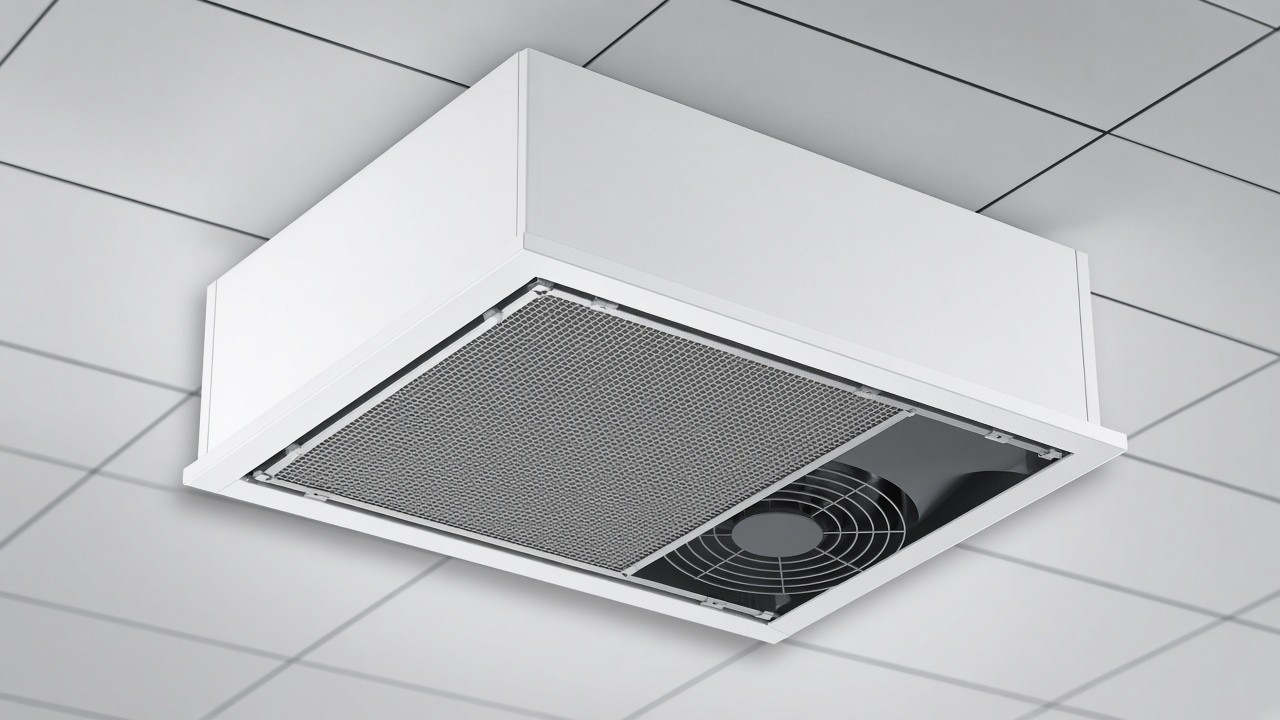
The FFU is the active element in a modular laminar flow ceiling. A unit with insufficient pressure capability can leave the room under-pressurized, while an oversized or poorly controlled unit can increase operating costs and turbulence.
Our selection process connects target room classification, filter resistance, rated airflow, static pressure, motor control, and ceiling compatibility. This makes it easier for purchasing teams, engineers, and compliance stakeholders to compare like-for-like proposals from a qualified Fan Filter Units supplier or manufacturer.
Efficiency, resistance, and airflow are linked.
As filter loading and system resistance increase, the selected fan must maintain the required airflow at the available static pressure. Final selection should therefore be confirmed against the complete pressure curve, filter grade, ceiling layout, and control range.
Three procurement paths
Choose the right level of performance
The lowest purchase price is not always the lowest total cost. Compare motor efficiency, control requirements, maintenance exposure, and cleanroom risk before upgrading.
Cost-Optimized
AC motorA practical route for basic cleanroom environments where budget is the primary constraint and fan-speed adjustment is infrequent.
Consider upgrading when:
- • Energy consumption is a significant operating cost.
- • Airflow must be adjusted as filters load.
- • Many units need coordinated commissioning.
Standard
EC motorThe common baseline for standard ISO 7–8 environments, combining improved energy efficiency with integrated speed control.
A strong fit when:
- • The facility needs repeatable airflow adjustment.
- • Power use and commissioning time matter.
- • Individual unit control is sufficient.
Performance-Enhanced
EC + group controlDesigned for ISO 5 and below, with centralized monitoring, low-vibration options, and coordinated control across large FFU arrays.
Worth the upgrade when:
- • Pressure stability and monitoring are critical.
- • The ceiling contains a large number of units.
- • Energy reporting and alarm integration are required.
Connected Products
Build around the FFU
An FFU performs best when its ceiling grid, filters, controls, and maintenance plan are specified as one system.
- T-Grid ceiling systems: Gasket-seal or gel-seal profiles matched to the selected housing.
- Group control modules: Hardware and software interfaces for monitoring pressure drop and airflow across multiple units.
- Replacement filters: HEPA H13/H14 and ULPA U15/U16 options pre-matched to the FFU housing.
- Pre-filters: Extended-life primary filtration to reduce the maintenance load on final filters.
Selection boundary
FFU or another airflow product?
An FFU is intended for distributed filtration and airflow within a modular cleanroom ceiling. It should not be treated as a direct substitute for a central air handling unit, a standalone laminar flow hood, or a terminal HEPA housing without checking pressure, mounting, controls, and room-balance requirements.
For existing installations, we can assess whether a replacement FFU is a true footprint-and-performance equivalent or whether the project needs a broader system change.
Engineering Specifications
Compare the fields that affect the installation
The values below define the RFQ framework. Model-specific airflow, pressure, dimensions, environmental limits, and documentation must be confirmed before purchase.
| Parameter | Specification / RFQ status |
|---|---|
| Filter grade | H13 to U16 HEPA / ULPA; confirm target class |
| Filter efficiency | Depends on model and selected filter grade; test documentation available on request |
| Rated airflow | Custom / To Be Confirmed against pressure curve |
| Initial pressure drop | Available on request by filter and fan configuration |
| Recommended final pressure drop | Typically 500–600 Pa, application dependent; confirm at RFQ stage |
| Filter media | Glass fiber / PTFE; To Be Confirmed |
| Housing material | Aluminum-zinc / stainless steel / powder-coated; Custom |
| Dimensions | 2' × 2', 2' × 4', or Custom; confirm ceiling module |
| Seal method | Gel seal / gasket seal |
| Temperature / humidity limit | To Be Confirmed for the operating environment |
| Dust-holding capacity | Depends on media and filter construction; Available on Request |
| Leak detection | PAO test port included; test procedure and report format to be confirmed |
| Applicable system | Modular cleanroom ceilings, T-grid, gel-seal, and compatible controlled airflow arrays |
Interface Requirements
Prepare for controls and compliance
- CE / EN: For European export markets, confirm electrical safety and electromagnetic compatibility requirements.
- ISO-related verification: Align filter performance and housing integrity testing with the project validation plan, including ISO 14644-3 where applicable.
- Local GB requirements: For domestic production facilities, confirm whether GB 50073 and related local requirements apply.
- Control integration: Define local speed control, group control, alarm signals, monitoring points, and network interface during RFQ.
Application Packages
Match the configuration to the risk profile
Pharmaceutical and biotech
Gel-seal housings and 316L stainless steel surface options for sterilization protocols and demanding hygiene requirements.
Electronics and semiconductor
High-static-pressure models for multi-stage filtration and applications with ionizing bars or additional resistance.
Food processing
Higher-ingress-protection options for environments exposed to wash-down cycles; confirm the required IP level before quotation.
Quality Control
Validate performance before shipment and installation
As a Fan Filter Units manufacturer and wholesale sourcing partner, CleanroomLink coordinates technical documentation and batch-level checks so your team can review evidence rather than rely on catalog claims.
Integrity testing
PAO/DOP testing for filter media, with report format confirmed for the project.
Performance verification
Airflow volume and motor power consumption checked against the technical datasheet.
Documentation
Test reports and certification copies available to support internal compliance audits.
FAQ
Questions buyers ask before ordering
What is the difference between AC, standard EC, and performance-enhanced EC FFUs?
AC units prioritize initial cost and suit infrequent speed adjustment. Standard EC units provide improved efficiency and integrated speed control. Performance-enhanced EC units add centralized group control, monitoring, and low-vibration options for more demanding or larger installations.
Can you provide a direct replacement for my existing FFU brand?
Yes. Provide the existing model number, external dimensions, mounting footprint, filter grade, voltage, control method, and available performance data. We will assess an equivalent unit rather than assuming that a similar size has the same airflow curve.
How should I verify a sample before approving a batch?
Compare the sample against the approved drawing and datasheet, then review airflow, power consumption, filter integrity, dimensions, seal condition, vibration, and control response. Third-party reports or independent onsite verification can be coordinated for critical environments.
How do I request an FFU quote?
Send your quantity, cleanroom class, ceiling type, dimensions, filter grade, airflow or pressure target, power supply, control preference, delivery location, and deadline. Existing drawings and model labels are especially useful for replacement or custom sourcing.
What is the lead time for custom dimensions?
Lead time depends on housing material, motor specification, filter construction, quantity, and production schedule. Share your required quantity and deadline so availability can be confirmed with the quotation.
Which standards and documents should be included?
The required package depends on destination and application. Discuss CE/EN, ISO 14644-3-related verification, GB requirements, filter test reports, electrical documents, and any customer-specific validation forms during the RFQ.
Build a Complete Solution
Send Your Current Spec
Upload your current FFU model, datasheet, CAD drawing, ceiling layout, or required performance metrics. CleanroomLink will review the information and prepare an equivalent-match or best-value comparison for your environment.
Technical inquiry
Include your quantity, target specifications, application, destination, and deadline. Our team will confirm missing parameters during review.