
Cleanroom Packaging Bags for Controlled Contamination, ESD and Barrier Risk
Cleanroom packaging is not validated by bag size or marketing language alone. For QA teams, engineers and B2B procurement managers, missing evidence for particle control, surface resistivity, barrier performance or material safety can create audit exposure and shipment risk.
CleanroomLink connects your sourcing process with model-specific specifications, test documentation and custom supply options for cleanroom packaging bags used in demanding manufacturing and distribution environments.
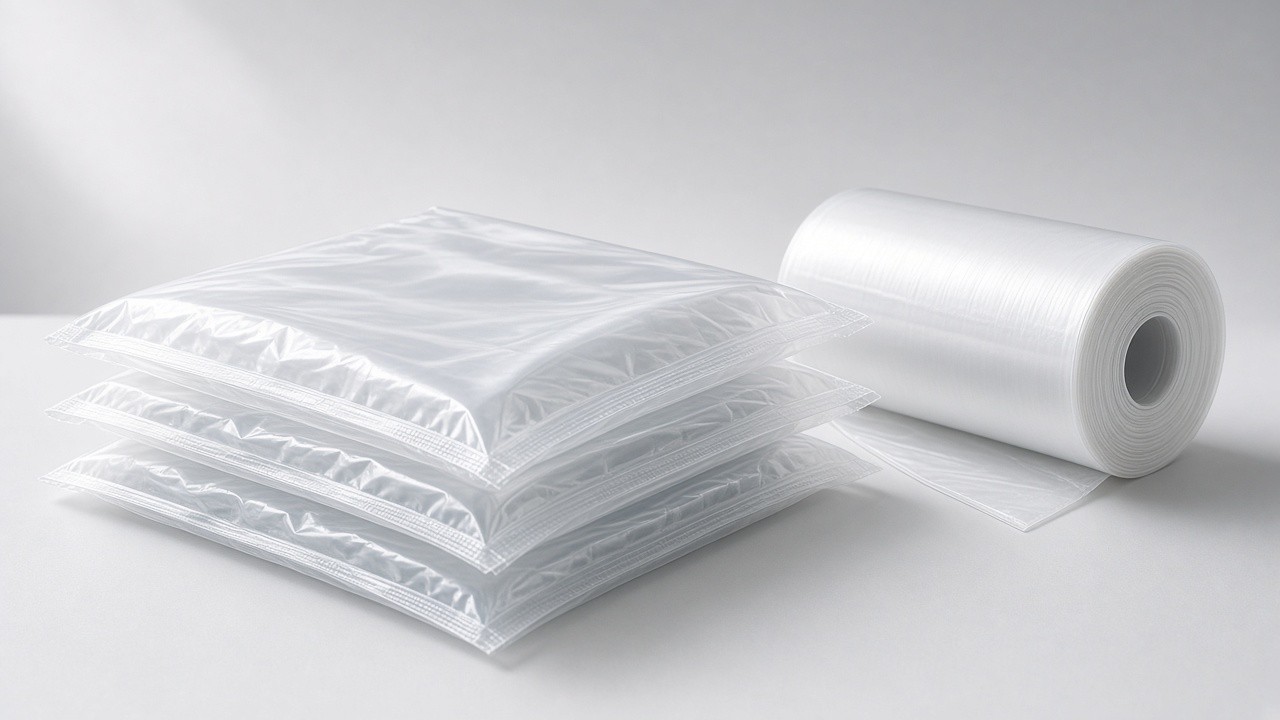
Model-based
Specifications confirmed during RFQ
Custom-ready
Sizes, structures and closures
Quick Buyer Fit
Three checks before you request a quote
The right cleanroom bag depends on the environment, the threat to the product and the evidence your quality system requires.
Controlled contamination
If packaging enters an ISO Class 5–8 environment, confirm the cleaning process, particulate expectations and packaging method instead of relying on the word “clean.”
Static control
For electronics and sensitive components, define the required surface resistivity or shielding performance and ask whether the property is inherent or coating-based.
Barrier integrity
Moisture, oxygen, UV exposure, storage time and transport conditions determine whether PE, a multilayer laminate, metallized film or foil is appropriate.
Where It Works
Packaging matched to the operating environment
Cleanroom Packaging Bags can support protection, containment and transport—but the required construction changes by product sensitivity and compliance boundary.
Discuss your application →Semiconductor & electronics
ESD-shielding and moisture-barrier options for wafers, PCBs and sensitive electronic components.
Pharmaceutical & medical devices
Clean, sterile-ready or high-barrier packaging concepts for GMP-regulated products, subject to model and process confirmation.
Precision manufacturing
Protective containment for optical components, aerospace parts and other products where particles or handling damage matter.
Inbound and outbound logistics
Barrier and closure choices can reduce exposure to humidity, oxygen, static discharge and uncontrolled re-opening during transport.
Parameter Table
Specifications to confirm during sourcing
Use this framework when comparing a cleanroom packaging bags supplier or manufacturer. Exact values, test methods and availability depend on the selected model and material composition.
| Parameter | Specification options / notes |
|---|---|
| Material | PE, Nylon/PE, metallized polyester or aluminum foil; custom material combinations available on request. |
| Structure layers | Single-layer, co-extruded or multilayer laminate; confirm layer sequence during RFQ. |
| Thickness | Reference range: 0.05 mm–0.20 mm; final thickness depends on model and application. |
| Surface resistance / shielding | ESD-safe or non-conductive options; reference surface resistance range 106–1011 Ω/sq. Confirm test method and shielding requirement. |
| Moisture / barrier performance | Low, medium or high barrier; WVTR and OTR results available on request for the applicable construction. |
| Dimensions | Custom length × width; provide product geometry, usable opening and tolerance requirements. |
| Closure | Heat-sealable, ziplock or tamper-evident; closure compatibility must be confirmed with the filling and sealing process. |
| Cleanliness level | ISO Class 5, 6, 7 or 8 target, based on particle count limits and the intended handling environment. |
| Sterility | Non-sterile or Gamma/EO-ready options; sterile status is not implied and must be specifically verified. |
| Transparency / color | Transparent, opaque or silver EMI-shielding appearance, depending on construction. |
| Packaging specification | Packing quantity, inner clean packaging, carton configuration and labeling: available on request and to be confirmed. |
| Typical applications | Wafers, PCBs, medical device housings, optical components, aerospace parts and other precision products. |
How to Select
Turn the application into a verifiable specification
Define the environment
Identify whether the bag enters a cleanroom and specify the target cleanliness class and particle limits.
Assess the threat
Confirm whether the product is static-sensitive, oxidation-sensitive, moisture-sensitive or vulnerable to puncture and handling.
Verify the evidence
Request a Certificate of Conformance and, where necessary, a recent third-party report for the specific material batch or model.
Selection boundary
Cleanroom bags are not automatically sterile bags
A cleanroom bag is processed to reduce particulate contamination. Sterility requires a defined sterilization process and verification. Similarly, an ESD bag is not automatically a moisture-barrier bag.
Use cleanroom packaging bags when contamination control is central.
Move to Gamma/EO-ready or validated sterile packaging only when your product process and regulatory requirements call for it. Select foil or metallized laminates when storage and transport require stronger moisture, oxygen or EMI protection.
Material & Construction
Construction should follow shelf life, handling and transport risk
The lowest-cost material is not always the lowest-risk choice. A suitable structure balances flexibility, seal integrity, barrier performance, cleanliness and the requirements of downstream handling.
PE polyethylene
A flexible and cost-effective option for general cleanroom use where extreme barrier or shielding performance is not required.
Metallized or foil laminates
Appropriate for longer storage or transport conditions where moisture and oxygen ingress must be minimized, with silver or foil constructions also supporting shielding requirements.
Anti-static construction
Topical coatings and integrated additives are available. For longer shelf life, inherent anti-static materials may help reduce property decay and sloughing risk, subject to model confirmation.
Standards & Documentation
Close the compliance gap before production release
A credible Cleanroom Packaging Bags manufacturer should help you identify which documents apply to the chosen material, process and destination market.
ASTM / ANSI
ESD and physical strength testing, where applicable.
ISO 14644
Cleanroom particle-count requirements and classification context.
RoHS / REACH
Material safety documentation for international trade.
Common Buying Mistakes
Avoid specification shortcuts that become quality problems
Confusing clean with sterile
Reduced particulates do not prove sterility. Ask for the defined sterilization process and verification when required.
Ignoring resistivity decay
Generic anti-static bags may lose performance during storage. Confirm aging, shelf-life and test conditions for the selected model.
Over-specifying the barrier
High-barrier foil may add cost without value when a multilayer PE construction satisfies the required shelf life.
FAQ
Questions procurement teams ask before approval
How can I confirm the correct model when published parameters are incomplete?+
Send the current bag specification, sample, application conditions and required cleanliness or ESD targets. The applicable material structure, test method and documentation can then be confirmed during the RFQ stage.
What information affects the price?+
Dimensions, thickness, layer structure, barrier level, closure, cleanliness process, printing or labeling, packing quantity, annual volume and required test documentation can all affect pricing.
Can you provide a substitute for our current brand-name bag?+
Yes. Provide the current product specifications or a sample. CleanroomLink can assess an equivalent or alternative construction against the required technical performance and supply conditions.
Do you support custom sizes and small batches?+
Custom sizing and flexible batch options are available on request. Project scale, material complexity and documentation needs determine lead time and commercial terms.
RFQ Checklist
Send the information needed for an accurate quotation
A complete request helps the supplier compare your current product, identify compliance gaps and recommend a documented alternative.
- 01Dimensions: length × width, opening and tolerance.
- 02Material and layers: for example, a three-layer anti-static structure.
- 03Required standards: such as ISO Class 7 or ASTM D257.
- 04Quantity: estimated annual usage and initial order volume.
- 05Application: for example, silicon wafers or medical device housings.
Replace Your Current Supplier
Benchmark your current cleanroom packaging before you switch
Stop managing multiple vendors for cleanroom consumables. CleanroomLink can review your current bag, align the replacement with your technical requirements and provide a supply option that is on time, on spec and fully documented.
Request your quotation
Share your specifications, current supplier reference or sample requirements.
You can also contact us at or provide your delivery details for a supply review at .