
Evidence-led cleanroom procurement
Industrial Clean Benches for Controlled, Verifiable Workspaces
CleanroomLink, a technical integrator for cleanroom infrastructure, supplies horizontal and vertical laminar flow benches for pharmaceutical compounding, semiconductor assembly, and precision manufacturing.
Our procurement process follows the evidence chain: test reports, material records, batch identification, equipment labeling, packaging checks, and performance verification before shipment.
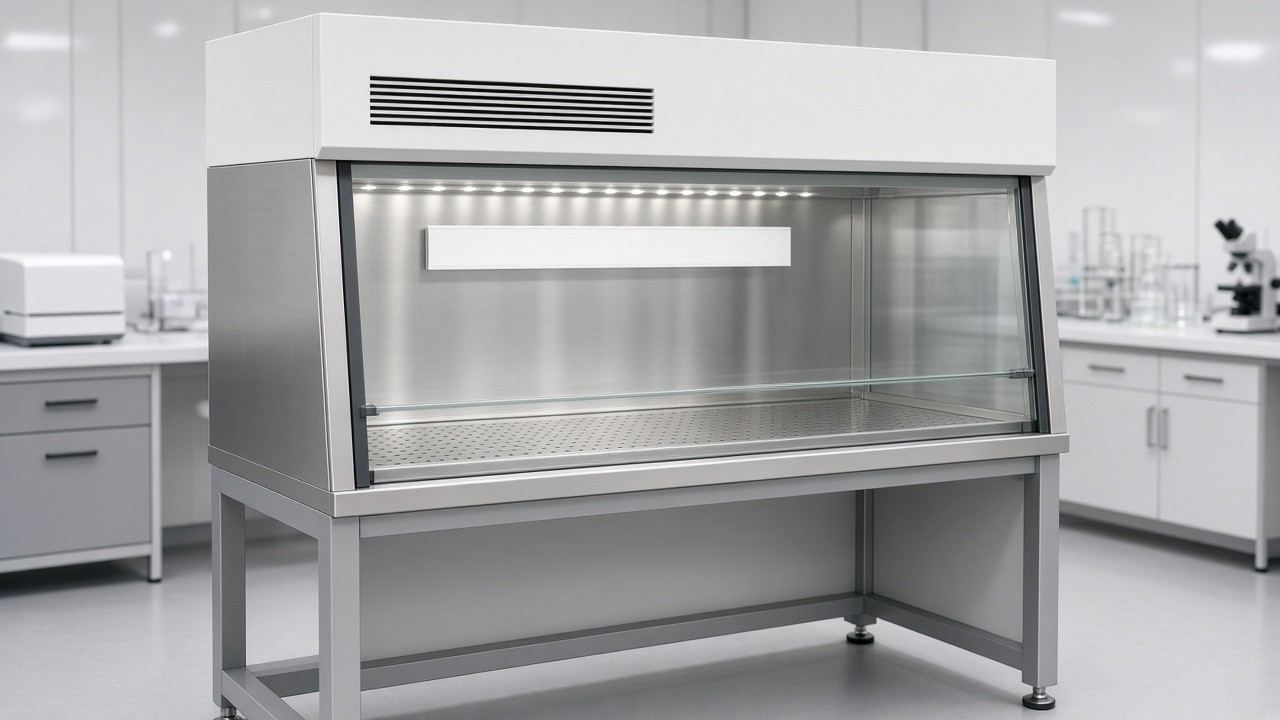
Flow options
Horizontal / Vertical
Work zone
ISO class target
Evidence
FAT & mapping
Buyer’s Shortlist
Three checks before you approve a supplier
The right clean bench is not selected by a product name alone. Confirm how the airflow, filtration, and documentation align with your process and site requirements.
Airflow pattern
Choose horizontal flow when the priority is product protection from the operator. Consider vertical flow for a different workspace arrangement, while confirming the actual protection boundary because a clean bench is not a personnel-protection device.
Filtration efficiency
Match the work-zone cleanliness target to your internal cleanroom standard. Standard HEPA performance is listed as 99.99% at 0.3μm, with H14 and U15 options available subject to model and verification requirements.
Validation documentation
Request the factory acceptance test, airflow velocity mapping, particle count records, filter information, batch traceability, and packaging evidence before shipment.
Must-Have Specs
Build the specification around the work zone
Clean Benches supplier selection should start with the process, not a catalogue model. Confirm work-zone dimensions, airflow uniformity, filtration grade, and the environmental conditions where the equipment will be installed.
- ✓Airflow organization: unidirectional laminar flow with field-adjustable velocity where supported by the selected model.
- ✓Cleanliness evidence: particle counts and performance mapping for the complete working surface, not only a single test point.
- ✓Integration readiness: local power, access clearance, exhaust or room interfaces, controls, installation, and commissioning responsibilities.
Nice-to-Have Specs
Details that reduce lifecycle risk
Material and cleanability
304 stainless steel work surfaces, easy-clean radii, chemical resistance, and anti-static construction can be evaluated against the application.
Serviceability
Industry-standard filter dimensions, accessible maintenance points, replacement planning, and clear batch or serial identification help avoid vendor lock-in.
Operator usability
Digital velocity display, microprocessor or PLC control, anti-glare LED lighting, vibration control, and ergonomic working depth may be specified where relevant.
Parameter Table
Clean bench specifications for RFQ alignment
The values below describe the core offering where information is available. Final values, certificates, and regional compliance requirements must be confirmed during the RFQ stage.
| Parameter | Specification / RFQ status |
|---|---|
| Equipment type | Horizontal / vertical laminar flow bench |
| Airflow form | Unidirectional laminar flow |
| Working area dimensions | Depends on model; confirm width, depth, and height at RFQ |
| Cleanliness class | ISO Class 5 / Class 100 target; verify by particle count report |
| Filter grade | HEPA 99.99% at 0.3μm; H14 / U15 options available on request |
| Air velocity range | 0.3m/s–0.5m/s, field adjustable; confirm model range and mapping method |
| Air volume | Depends on working area and model; to be confirmed |
| Noise | <62 dB(A) at working distance; verify test conditions |
| Illumination | LED anti-glare, >800 lux; confirm measured value by model |
| Power supply | 220V/50Hz or 110V/60Hz; customizable subject to region |
| Cabinet material | 304 stainless steel work surface; cabinet construction and finish to be confirmed |
| Control method | Microprocessor / PLC with digital velocity display |
| Customization options | Custom dimensions, material, anti-static construction, filter grade, voltage, and integration options available on request |
Evidence Chain
Verification continues from materials to packaging
A credible Clean Benches manufacturer or wholesale supplier should be able to connect the shipped unit to its materials, batch, test conditions, and intended installation environment.
Material records
Mill test certificates for stainless steel components, where required.
Airflow mapping
Velocity uniformity checks across the working surface to identify dead zones.
Compliance alignment
CE/EN, IEST-RP-CC002.3, or other target-market requirements confirmed by project.
Shipment traceability
Batch identification, equipment labels, packaging review, and document release before dispatch.
Red Flags
Questions that protect your procurement decision
No velocity mapping
Without a documented airflow velocity test, the claimed work-zone performance cannot be independently reviewed.
Non-standard filters
Proprietary filter dimensions may increase replacement cost and create long-term supplier dependence.
Missing electrical evidence
Confirm local voltage, safety certification, and target-market requirements such as UL, CE, or GB before site acceptance.
Applications & Selection Boundary
Configure the bench around the process
Clean benches support product protection in non-hazardous processes. They are not a substitute for equipment designed to protect personnel or the environment.
Electronics and semiconductor
Specify ESD-safe construction, low vibration, suitable lighting, and a work-zone layout that protects sensitive components during assembly.
Pharmaceutical and medical
Evaluate easy-clean radii, VHP resistance, ergonomic access, and documentation suitable for compounding or controlled preparation.
Precision assembly
Prioritize workspace depth, illumination, airflow uniformity, and operator comfort for high-accuracy manual tasks.
Clean Bench vs. Biosafety Cabinet
Clean bench: provides product protection through clean, directed air for non-hazardous materials. It does not provide personnel or environmental protection.
Biosafety cabinet: is the relevant comparison when personnel, product, and environmental protection are required. If biological agents or toxic powders are involved, a clean bench is not suitable.
FAQ
Practical answers for replacement and custom sourcing
Can you replace an existing clean bench?
Yes. Share the existing model or technical specification sheet, including dimensions, air velocity, filter grade, electrical requirements, and application. We can assess a compatible replacement or a custom alternative.
Can you benchmark a proposed unit against our current specification?
Yes. We compare work-zone dimensions, airflow pattern, velocity range, filter efficiency, noise, lighting, materials, controls, documentation, and installation interfaces. Any unverified value is marked for confirmation during RFQ.
Why can prices differ between apparently similar clean benches?
Price may reflect filter grade, stainless steel construction, control system, airflow testing, electrical certification, custom dimensions, packaging, documentation, installation support, and quantity. A like-for-like comparison should include the full evidence and service scope.
What does the validation process include?
The project can include review of material certificates, filter records, factory acceptance testing, airflow velocity mapping, particle counts, noise and illumination checks, labeling, packaging, installation guidance, and site commissioning requirements. The exact document package is confirmed before order release.
Do you offer onsite installation support and custom lead times?
Detailed installation manuals and remote technical guidance are available. For larger projects, local engineering support may be coordinated. Standard units typically ship within 4–6 weeks; custom dimensions or materials may extend the lead time and must be confirmed against your project schedule.
Shortlist & Quote
Request a Sample + Quote
Start with a sample or proceed directly to a project quotation. CleanroomLink will help match the equipment to your process, target market, and documentation requirements.
Include these details in your inquiry
- 01.Target ISO cleanroom class and work-zone cleanliness requirement
- 02.Required working area dimensions and horizontal or vertical flow preference
- 03.Target-market standards, such as CE or ANSI requirements
- 04.Quantity, application environment, replacement details, and project timeline