
Choose the right protection before the wrong specification chooses your cost.
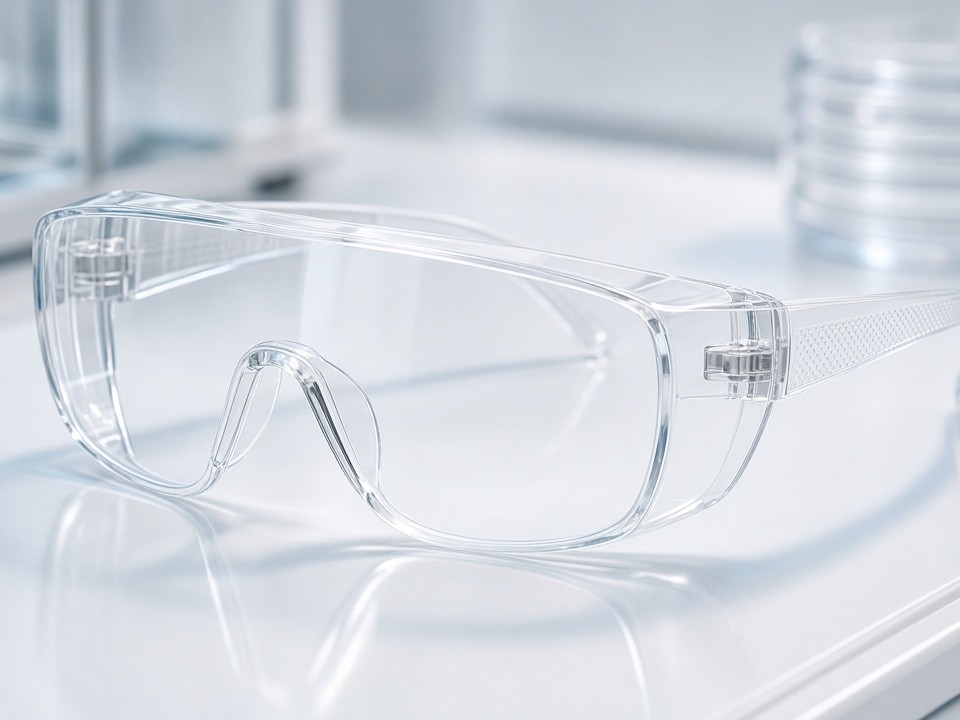
In a controlled production environment, cleanroom eye protection is part of your contamination control and workplace safety strategy—not merely an accessory.
Risk focus
Impact, splash and full-face exposure
RFQ focus
Fit, standards and process compatibility
The cost of choosing incorrectly
A specification gap can become an operational failure.
Audit non-compliance
Using standard industrial safety glasses in a GMP-regulated facility may contribute to failed audits or production halts.
Contamination risk
An improper seal can allow particles or biological matter to move between the wearer and the cleanroom atmosphere.
Unplanned downtime
Inadequate anti-fog performance encourages repeated removal and adjustment, disrupting workflow and increasing handling risk.
Personal safety exposure
Selecting impact glasses where chemical splash resistance is required can expose personnel to irreversible injury.
Specification Map
Anatomy of cleanroom eye protection
A suitable configuration isolates the wearer from the environment while maintaining visibility, comfort and compatibility with the rest of the PPE system.
Seal integrity
Soft-touch silicone gaskets can support long-duration wear, while foam-sealed frames may be selected for tighter, lower-particle environments. Seal selection depends on the process and required containment level.
Ventilation architecture
Indirect, labyrinth or sealed ventilation designs balance airflow and fog control against the need to block direct liquid splash and larger particulates.
Material compatibility
Lens and frame materials should be checked against your cleaning agents, disinfectants and sterilization process before approval.
Performance Specs
Match protection to the actual hazard.
Our sourcing process starts with risk assessment. Impact, splash and full-face risks require different protection strategies, and one product should not be treated as a universal substitute for another.
Impact protection
For high-speed mechanical risks such as precision machining, the required model may need ANSI Z87.1 or EN 166 high-velocity performance. Confirm the target rating during RFQ.
Chemical splash protection
Pharmaceutical and chemical processes may require full-seal goggles that limit liquid ingress during active movement. Direct, indirect and sealed designs are not equivalent.
Full-face coverage
For high-volume splash or debris risks affecting the forehead, cheeks or chin, a face shield may be required. Face shields are generally worn over goggles rather than used as a direct replacement.
Selection checkpoint
Before requesting a quote, identify:
- ●Primary hazard: mechanical impact, liquid splash, particles or combined exposure
- ●Required cleanroom or ISO classification
- ●Cleaning, disinfection and sterilization method
- ●Compatibility with masks, hoods, helmets and prescription eyewear
Dimensional Specs
Fit and dimensions affect real-world performance.
Dimensional data varies by model. These are the points our team can validate against your wearer profile and PPE stack during sample review.
Frame / lens geometry
Depends on Model
Confirm coverage, curvature and peripheral clearance.
Headband adjustment
Depends on Model
Confirm adjustment range and retention during movement.
Weight and balance
To Be Confirmed
Validate comfort for the intended wearing duration.
OTG / PPE clearance
Available on Request
Check prescription eyewear, masks and hoods together.
Parameter Table
The fields that make an RFQ actionable.
Use this matrix to compare models and explain which values must be confirmed before datasheet approval.
| Parameter | Specification options | RFQ confirmation point |
|---|---|---|
| Lens / face-shield material | Polycarbonate; treated CR-39; other model-dependent options | Confirm chemical and sterilization compatibility |
| Impact rating | ANSI Z87.1+, EN 166, or non-rated | Confirm whether mechanical impact is a process risk |
| Anti-fog / anti-scratch | Permanent coating or wiped-on treatment | Confirm humidity, cleaning and autoclave requirements |
| Chemical splash | Direct, indirect or sealed | Critical for liquid-handling processes |
| Seal method | Silicone, foam or hard plastic | Check cleanroom mask and hood compatibility |
| Ventilation | Indirect, labyrinth or sealed | Balance fog control against particle containment |
| View range | Panoramic or standard | Confirm visibility needs for precision assembly |
| Lens color | Clear, amber or tinted | Clear is standard for indoor cleanroom work; confirm task lighting |
| Wear compatibility | OTG available on request | Confirm prescription glasses and other PPE |
| Cleanroom suitability | ISO Class 4–8 compatible options | Confirm the exact ISO cleanliness level |
| Applicable standards | EN 166, ANSI/ISEA Z87.1, ISO 13485-related requirements | Specify target market and documentation needs |
Specific values, certifications and test documentation vary by model. They must be confirmed through datasheet validation during the RFQ stage.
Compliance Specs
Build the compliance requirement into the product brief.
CleanroomLink supports buyers looking for a Cleanroom Eye Protection supplier or manufacturer who can connect product selection with target-market requirements.
European markets
Confirm EN 166 performance and CE documentation for the selected personal protective equipment configuration.
North American markets
Confirm requirements under ANSI/ISEA Z87.1 for occupational eye and face protection.
GMP and global operations
Specify sterilization compatibility, cleanroom-grade packaging and any internal QA release requirements.
Customization & Sourcing
Configure the supply around your SOP, not just your unit price.
Cleanroom packaging
Cleanroom-ready bagging and double-packaging can be discussed for internal handling procedures.
Wholesale supply
Bulk sourcing is available for facility launches and scheduled replenishment programs.
Equivalent alternatives
Performance-matched alternatives can be evaluated when current-brand cost creates budget pressure.
Use Cases & Application Boundaries
Goggles and face shields solve different problems.
A frequent procurement error is treating eye-specific protection and full-face coverage as interchangeable. Select based on the direction, volume and consequence of the hazard.
For eye-specific exposure
Best suited to eye protection against splashes, fine particulates and gases when a seal around the orbit is required. Suitable models may be used in pharmaceutical, laboratory, semiconductor and controlled assembly environments, subject to the confirmed ISO class and process hazards.
For broader facial exposure
Preferred for high-volume liquid splash or debris that may reach the forehead, cheeks or chin. A face shield is typically worn over goggles for maximum protection; it should not automatically replace sealed eye protection.
Need help defining the boundary?
Share your production line hazards, movement pattern and existing PPE. CleanroomLink can help develop a risk-based configuration before you compare wholesale pricing.
FAQ
Questions procurement, QA and engineering teams ask.
How should we choose lens and frame materials?+
Start with the cleaning agents, disinfectants and sterilization process used at your facility. Polycarbonate and treated CR-39 are listed options in the source specification, but final material suitability is model-dependent and should be validated against your chemicals and process.
What is the performance trade-off between vented and sealed goggles?+
Indirect ventilation can reduce fogging through airflow while limiting direct liquid entry. Sealed designs provide stronger containment but may require higher-performing anti-fog treatment. The correct balance depends on your ISO class, humidity and splash risk.
What storage conditions should be considered?+
Storage conditions are model- and packaging-dependent. Confirm the supplier’s instructions for temperature, humidity, light exposure, packaging integrity and separation from chemicals before defining your warehouse SOP.
How often should cleanroom eye protection be replaced?+
Replacement depends on your facility SOP, wear intensity and visible condition. Scratched lenses can reduce visibility and trap particles, so QA and EHS teams should define inspection and replacement intervals for the selected model.
Can you provide samples for validation?+
Yes. Sample provision can support fit, comfort, visibility and compatibility checks with masks, hoods and other PPE before a bulk order. Include your target ISO class, hazards and preferred standards in the request.
Request Datasheet & Quote
Get a Configuration Recommendation.
Choosing the wrong eye protection costs more than the product itself—it can cost time, compliance and safety. Start with the right specification, then request pricing.
Include these details in your inquiry:
- Target ISO cleanroom class
- Primary hazards: chemical, mechanical, particulate or combined
- Preferred standards: ANSI, EN or other market requirements
- Cleaning, sterilization and packaging expectations
- Required quantity, sample plan and delivery market
Tell us what your process requires.
Our team will review the configuration and return the relevant datasheet and quote path.
Email:
Address: