
Industrial air filtration for controlled environments
Medium-Efficiency Filters Built Around Your Air System
CleanroomLink supplies industrial Medium-Efficiency Filters for AHUs, VAV systems, cleanroom pre-filtration, and manufacturing environments. We balance particle capture, pressure drop, energy use, and downstream HEPA or ULPA protection instead of treating the filter as a standalone purchase.
AHU-ready
Standard and custom footprints
M5–F9
Selection depends on system duty
B2B supply
Documentation and batch traceability
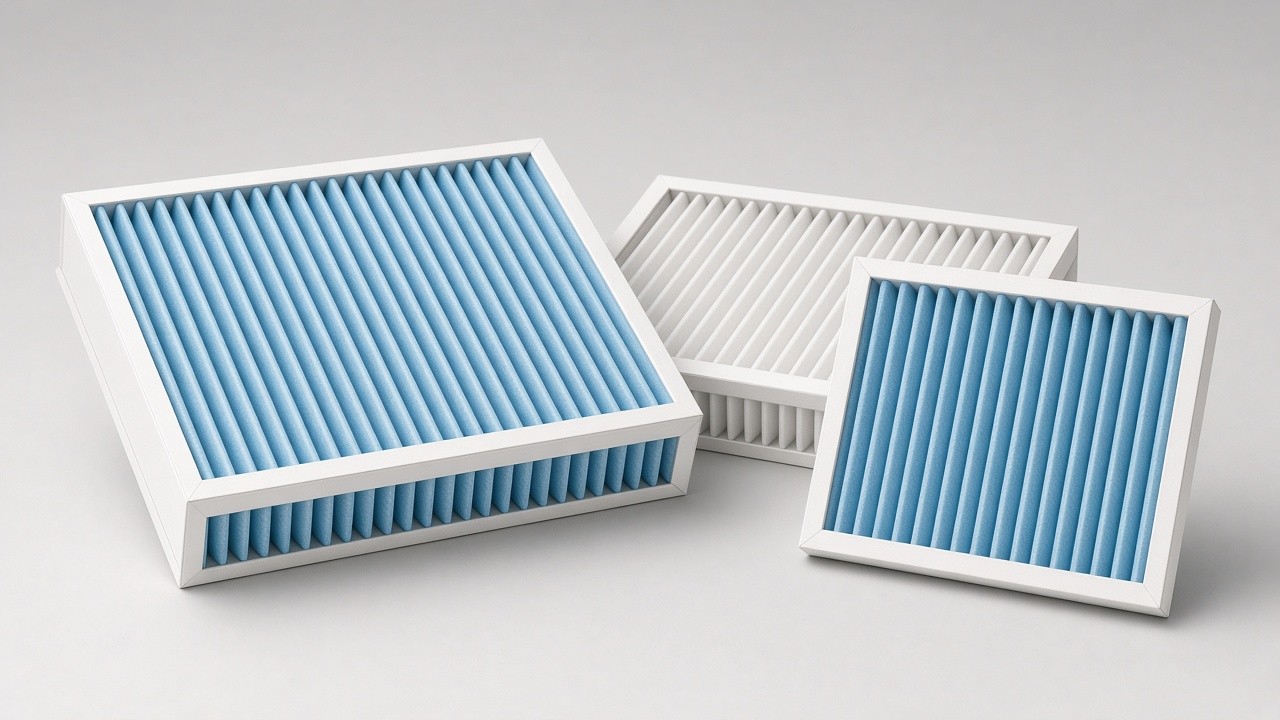
System-first selection
Match efficiency, face area, airflow, resistance, and sealing to the actual housing and fan curve.
Application risk analysis
The wrong pre-filter can create a larger operating problem
Medium-efficiency filtration is the bridge between atmospheric dust and high-efficiency final filters. Selection should begin with the environment, the air-handling equipment, and the consequences of a failure.
01
Premature HEPA failure
Insufficient capture or bypass can load downstream HEPA filters faster, causing unplanned maintenance and higher replacement costs.
02
Energy inefficiency
A poorly selected media structure may develop pressure spikes that force the AHU fan to consume more energy to maintain airflow.
03
Contamination exposure
In food, medical, and clean manufacturing, weak gaskets or poor seating can allow unfiltered air into the controlled zone.
Cost vs. performance
The purchase price is only part of the filter cost
A lower-cost filter with high initial resistance can increase fan energy consumption throughout its service life. The right solution weighs pressure drop against dust-holding capacity, replacement intervals, and required air quality.
Selection principle
Do not upgrade to a higher efficiency grade without checking the fan curve, available face area, and required air changes per hour.
Cost-Optimized
Standard synthetic media with robust cardboard or GI frames for environments with frequent replacement cycles.
Standard Balance
A practical choice for manufacturing and general cleanroom pre-filtration, with improved dust-holding capacity.
Premium Duty
High-capacity, low-resistance construction for demanding 24/7 production and longer service-life objectives.
Technical specifications
Parameters to confirm before ordering
The values below are selection fields rather than universal product claims. Final specifications depend on the AHU design, airflow, media configuration, operating environment, and documentation requirements.
| Parameter | Specification details | RFQ confirmation |
|---|---|---|
| Filter class | M5, M6, F7, F8, F9 or ISO 16890 ePM1/ePM2.5 | Required grade and test basis |
| Filtration efficiency | Depends on model and application requirement | To be confirmed |
| Rated airflow | Custom to AHU specifications | CMH/CFM and operating point |
| Initial resistance | Depends on model and media depth | To be confirmed |
| Recommended final resistance | Depends on system design | Confirm with fan curve and maintenance plan |
| Filter media | Synthetic fiber, fiberglass, or melt-blown | To be confirmed |
| Frame material | Galvanized steel, aluminum alloy, or cardboard | Select for environment and service life |
| Dimensions | 592 × 592 mm, 592 × 287 mm, or custom sizes | Face size and depth required |
| Sealing method | Gasket, PU, or gel seal | Match housing interface |
| Temperature / humidity | Depends on model; humidity up to 100% RH may be available by model | Operating conditions to be confirmed |
| Dust-holding capacity | To be confirmed per test report | Report available on request |
| Leak testing | Available on request | Documentation level to be confirmed |
| Applicable system | Standard AHU and VAV boxes | Confirm fit and airflow duty |
Application fit
Efficiency, resistance, and airflow must work together
Higher efficiency, such as F9, generally correlates with higher initial resistance. If the system is static, changing grade without recalculating the fan curve can reduce airflow and air changes per hour.
Match face area to volume
An undersized filter increases face velocity, which may contribute to particle re-entrainment, pressure rise, or media damage.
Define the boundary with HEPA filters
Medium-efficiency filters are typically used upstream as protection and pre-filtration. They are not a substitute for a specified HEPA or ULPA final stage where that level of control is required.
Where costs change
Three purchasing variables shape total cost
Media composition
Synthetic media is generally cost-effective and moisture-resistant; other media choices depend on efficiency and application needs.
Frame construction
GI frames support durability, while aluminum can reduce weight and support corrosion-sensitive applications.
Certification and records
EN or ISO validation reports and audit documentation may change the commercial scope compared with standard industrial supply.
Quality control
Evidence for procurement and compliance teams
- ✓Batch testing: Initial resistance and efficiency are checked against stated specifications.
- ✓Traceability: Batch numbers and individual test certificates are available where required.
- ✓Seal integrity: Frame rigidity and gasket quality are reviewed to reduce bypass leakage.
Ordering tips
Send the details that make an RFQ accurate
- 1. Existing model: Share the current filter model or part number for cross-reference.
- 2. AHU duty: Provide airflow in CMH/CFM and pressure-drop limits.
- 3. Dimensions: Confirm face dimensions and depth, such as 592 × 592 × 292 mm.
- 4. Environment: Identify humidity, temperature, or chemical exposure.
- 5. Standards: State any EN 779, ISO 16890, GMP, or audit documentation requirements.
FAQ
Questions procurement teams ask before selecting a supplier
How do I choose between M5 and F9?
The correct grade depends on the cleanroom or production requirement, downstream HEPA protection, airflow, and available pressure budget. We review the system design before recommending a class.
What is the minimum order quantity?
MOQ depends on dimensions, media, frame, customization, and project volume. Share your forecast so we can advise on a cost-effective batch size.
Are samples available?
Samples can be arranged for large-scale projects and system testing, subject to the selected specification.
Can you supply custom sizes and construction?
Yes. Standard AHU footprints and custom-engineered systems can be reviewed. Dimensions, depth, sealing method, and frame material must be confirmed during the RFQ.
What certification documents can be provided?
Available documentation depends on the model and order scope. Test reports, batch records, and requested efficiency or resistance data are available on request and must be confirmed before order placement.
What is the typical lead time?
Lead time varies with technical requirements, customization, quantity, and current production capacity. An estimated delivery date is provided after requirements are reviewed.
Cost-optimized RFQ
Discuss Your Application
Do not guess your filtration requirements. Whether you are replacing filters on an existing line or building a new cleanroom system, complex operating conditions are best handled through technical communication first.
Share your airflow, filter dimensions, current model, target efficiency, environment, and documentation needs. CleanroomLink will help define the right specifications, manage sourcing, and balance performance with total operating cost.
Start Your RFQTell us what your system requires
Provide your project information below and our team will review the application.