
Handheld Sticky Rollers for Controlled Environments
Cleanroom contamination control depends on documented performance, not simple product availability. CleanroomLink helps procurement, engineering, quality, and factory teams source handheld sticky rollers through a traceable chain covering materials, testing, batch control, labeling, and cleanroom-ready packaging.
Traceable
Material and batch evidence
Configurable
Widths, cores, and packaging
Project-led
Sample approval before supply
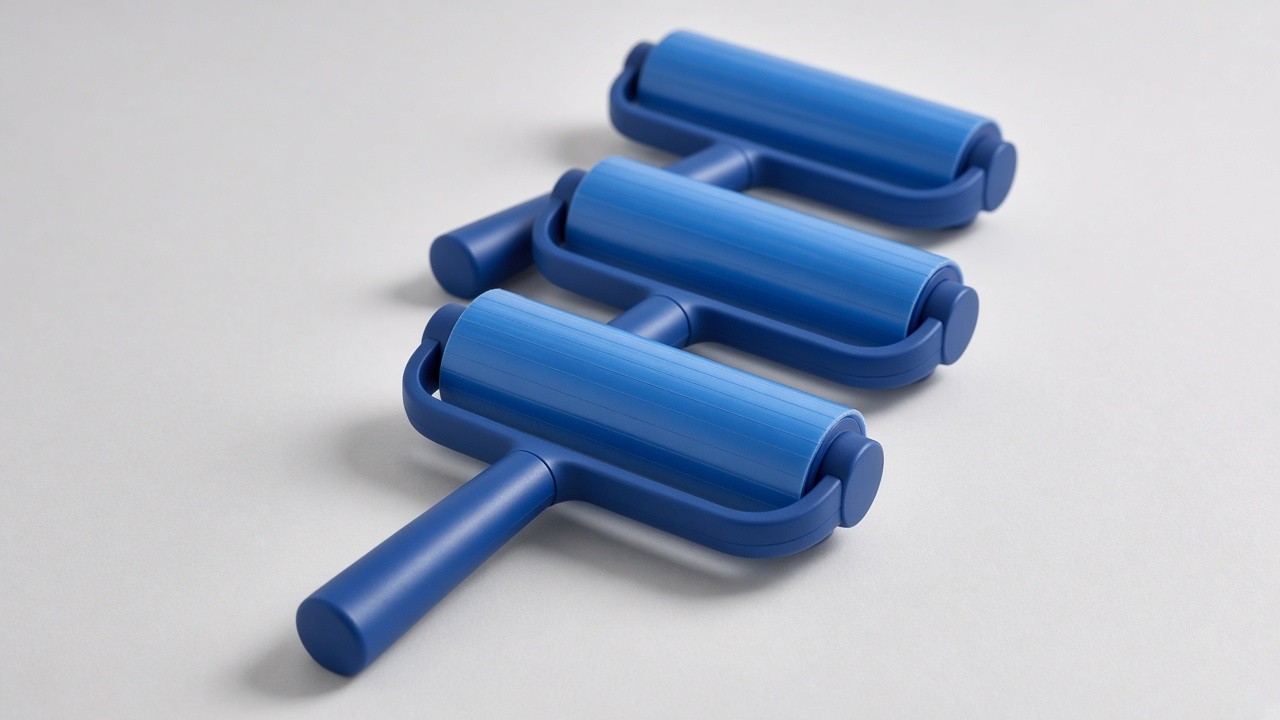
A documented route from formulation to final pack
Review adhesive chemistry, substrate construction, release performance, and packaging cleanliness before the specification is frozen.
Project Planning
Build the evidence chain before the purchase order.
A handheld sticky roller may look like a simple consumable, but the adhesive formulation and backing material can affect product yield, surface cleanliness, and audit readiness. Our approach is designed for B2B buyers looking for a reliable Handheld Sticky Rollers supplier or manufacturer rather than an unverified commodity source.
01
Material traceability
Confirm adhesive origin, film substrate, and relevant material compliance data.
02
Batch consistency
Check that tack level and residue behavior remain consistent across shipments.
03
Technical records
Request TDS documents and, where required, third-party particle or ion release reports.
Design Inputs
Start with the application risk, not the catalog size.
The correct roller depends on the target surface, cleanroom classification, cleaning cycle, and contamination sensitivity. During an RFQ, these inputs help determine which specifications need confirmation and which test reports should accompany samples.
Adhesive transfer versus tack
Higher tack does not automatically mean better cleaning. Excessive tack can transfer adhesive to sensitive surfaces such as optical components or semiconductor wafers. Acrylic-based options may be considered where low residue is the priority, while rubber-based options may be considered where higher tack is required.
Particles and fibers
Standard rollers may release unwanted particulates during use. Roller film, core, handle, and manufacturing controls should be reviewed against the intended cleanroom class, including ISO Class 4 to 8 environments where applicable.
Surface and process fit
Identify surface energy, cleaning area, solvent exposure, handling method, and packaging route before choosing a model. For complex or contamination-sensitive applications, these requirements should be confirmed during sample approval.
Selection boundary
Handheld sticky rollers versus manual adhesive tape
Handheld sticky rollers are designed for rapid, uniform coverage across larger areas such as workbenches, walls, and floors. Manual adhesive tape is better suited to spot cleaning, small areas, or irregular geometries that a roller cannot reach. Where a cleaning cycle involves more than 0.5 m² of surface, a roller can be more efficient and reduce manual contact compared with hand-applied tape.
Ask during RFQ
- Target surface and sensitivity
- Area per cleaning cycle
- Cleanroom classification
- Residue and solvent limits
Parameter Table
Specifications that support a defensible purchase decision
The following fields should be reviewed against your application and confirmed during the RFQ or engineering phase. Exact values depend on the selected model and are not assumed without supporting documentation.
| Parameter | Specification criteria | RFQ confirmation |
|---|---|---|
| Material | PE film; silicone-free options available | Confirm substrate and adhesive chemistry |
| Basis weight / thickness | Depends on model | To Be Confirmed |
| Dimensions | 4", 6", 8", and 10" standard widths; custom widths available | Confirm width, core, and handle interface |
| Particle release | Verified via IEST-RP-CC004.3 or equivalent | Test report available on request |
| Fiber release | Low-shedding substrate construction | Confirm test method and model |
| Liquid absorption | Depends on construction; not a universal performance claim | To Be Confirmed for the application |
| Ionic residue | Available on request for critical semiconductor use | Specify limits and required report |
| Solvent compatibility | Depends on solvent type and adhesive system | To Be Confirmed |
| Sterility | Non-sterile; gamma-irradiated option available on request | Request for quotation |
| Pre-wetted status | Not assumed; dry or pre-wetted configuration depends on model | To Be Confirmed |
| Cleanroom grade | ISO Class 5-8 compatible options | Confirm target classification |
| Packaging method | Double-bagged; cleanroom-grade anti-static packaging options | Confirm bagging, labeling, and pack quantity |
Specific test values vary by model. Final technical values, certificates, and packaging controls are confirmed during specification review and sample approval.
Specification Freeze
Lock the approved configuration before scaling.
Once the optimal roller type is identified, CleanroomLink creates a specification freeze covering material composition, adhesive formulation, dimensions, and packaging method. Any manufacturing change by a supply partner requires formal notification and re-validation. This helps ensure that the product supplied later remains aligned with the product approved at project launch.
Approved materials
Substrate and adhesive record
Controlled packaging
Bagging and label requirements
Change notification
Re-validation when required
Sample Approval
Validate the roller with the people who approve your process.
Samples are selected around the substrate, cleanroom requirement, and documentation package instead of being sent as an isolated catalog item.
-
1
Selection
Receive samples based on your target surface, required tack, dimensions, and cleanroom conditions.
-
2
Internal testing
Evaluate tack level, residue transfer, coverage, handling, and ergonomic compatibility.
-
3
Documentation review
Review supporting test reports and batch information for the specific configuration supplied.
-
4
Approval and archive
After sign-off, the approved product configuration is archived for future mass supply orders.
Mass Supply
Move from approved sample to dependable wholesale supply.
CleanroomLink coordinates manufacturing sources, logistics, quality inspections, and export compliance to reduce the management burden for international procurement teams seeking custom or recurring Handheld Sticky Rollers supply.
Lead-time planning
Buffer stock may be maintained for long-term contract customers.
Quality oversight
Pre-shipment checks focus on package integrity and label compliance.
Cost control
Direct-to-factory sourcing can reduce unnecessary distribution layers.
Standard items typically ship within 2-3 weeks; custom specifications require additional production setup and validation time.
FAQ
Answers for project-based procurement
Can we request custom widths for specific roller handles? +
Yes. Custom sizing and core specifications can be reviewed. Provide your handle dimensions or technical drawings during the initial consultation.
How do you verify adhesive residue levels? +
Relevant test reports can be provided based on standard industry protocols. For optical coatings or other sensitive substrates, additional testing can be discussed during sample approval.
What is the lead time for bulk orders? +
Lead time depends on material selection, quantity, and custom requirements. Standard items typically ship within 2-3 weeks, while custom specifications need additional setup and validation.
Can you support ISO or GMP audit documentation? +
Yes. Certificates of conformance, test reports, technical data, and other available records can be reviewed according to your audit and project requirements.
How are specifications locked before mass supply? +
The approved material, adhesive, dimensions, packaging, and documentation requirements are recorded in a specification freeze. Changes require formal notification and review.
Can you support continuous supply after sample approval? +
Yes. Supply continuity can be planned through consolidated requirements, source coordination, pre-shipment inspection, and agreed documentation controls.
Start a Project
Discuss Your Application
For complex cleanroom conditions, adhesive-sensitive substrates, or specific particle and ion limits, technical communication should come before the purchase order. Share your application, target surface, cleanroom class, dimensions, packaging expectations, and documentation needs with our team.
Office:
WhatsApp:
Send your project brief
Include the required model, application, testing, and delivery information so the technical team can respond with a relevant route.