
Industrial cleanroom safety supply
Slip-Resistant Shoe Covers for Clean, High-Traffic Work Zones
For pharmaceutical, food processing, electronics, and other controlled facilities, CleanroomLink helps procurement teams match outsole traction, contamination control, ESD needs, and mechanical risk to the right shoe-cover configuration.
Traction matched to flooring
CPE, PVC, and rubber outsole options.
Cleanroom-ready configurations
Options for ISO Class 5 to 9 environments.
RFQ-led validation
Test reports and final specifications confirmed by model.
Buyer’s shortlist
Confirm the risk profile before selecting a cover.
The correct model depends on floor type, wet-area exposure, ESD controls, cleanliness requirements, and whether impact or puncture protection is needed.
Must-have specs
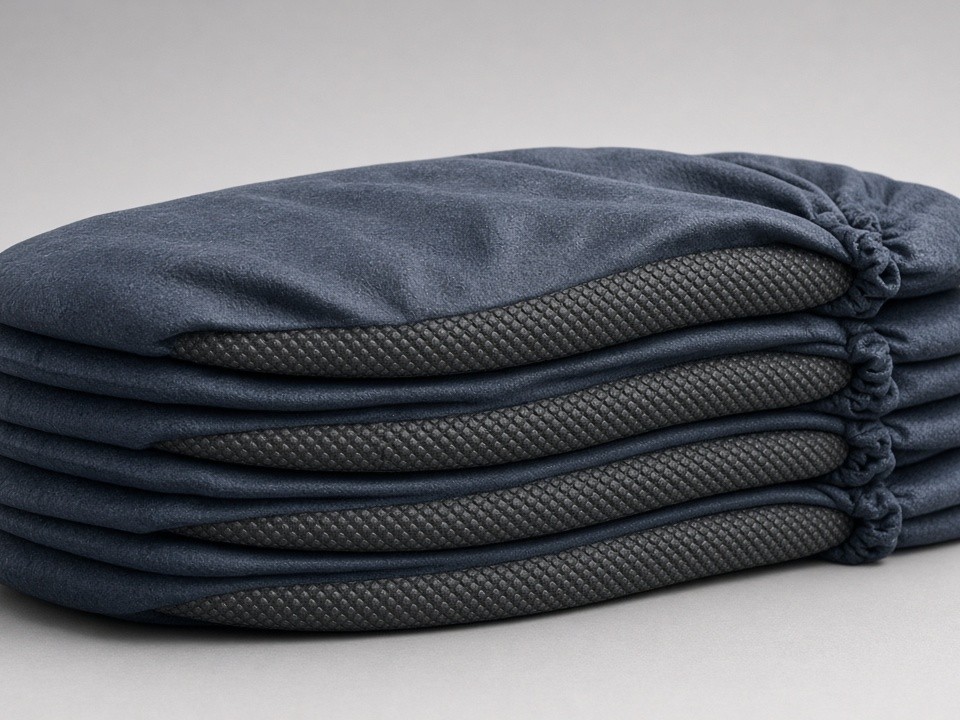
- Outsole construction: embossed CPE, textured PVC, or high-traction rubber selected for the actual floor.
- Slip-resistance evidence: applicable ASTM F1677 or ISO 13287 testing, where required for the selected model.
- Cleanliness and fluid control: upper and sole materials aligned with contamination and wet-area requirements.
- ESD pathway: surface resistivity and grounding continuity confirmed for electronics or semiconductor areas.
Nice-to-have specs
- Custom XL sizing, color matching, or elastic dimensions for workforce fit and gowning flow.
- Conductive strips or inherently dissipative materials for defined ESD control plans.
- Launderable construction for reusable programs where lifecycle economics justify validation.
- Reinforced toe or puncture-resistant construction for maintenance areas, subject to safety assessment.
Parameter table
Slip-Resistant Shoe Covers Specifications
Use this matrix to prepare an RFQ. The final material combination, test evidence, and compliance documentation are confirmed against the selected model and application.
| Parameter | Available configuration or RFQ status |
|---|---|
| Upper material | CPE, non-woven PP, or SMS fabric |
| Outsole material | Embossed CPE, PVC, or high-traction rubber |
| Slip-resistance | ASTM F1677 / ISO 13287 compliant options; friction coefficient and test method to be confirmed by model |
| Surface resistance / ESD | 106–109 Ω static-dissipative option; test report and grounding setup to be confirmed during RFQ |
| Impact protection | Standard shoe-cover protection; reinforced toe or structural safety protection available on request and must be confirmed |
| Puncture resistance | From standard fluid barrier to heavy-duty puncture-resistant configurations; depends on model |
| Water / fluid resistance | Hydrophobic treatment or impervious film; performance depends on material and seam design |
| Cleanliness rating | Compatible options for ISO Class 5 to 9 environments; site protocol and validation to be confirmed |
| Sizes | Universal elasticized fit to custom XL; final dimensions available on request |
| Colors | Blue, white, or custom dye subject to order requirements |
| Lifecycle | Disposable single-use or reusable launderable; service life depends on use and laundering protocol |
| Applicable standards | CE, EN, ANSI/ASTM, ASTM F1677, and ISO 13287 options; applicable standard and documentation to be confirmed at RFQ |
Specific friction, ESD, mechanical, and cleanliness test reports are provided upon request based on the selected supply configuration.
Engineering selection
Separate the risks before you specify the product.
Slip prevention, ESD control, cleanroom compatibility, and mechanical safety are related procurement concerns, but they are not interchangeable performance claims.
Traction on wet floors
For food and beverage areas, embossed CPE or textured PVC soles can help channel liquids away from the contact patch. Floor material, contaminants, and walking conditions still require site testing.
ESD control
An ESD shoe cover must work as part of the operator–footwear–flooring system. Conductive strips or dissipative materials may be available, but resistance and grounding continuity need verification.
Cleanliness control
Upper fabric, sole shedding, packaging, gowning behavior, and the site’s ISO-class protocol all affect contamination performance. Cleanroom suitability is not the same as slip certification.
Mechanical safety
A standard cover is not automatically an impact-rated or puncture-rated safety product. Reinforced options are available on request, but structural hazards may require safety overshoes.
Red flags
Avoid an expensive specification mismatch.
- ●Choosing a generic disposable cover without checking traction on the facility’s actual floor and fluid conditions.
- ●Treating a cleanroom-compatible material as proof of ESD performance or mechanical safety.
- ●Accepting an ASTM, ISO, CE, or EN reference without confirming which product model and test report it covers.
- ●Using a shoe cover where the task requires a structural safety overshoe with impact or puncture protection.
Boundary selection
Shoe covers vs. safety overshoes
Slip-resistant shoe covers
Best for hygiene control, light slip prevention, fluid barriers, and reducing particulate transfer in controlled production areas.
Structural safety overshoes
Better suited to logistics, heavy assembly, or maintenance tasks requiring defined impact, toe, or high-traction protection.
Applications
Built around real facility requirements
As a Slip-Resistant Shoe Covers supplier and manufacturer partner, CleanroomLink supports wholesale and custom sourcing programs across controlled industrial environments.
Pharmaceutical
Cleanliness-focused gowning, controlled traffic, and documented material selection.
Food processing
Fluid-heavy zones where outsole texture and water resistance must be evaluated together.
Electronics and semiconductor
ESD-sensitive work areas requiring resistance, grounding, and cleanliness verification.
Maintenance and engineering
Applications where a standard cover may need to be compared with a structural safety overshoe.
Engineering FAQ
Questions to resolve before a bulk order
How do we choose the material for our floor and process?+
Share the floor material, wet or dry conditions, cleaning chemicals if relevant, traffic pattern, and required contamination controls. Embossed CPE, textured PVC, rubber, PP, and SMS options are then matched to the application rather than selected from a generic size list.
What performance trade-offs should procurement expect?+
A more impervious film can affect breathability, a heavier outsole can affect gowning comfort, and ESD construction may require a specific floor and grounding system. Reusable products may reduce recurring waste but require laundering validation and lifecycle review.
What storage conditions are recommended?+
Confirm the product-specific storage instructions during RFQ. In general, procurement teams should protect packaged covers from moisture, direct heat, contamination, and compression that could damage elastic or formed outsole features.
What is the service life of a cover?+
Disposable models are intended for single use. Reusable or launderable models depend on traffic, cleaning process, material wear, and site acceptance criteria. A fixed service-life claim should be confirmed against the selected model and your operating protocol.
Can we validate samples before committing to a wholesale order?+
Yes. Sample kits are available for major orders. Test them on the actual production floor, including wet traction, gowning workflow, ESD grounding continuity where applicable, fit, contamination control, and compatibility with automated gowning equipment.
What is the expected lead time for bulk supply?+
Standard inventory is stated as shipping within 7–10 days. Custom ESD-rated, reinforced, sizing, or color configurations depend on production schedules and are confirmed during the RFQ process.
Shortlist & quote
Request Batch Pricing
Whether you are a distributor, factory, or long-term procurement customer, CleanroomLink can help consolidate contamination-control supply with technical documentation, testing support, and volume pricing.
Address
Include estimated annual volume, facility type, floor material, required sizes, disposable or reusable preference, and applicable safety or cleanliness standards.
Send your sourcing brief
Our team will review the application boundary and prepare a technical proposal for your shortlist.