
Industrial cleanroom filtration sourcing
HEPA Filters for Reliable Performance and Cost-Controlled Replacement
Replacing a proprietary filter is not simply a matter of matching length and width. Our H13 and H14 HEPA filter solutions help procurement teams, engineers, quality managers, and factory operators compare efficiency, airflow, initial resistance, media, sealing, and test documentation before placing an order.
As a HEPA Filters supplier and OEM sourcing partner, CleanroomLink helps you evaluate equivalent models for existing systems, new cleanrooms, and cost-sensitive replacement programs.
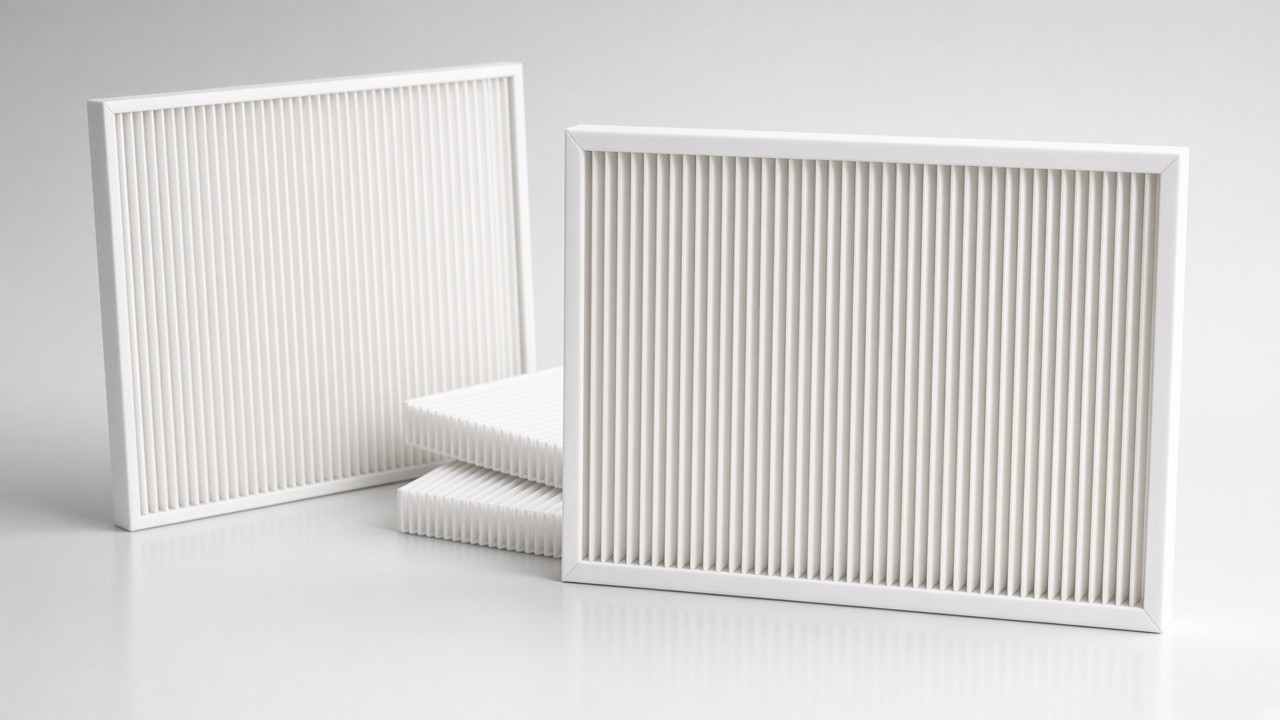
H13 / H14
Efficiency options
MPPS
Performance basis
01 / Cost vs. Performance
Compare the complete operating picture, not only the purchase price
A lower-cost replacement can become more expensive if its initial resistance is too high for the AHU, its airflow does not match the system, or its media and seal cannot support the operating environment. We help you balance efficiency, pressure drop, service life, and documentation.
Efficiency and resistance
H13 and H14 performance must be evaluated together with initial resistance at the required rated airflow. An improperly matched filter may increase AHU energy demand and shorten media service life.
Media and environment
Borosilicate glass fiber is a common option for MPPS-based performance. PTFE may be considered where chemical resistance is important. Media selection depends on dust loading, outgassing, temperature, humidity, and process chemistry.
Replacement continuity
For an equivalent replacement, share the current part number, dimensions, airflow, seal type, and available test report. This gives the manufacturer a clearer basis for compatibility and repeat supply.
A practical sourcing scenario
A factory replacing a branded H14 filter may need to preserve the existing terminal housing, maintain the designed airflow, avoid excessive pressure drop, and provide scan-test evidence. The right RFQ therefore converts the operating need into measurable specifications rather than requesting “the same filter” by size alone.
02 / Good · Better · Best
Select the performance tier that fits your system
The most appropriate HEPA filter specifications depend on cleanroom classification, process sensitivity, operating hours, maintenance strategy, and documentation requirements.
Good
Standard solutions
Reliable H13 efficiency for general cleanroom applications, including stable ISO Class 7–8 environments with predictable replacement cycles.
- ✓Suitable for routine replacement programs
- ✓Balanced specification for stable operating conditions
- ✓Final configuration confirmed against the existing system
Better
Optimized solutions
Designed for applications where lower initial resistance, higher dust-holding capacity, and lifecycle energy costs matter.
- ✓Media options evaluated for pressure-drop control
- ✓Supports demanding facilities with ongoing maintenance needs
- ✓Useful for total-cost-of-ownership comparisons
Best
Performance-critical solutions
For sensitive environments such as pharmaceutical filling lines and semiconductor cleanrooms where documentation and individual integrity testing are essential.
- ✓H14 options for critical filtration duties
- ✓Factory scan testing by DOP or PAO where required
- ✓Documentation and batch traceability available on request
Selection boundary: HEPA filters are not automatically interchangeable with ULPA filters or other high-efficiency media. If your system specification names a different classification, particle target, or pressure-drop limit, confirm the requirement during the RFQ review before approving an equivalent.
03 / Parameter Table
Turn the application need into an RFQ-ready specification
Use the fields below to prepare a comparable request for quotation. Values marked as dependent, custom, or to be confirmed require review against your current filter, housing, airflow, and operating conditions.
| Parameter | Specification options for quotation |
|---|---|
| Filtration grade | H13 / H14; confirm required grade during RFQ |
| Filtration efficiency | H13: 99.97% @ 0.3 μm / H14: 99.995% @ 0.3 μm; MPPS performance basis to be confirmed |
| Rated airflow | Depends on model; specify m³/h or CFM |
| Initial resistance | Specify Pa at rated airflow; depends on model and media |
| Recommended final resistance | To be confirmed for the system; commonly evaluated against initial resistance and AHU limits |
| Filter media | Borosilicate glass fiber / PTFE for chemical resistance; custom selection available on request |
| Frame material | Anodized aluminum / stainless steel / galvanized steel |
| Dimensions | Custom; provide length × width × depth in mm and current model number where available |
| Sealing method | PU / silicone / gel seal / flat gasket; confirm housing interface |
| Temperature and humidity tolerance | Maximum temperature and humidity: to be confirmed for selected model and process |
| Dust-holding capacity | Depends on media, airflow, and environment; available on request |
| Leak testing | Individual factory scan test using DOP/PAO or standard batch test; confirm documentation level |
| Applicable system | Terminal housing, AHU, cleanroom supply system, pharmaceutical, biotech, electronics, semiconductor, or precision manufacturing system |
04 / Application Fit
Match the filter to the downstream process
A HEPA filter specification that works in one facility may be unsuitable in another. The process environment determines the required media, seal, resistance, traceability, and validation support.
Pharmaceutical & biotech
GMP-oriented applications may require high-performance gaskets, resistance to chemical decontamination, and materials suitable for VHP exposure. Confirm the specific process conditions.
Electronics & semiconductor
Low outgassing and boron-free media may be important where contamination control protects sensitive silicon wafers. Requirements should be stated in the RFQ.
Precision manufacturing
Long-term stability, dust-holding capacity, and predictable maintenance intervals can help reduce shutdown frequency in controlled production areas.
05 / Where Costs Change
The quotation changes when the specification changes
Wholesale pricing is not determined by size alone. We identify the cost drivers so buyers can decide which requirements are essential and which can remain standard.
Efficiency grade
H13 versus H14 and the requested MPPS or efficiency evidence affect media and testing requirements.
Airflow and resistance
Higher airflow targets and lower resistance requirements may require different media construction or depth.
Materials and sealing
Stainless frames, PTFE media, silicone, gel seals, and special chemical or humidity demands can change the bill of materials.
Testing and customization
Custom dimensions, individual scan testing, reports, packaging, tooling, and volume influence the final quotation.
06 / Quality Control
Documentation that supports technical approval
CleanroomLink works with manufacturing partners whose processes are reviewed against the testing and traceability needs of the application.
Scan testing
For H14 grades and critical applications, individual scan-test reports using DOP or PAO are available when required to verify media and seal integrity.
Standards-based reports
Test reports based on EN 1822 or ISO 29463 can be provided according to the selected product and documentation scope.
Batch traceability
Batch tracking supports consistency from the initial order through repeat supply. Confirm the required records during the RFQ stage.
07 / Ordering Tips
Send the details that prevent an incorrect match
If you are sourcing an equivalent filter from a current brand, the existing part number is useful, but it should be checked against the actual installation and operating data.
- 1
Provide the current model or part number, frame dimensions, depth, and a photo or datasheet if available.
- 2
Confirm H13 or H14, rated airflow, acceptable initial resistance, and the system's final resistance limit.
- 3
State the seal type, frame material, temperature and humidity conditions, process chemicals, and expected dust loading.
- 4
Request the required test report, scan-test level, batch traceability, quantity, destination, and target delivery schedule.
08 / FAQ
Questions buyers ask before approving a HEPA filter
Can you match filters from brands such as Camfil or AAF?
We can often review an equivalent based on the existing part number, dimensions, airflow, efficiency, seal, and performance documentation. Compatibility must be verified against the actual housing and operating data.
What if I do not know the exact resistance or airflow?
Send the current model number, datasheet, equipment information, or a clear label and dimension record. The missing parameters can then be reviewed and marked as to be confirmed before production.
Which information has the greatest effect on price?
Efficiency grade, airflow and resistance targets, media, frame, seal, custom dimensions, testing level, reporting, quantity, and packaging can all affect the quotation.
Do you support custom HEPA filter sizes?
Yes. Custom dimensions and configurations are available through qualified manufacturing partners. Tooling, testing, lead time, and minimum order requirements are confirmed during the RFQ.
Can I request a sample before a wholesale order?
Yes. Sample requests can support internal fit, airflow, validation, and documentation review before a larger replacement or project order.
What is the lead time for custom HEPA filters?
Lead time depends on the specification, quantity, tooling, testing, and production schedule. Standard availability and custom timing are confirmed with the quotation.
09 / Cost-Optimized RFQ
Request a Sample + Quote
Start with a sample if your team needs to verify fit or performance. For replacement planning or a new cleanroom project, send the current part number and technical requirements for an equivalent comparison.
CleanroomLink