
Industrial PPE Sourcing & Risk-Based Selection
Industrial Cut Protection Solutions
Protect workers across metal stamping, glass handling, automotive assembly, and mechanical operations with cut-resistant solutions selected for the actual hazard—not simply the highest available protection level.
CleanroomLink integrates facility requirements, certified product sourcing, and supply continuity to help safety and procurement teams balance protection, dexterity, grip, durability, and operating cost.
Selection focus
Actual workplace risk
Performance
Grip, abrasion & dexterity
Standards
EN 388 & ANSI/ISEA 105
Risk-based protection
Match protection to the workplace hazard
Industrial cut protection is not a one-size-fits-all decision. Over-specifying protection can increase cost and reduce comfort or dexterity, while under-specifying it can create immediate safety liabilities.
We analyze production lines and workstations to identify the real combination of sharp-edge exposure, handling method, oil or moisture, abrasion, grip, and required hand movement.
The practical objective
Select the appropriate protection level for each task, supporting worker compliance without adding unnecessary material, cost, or restriction.
Metal processing
Sharp sheet metal and stamping operations may require high cut and abrasion resistance, with grip performance suited to oily or wet surfaces.
Glass handling
Glass work combines sharp-edge exposure with the need for secure dry or tacky grip and dependable handling control.
Automotive assembly
Assembly tasks often need a balance of medium cut protection, oil-compatible grip, abrasion resistance, and high dexterity.
Mechanical precision work
Small components and general maintenance may prioritize fingertip control and flexibility while maintaining task-appropriate resistance.
Technical selection matrix
Performance specifications by application
Use this matrix as a starting point for reviewing current inventory, workstation requirements, and product specifications against recognized industry standards.
| Application | Cut risk | Recommended cut level | Typical material | Abrasion | Grip | Dexterity | Standard |
|---|---|---|---|---|---|---|---|
| Metal Stamping | High | A5–A9 / Level E–F | HPPE / steel / glass fiber | High | Oil / wet | Moderate | EN 388 / ANSI 105 |
| Glass Handling | High | A4–A6 / Level D–E | Engineered yarn | Medium | Dry / tacky | Moderate | EN 388 / ANSI 105 |
| Auto Assembly | Medium | A2–A4 / Level C–D | HPPE / nylon / PU | Medium | Dry / oil | High | EN 388 / ANSI 105 |
| General Maintenance | Low / medium | A1–A3 / Level B–C | Polyester / nitrile | High | Dry / oil | High | EN 388 / ANSI 105 |
| Precision Parts | Low | A1–A2 / Level A–B | Nylon / carbon | Low | Dry | Excellent | EN 388 / ANSI 105 |
Recommended levels are application guidance. Final selection should be validated against the specific task, exposure, product test data, and workplace assessment.
Integrated sourcing
One supply strategy for varied production lines
A single brand catalog may not contain the best glove construction for every station. CleanroomLink works with multiple certified manufacturers to provide options that match different risk profiles and operating requirements.
Tiered sourcing
Compare premium, high-durability gloves for heavy metal fabrication with cost-optimized protection for light assembly.
Supply stability
A diversified manufacturing base helps reduce exposure to production delays and stock shortages associated with single-source distribution.
Consolidated procurement
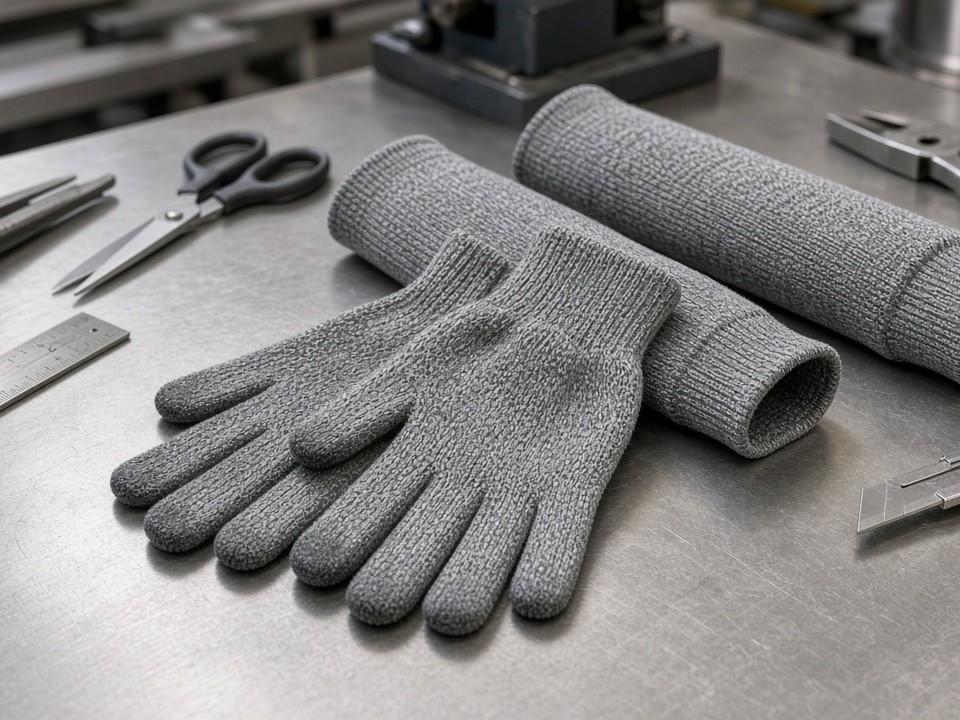
Source cut-resistant gloves, arm sleeves, and protective clothing through one partner to reduce administrative and shipping complexity.
Compliance and testing
Documented performance for regulated operations
Compliance is non-negotiable in industrial safety. We verify that supplied products align with the standards required for your target markets and provide the technical information needed for responsible procurement.
EN 388
Documentation for mechanical risks, including abrasion, blade cut, tear, and puncture resistance.
ANSI/ISEA 105
Verification that specifications align with current North American cut-level classifications.
Technical transparency
Relevant technical data sheets and, where required, third-party test reports accompany supplied products.
Value engineering
Optimize safety spend without compromising protection
Premium PPE is not always necessary for every task. We help identify where protection is being over-specified and where equivalent materials or constructions can provide the required safety rating at a more competitive cost.
-
1
Performance analysis
Review current workstations to identify unnecessary use of highest-tier protection on low-risk tasks.
-
2
Alternative sourcing
Compare equivalent products using similar high-performance fibers and coatings while maintaining required safety ratings.
-
3
Inventory management
Consolidate vendors, shipping lanes, and invoice cycles across your industrial PPE requirements.
Implementation pathway
From requirements review to reliable supply
Plant managers, EHS leads, and procurement teams can use a structured process to validate protection before integrating it into ongoing operations.
Step 01
Submit requirements
Share current PPE specifications, application scenarios, and annual usage volumes.
Step 02
Consultation and sampling
We evaluate the requirements and provide samples matched to cut resistance, grip, and dexterity needs.
Step 03
Integrate and replenish
After validation on your line, we support consistent quality and availability through your ongoing supply chain.
Request a consultation
Build a cut protection program around your real risks
Contact our team to discuss production environments, current glove specifications, annual volumes, and the performance requirements for each workstation.
Email:
Address: