
Filters & Cartridges for Controlled, Compliance-Driven Environments
CleanroomLink helps procurement teams, engineers, QA specialists, and factory managers align filtration media, fit, documentation, and delivery with the demands of their facility.
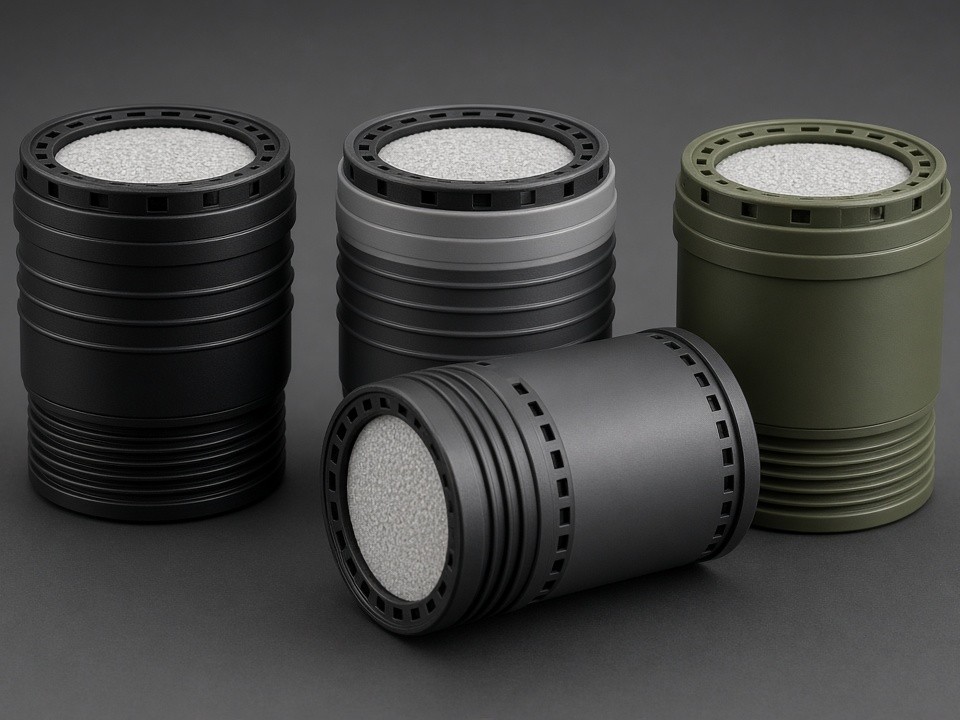
Procurement focus
Correct media and a reliable seal matter as much as nominal efficiency. Every project is reviewed against its housing, airflow, risk profile, and validation plan.
Best for
- •High-volume facility maintenance and batch-based OEM procurement
- •Standardized cleanroom setups covering ISO 5–9 environments
- •Compliance-driven industrial processes requiring traceable specifications
Not ideal for
- •Non-standard proprietary legacy housings without drawings or part references
- •Consumer-grade HVAC systems, DIY installations, or unverified filtration projects
- •Single-unit residential orders where shipping cost outweighs sourcing value
Decision tree
Start with the application, not the product name
A suitable filter or cartridge depends on what must be removed, where the component will be installed, and how the result will be verified. Use this path to prepare a focused RFQ.
Where will it operate?
Identify the cleanroom, pharmaceutical suite, semiconductor area, precision manufacturing line, HVAC, or AHU interface.
What must be captured?
Separate airborne particulates from toxic gases, chemical vapors, or mixed contamination before selecting media.
How will it be accepted?
Define the required standard, test report, installation validation, and ongoing replacement process.
Define your environment
Downstream process requirements determine the filter class and construction. Airflow management in a semiconductor cleanroom may require a different media and housing interface from particulate control in a pharmaceutical suite or vapor control in precision manufacturing.
CleanroomLink can help assess whether HEPA, ULPA, activated carbon, or another media configuration is appropriate for the target air-quality conditions and particle-size constraints. The final choice remains model-dependent and should be confirmed against the equipment and site requirements.
Environment inputs
- Installation pointHVAC, AHU, terminal housing, process enclosure, or other interface
- Airflow requirementRequired airflow volume, operating conditions, and available pressure margin
- Site classificationTarget ISO classification and facility-specific contamination-control objectives
Risk review
Particulates
Consider capture efficiency, particle size, dust-holding capacity, and pressure drop.
Gases and vapors
Confirm whether activated carbon or another adsorptive configuration is needed.
System load
Avoid excessive resistance that could strain the HVAC infrastructure or alter process airflow.
Assess contamination risks
The correct filter or cartridge is a balance between the hazard, required capture performance, pressure drop, service life, and installation fit. A higher nominal rating is not automatically the correct choice if it creates unnecessary energy use or does not address the actual contaminant.
Procurement matrix
Technical specification parameters
Each field affects compatibility, testing, service life, lead time, or total cost. Model-specific values and any required certificates should be confirmed during the RFQ stage before approval.
| Parameter | What to confirm |
|---|---|
| Protection type | Particulate, gas/vapor, or combined protection; depends on model and risk assessment. |
| Filtration target | Airborne particles, chemical vapors, toxic gases, or another defined contaminant. |
| Filtration grade | HEPA, ULPA, activated carbon, or other configuration; to be confirmed by application. |
| Filtration efficiency | Depends on model, test method, and target standard; available on request. |
| Breathing resistance / pressure drop | Initial and operating pressure drop must be matched to airflow and system capacity; to be confirmed. |
| Valve option | Depends on cartridge or assembly design; available on request where applicable. |
| Wearing / installation method | System-integrated housing, frame, or cartridge interface; confirm existing installation. |
| Reusability | Disposable or reusable depends on media and design; service interval to be confirmed. |
| Size | Standard size or custom dimensions; provide housing measurements or technical drawings. |
| Media / cartridge type | Fiberglass, synthetic, activated carbon, or other media; moisture and durability requirements apply. |
| Applicable standards | EN 1822, ISO 29463, ASHRAE, ISO 14644, or project-specific requirements; documentation to be confirmed. |
| Packaging specification | Standard or project-specific packing, labeling, and batch traceability; available on request. |
Align the specification
Avoid the over-specification trap. A premium filtration grade is not always necessary when a standard industrial solution meets the documented compliance requirement. We help purchasing and QA teams lock the correct media, dimensions, seal, pressure-drop target, and replacement cycle.
For project sourcing, request the current part number, drawings, target airflow, ISO classification, and required certification package. Certificate of Conformance and efficiency test reports are subject to model and project requirements.
Validate before release
A filter performs only when the media, frame, gasket, and housing work together. We can coordinate sample review and help verify that supplied components match site testing protocols.
- ●Sample units for fit and performance review, when required
- ●Technical data sheets and available compliance documentation
- ●DOP/PAO or pressure-drop validation requirements confirmed during RFQ
Know the boundary
Industrial filters are not stand-alone air purifiers
These products serve different procurement and validation purposes. Choosing between them should start with the facility design, not a generic efficiency claim.
Filters & cartridges
Integrated into HVAC or AHU systems, selected for defined airflow volumes, housing compatibility, media performance, and applicable standards.
Air purifiers
Stand-alone units for localized, non-critical environments. They are rarely sufficient where an ISO cleanroom design requires system-integrated contamination control.
Project purchasing FAQ
Answers for specification, approval, and supply planning
Can you provide filters that match our existing OEM housing? +
Yes. Direct-fit replacements or alternatives can be reviewed using the current part number, housing measurements, technical drawings, airflow requirements, and seal details. Compatibility is to be confirmed before quotation.
How are specifications locked for a new project? +
The RFQ should identify the environment, contamination risk, target airflow, dimensions, media preference, applicable standards, packaging, and required documentation. CleanroomLink can then coordinate a model review before the specification is approved.
Do you support sample approval before bulk shipment? +
Sample units may be arranged for fit, performance, and documentation review. Technical data sheets and available compliance records can be provided according to the selected model and project requirements.
Can you support bulk pricing and recurring maintenance cycles? +
Yes. Annual demand, batch quantities, delivery locations, packaging, and replacement schedules can be reviewed for a wholesale or supply-chain program. Pricing, stock planning, and lead time depend on the confirmed specification.
What is the lead time for custom-sized cartridges? +
Standard sizes may be available from stock or short-cycle production. Custom dimensions, media configuration, frame complexity, quantity, and documentation affect timing; the exact lead time is provided after technical review.
Quote based on your inputs
Discuss Your Application
Complex environments should start with technical communication, not a generic product listing. Share your target ISO classification, airflow requirements, current housing or part number, contamination risk, certification standards, quantity, and delivery schedule.
Our team can review the application, identify the specification points that need confirmation, and develop a quotation for standard, custom, or recurring supply requirements.