
Controlled-environment chemical sourcing
Surface Disinfectants for Controlled Environments
The wrong disinfectant specification can create a larger problem than the contamination it was intended to control. CleanroomLink helps regulated facilities select documented, material-conscious solutions for critical and support zones.
Specification before substitution
Match the active ingredient, target microorganisms, contact time, residue profile and material compatibility to the validated SOP.
The cost of choosing the wrong specification
A disinfectant decision affects quality, uptime and compliance
In pharmaceutical, semiconductor and other regulated production environments, a low-cost or poorly matched chemical can become an operational liability.
01
Quality risk
An incomplete microbial spectrum or unsuitable contact time can leave contamination control gaps and compromise batch confidence.
02
Production downtime
Corrosion, residue or equipment damage may force maintenance, requalification or an unplanned production stop.
03
Rework and waste
A rinse-required product used where low residue is required can add labor, extend recovery time and increase rework exposure.
04
Compliance exposure
Missing efficacy evidence, SDS, CoA or traceability documentation can complicate audits and release decisions.
Who this is for
Built for teams accountable for environmental control
QA and compliance managers
Need documented efficacy against defined target microorganisms and traceable supply records.
Facility and cleanroom operations managers
Need repeatable cleaning and disinfection protocols that protect production assets and support uptime.
EHS and procurement teams
Need controlled chemical exposure, clear safety data, scalable MOQ and dependable batch continuity.
Who should choose another option
Not every facility needs a validated cleanroom program
If your environment is non-regulated, does not require audit documentation, and standard industrial cleaners meet your risk assessment, our technical-grade, certification-driven supply chain may exceed your current needs.
This range is intended for buyers who value defined specifications, documented performance, material protection and sustained supply over the lowest general-purpose chemical cost.
Application scenarios
Match the disinfection strategy to the zone and risk
Cleaning removes soils; disinfection reduces defined microbial loads; sporicidal treatment addresses spore-forming organisms. These steps should not be treated as interchangeable, and material compatibility must be assessed alongside microbiological efficacy.
Low-residue, controlled disinfection
Consider sterile-filtered or sterile-grade options where required, with a primary disinfectant and a sporicide used within an approved rotation strategy.
Broad-spectrum efficiency
Prioritize practical coverage, application format and cost efficiency while retaining the documentation required by the site quality system.
Protect sensitive materials
Confirm compatibility with 316L stainless steel, glass, epoxy, polycarbonate, sensors and mechanical interfaces before routine use.
Parameter table
Convert the use case into quotable specifications
The final model, formulation and pack should be locked during RFQ review. Values below indicate available directions, not a substitute for product-specific technical confirmation.
| Parameter | Available options / RFQ status |
|---|---|
| Product type | Broad-spectrum / Sporicidal / Sterile-grade; Depends on Model |
| Main ingredients / material | Peracetic Acid / Quaternary Ammonium / Hydrogen Peroxide / Alcohol-based; formulation to be confirmed |
| Concentration or formulation | Ready-to-use (RTU) / Concentrated; Exact concentration available on request |
| Applicable surface | 316L stainless steel / Polymer / Glass / Epoxy; site materials to be confirmed |
| Contact time | Product-specific kill time; Data available on request |
| Residue characteristics | Low-residue / Rinse-required; Depends on Model and use protocol |
| Sterility | Sterile-filtered / Non-sterile; To be Confirmed |
| Cleanroom level | ISO 5 to ISO 9 compatibility; suitability depends on product and validation |
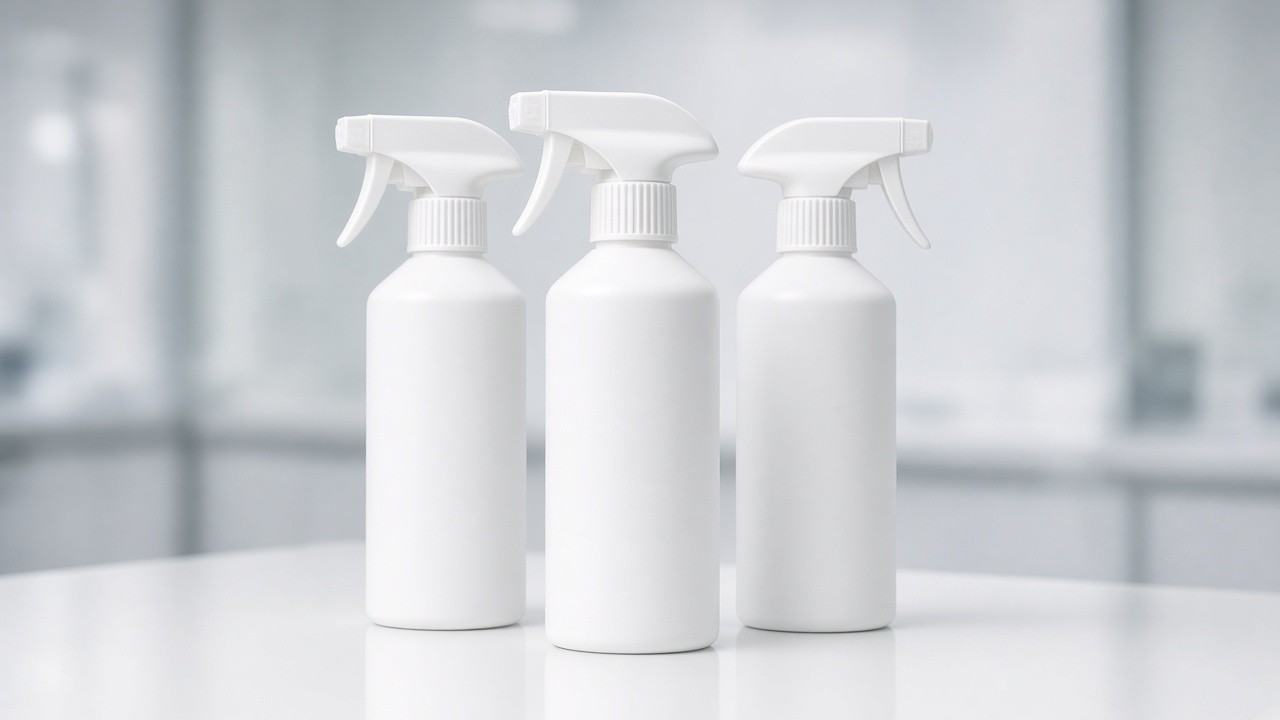
| Packaging specification | 500 ml trigger spray / 5 L canister / 20 L drum; Custom pack available on request |
| Compatibility | Material compatibility testing and charts; target equipment to be named in RFQ |
| Storage conditions | Standard ambient / Temperature controlled; product-specific conditions to be confirmed |
| Typical use | Critical clean zones / Controlled support zones / Equipment maintenance |
Include the target microbial profile, required standards, surface materials, cleanroom classification, pack size and annual demand in your RFQ.
Performance priorities
Select for evidence, not just an ingredient name
Target microorganisms
Separate broad-spectrum, bactericidal, fungicidal, virucidal and sporicidal requirements. Match the formulation to environmental monitoring trends.
Contact time
Use product-specific kill-time data so the SOP defines a realistic wet contact period and does not assume instant efficacy.
Surface compatibility
Assess pitting, discoloration, embrittlement and stress effects across stainless steel, epoxy, polymer, glass and instrument materials.
Residue and rotation
Choose low-residue or rinse-required chemistry deliberately, then define primary and secondary agents in a rotation strategy based on site risk.
Relevant standards
Documentation that supports your quality system
As a Surface Disinfectants supplier and sourcing partner, CleanroomLink can coordinate technical documentation according to the selected model and destination market.
- EN 1276 / 1650 / 14476Bactericidal, fungicidal and virucidal activity references, where applicable.
- USP / EP requirementsRelevant to pharmaceutical-grade sterile solutions; applicability to be confirmed.
- SDS under GHS / CLPSafety data documentation available according to product and market.
- Batch CoACertificate of Analysis and traceability status to be confirmed at RFQ.
Packaging and MOQ
Scale from evaluation to annual supply
We support small-batch testing quantities for new projects, then coordinate larger formats and annual supply agreements for established production. Packaging, MOQ, shelf life, lead time and temperature controls depend on the selected formulation and destination.
Supply model
- Consolidated sourcing with cleanroom consumables
- Batch consistency and lot planning
- Custom packaging and MOQ available on request
- Bulk delivery schedule confirmed after RFQ
Frequently asked questions
Project procurement questions, answered
How are specifications locked before an order?+
Share the target microorganisms, surface materials, cleanroom class, contact-time requirement, residue expectations, sterility status, packaging and destination. The selected model and final technical values are confirmed during RFQ review.
Can we receive samples for approval?+
Sample availability is product-dependent. We can coordinate evaluation quantities and the documentation needed for internal material compatibility, cleaning validation or quality approval.
Can you support batch delivery and continuous supply?+
Yes. Lead time, MOQ, lot allocation and annual supply planning vary by formulation and certification requirements. A confirmed delivery schedule is provided after the formal RFQ.
How does this differ from a general-purpose cleaner?+
A cleaner primarily removes soil, while a disinfectant is selected for defined microbial reduction and contact time. A sporicide addresses spore-forming organisms and may have a different residue and compatibility profile. The correct choice depends on your validated process.
Compare options
Request a standard and an upgraded proposal
Tell us your budget, target standard, microbial profile, cleanroom classification, equipment materials and expected volume. We will compare a practical standard-compliance route with a premium validated route.
Standard Compliance
Cost-effective contamination control for defined operational requirements.
Premium / Validated
Higher-performance, fully documented options for critical zones.