
Industrial & cleanroom respiratory protection
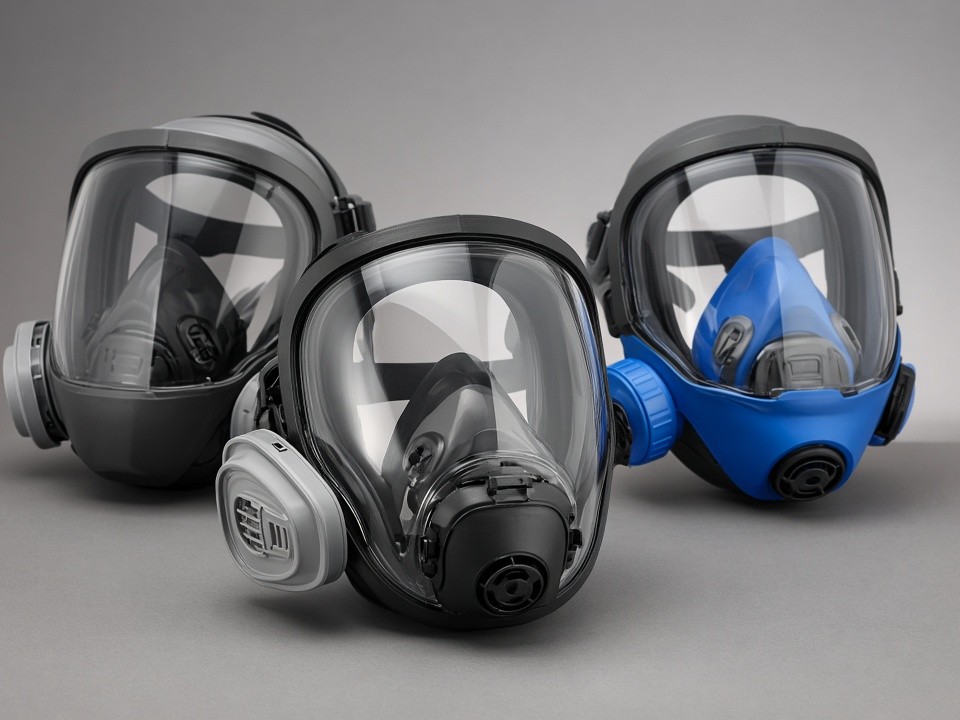
Full-Face Respirators Selected Around Your Actual Workplace Risks
The right full-face respirator connects respiratory protection, eye protection, sealing performance, and filter compatibility in one system. For overseas buyers, engineers, EHS teams, and factory managers, every specification can affect production continuity and worker safety.
CleanroomLink helps procurement teams compare models, confirm fit and standards, and source a Full-Face Respirators solution for defined contaminants rather than relying on a generic catalog description.
01
Seal and fit must be validated on the wearer.
02
Filter selection must follow the contaminant profile.
Start with the field result
Why the core parameters matter
A respirator specification is useful only when it predicts what will happen on the factory floor. These are the decisions that most directly influence visibility, protection, comfort, and supply continuity.
Seal material
A stable seal supports consistent protection
Medical-grade silicone is prioritized where long-wear comfort, skin compatibility, and seal integrity across changing temperatures matter. Final material remains model-dependent.
Field of vision
Less visual obstruction means fewer work interruptions
A wide, distortion-controlled visor helps operators maintain peripheral awareness during precision work, inspection, and movement around equipment.
Filter interface
The interface determines future consumable flexibility
Bayonet, RD40, and proprietary systems affect replacement sourcing, cross-compatibility, and long-term filter costs. Confirm the interface before approval.
Integrated PPE
Compatibility prevents failures at the workstation
Headgear, cleanroom hooding, communication equipment, and other PPE must work with the respirator without compromising the seal or visibility.
Procurement risk review
Common Wrong Choices in Respirator Procurement
The lowest unit price can create higher costs when the selected model does not match the workforce, contaminant, or operating environment.
One size for every wearer
Without correct sizing and fit testing, a high-rated respirator can provide no effective protection.
Assuming “multi-gas” covers every exposure
Filter media must address the actual vapor, gas, particulate, or combination hazard. Protection levels are not interchangeable.
Ignoring visor compatibility
Solvents and process chemicals may affect visor clarity or durability. Material compatibility should be confirmed before volume purchasing.
Leaving communication out of the specification
Speech diaphragms, voice amplification, or radio interfaces may be required in complex manufacturing operations.
Correct selection logic
Beyond the mask: a four-part technical review
- 01 / Seal and material. Match the face seal to wear duration, temperature, skin contact, cleaning, and chemical exposure requirements.
- 02 / Vision. Specify visor material, anti-fog needs, scratch resistance, and acceptable distortion for the task.
- 03 / Filter system. Confirm the contaminant, filtration level, interface, replacement cycle, and whether negative-pressure or PAPR configuration is appropriate.
- 04 / System compatibility. Check interaction with head protection, hooding, eyewear, communication tools, and site fit-testing procedures.
Engineering specifications
Lock the right parameters before issuing an RFQ
The entries below are selection fields, not blanket claims for every model. Final values, certification scope, and compatibility must be confirmed against the proposed respirator and target market.
| Parameter | Specification / RFQ status |
|---|---|
| Protection type | Negative Pressure / Powered Air Purifying (PAPR); confirm configuration |
| Filtering object | Particulates, gases, vapors, or combination contaminants; confirm from site assessment |
| Filter grade / class | Depends on model and target standard; To Be Confirmed |
| Filter efficiency | To Be Confirmed by model test report and applicable standard |
| Breathing resistance | To Be Confirmed; request test data for the selected filter configuration |
| Valve options | Exhalation valve / speech diaphragm; Available on Request |
| Wearing method | Head harness and adjustable straps; confirm fit-test process and size range |
| Reusability | Depends on Model; confirm cleaning, inspection, and replacement guidance |
| Size | Depends on Model; single or multiple sizes to be confirmed |
| Filter media / cartridge type | Bayonet / RD40 (EN148-1) / proprietary; filter media depends on contaminant |
| Applicable standards | CE (EN136), NIOSH (42 CFR 84), ANSI Z87.1, or target-market requirement; confirm scope |
| Packaging specification | Individual / bulk industrial; carton details Available on Request |
When to upgrade
Half-mask and full-face respirators are not interchangeable
A half-mask may be suitable when eye exposure is not part of the hazard and the selected filter system meets the required protection level. Move to a full-face configuration when the face and eyes need integrated protection or when the task demands a wider, clearer working view.
Eye irritation risk
Acids, solvents, and fine dust can make separate eye protection insufficient for the task.
Higher protection requirement
Full-face models typically provide a higher APF than half-mask respirators, subject to the applicable standard and fit.
Visibility and focus
Integrated eye protection can reduce the need for uncomfortable goggle combinations in dusty or chemically active areas.
Applications
Application matrix for project sourcing
| Industry | Primary requirement | Recommended selection focus |
|---|---|---|
| Pharmaceutical | Sterile compatibility and low particle shedding | Silicone-based, easy-to-sanitize models; confirm cleanroom process requirements |
| Electronics / semiconductor | ESD safety and low outgassing | Anti-static materials or silicone-free options where required; confirm site standard |
| Chemical processing | Chemical resistance and vapor-specific filtration | Durable visor, compatible seal, and filter matched to the named chemical exposure |
| Precision manufacturing | Comfort, visibility, and communication | Lightweight ergonomic design, wide vision, and speech diaphragm options |
Audit readiness
Documentation to ask for before a large order
A credible Full-Face Respirators supplier or manufacturer should help you establish traceability, conformity, and maintenance requirements before commercial approval.
Declaration of Conformity
Confirm CE or the relevant international conformity route for the exact model and configuration.
Test reports
Request third-party or applicable laboratory evidence for filter efficiency and breathing resistance.
User instructions and maintenance manuals
Your EHS team needs cleaning, inspection, fit, storage, and replacement guidance for training.
Certificate of Origin
Support customs clearance and supply-chain traceability for international wholesale procurement.
Project procurement FAQ
Answers for specification, approval, and ongoing supply
Can you match our current filter specification with a cost-effective alternative?
Yes. Send current part numbers, filter interface, contaminant information, standards, and available test data. We can review equivalent or alternative configurations without assuming that all filters provide the same protection.
How is sample approval handled for a large rollout?
Samples can be arranged for site-specific fit testing, visibility review, PPE compatibility checks, and performance evaluation. After approval, the model and key specifications are locked for the bulk order.
Can you support consistent filter replacements after the first shipment?
We can discuss replenishment scheduling, replacement quantities, and ongoing supply planning so critical respiratory consumables remain available across production sites.
What if our target market requires NIOSH instead of EN certification?
Tell us the destination market and mandatory framework. We will identify products and documentation aligned with the target requirement, subject to model availability and certification scope.
Which details should be finalized before requesting a wholesale quotation?
Provide the contaminants, operating environment, wearer population, required standard, preferred interface, estimated quantity, sample requirement, packaging needs, and expected delivery schedule. Any unknown field can be marked To Be Confirmed for technical review.
Send current spec for matching
Discuss Your Application before you lock the model
Complex hazards, cleanroom constraints, filter interfaces, and target-market standards deserve technical communication first. Share your current specification or a short workplace hazard summary, and CleanroomLink will help narrow the options.
- • Current respirator or filter part numbers
- • Contaminants and operating conditions
- • Required standards and destination market
- • Sample, quantity, packaging, and delivery expectations
Technical matching request
Use the contact channel below to send your requirements for a tailored Full-Face Respirators selection.