
Industrial hand protection engineering
General-Purpose Work Gloves for Controlled Industrial Risk
General-purpose protection should be selected by hazard, process, and acceptance criteria—not by price alone. CleanroomLink helps procurement teams, engineers, quality managers, and factory operators define the right glove construction for assembly, processing, logistics, and manufacturing environments.
Quality-first starting point
Confirm the hazard profile, required test method, target market, and inspection plan before finalizing a glove specification.
Material First
Start acceptance with the work condition and test method
Before reviewing glove design, define what the glove must withstand and how performance will be verified. A practical acceptance review should cover abrasion, cut, tear, and puncture exposure; oil or chemical contact; temperature; grip condition; expected service life; and the target compliance market.
For an RFQ, provide the current glove or a task description, production environment, required sizes, annual volume, and any internal inspection limits. Exact ratings, test reports, and certificates must be confirmed against the selected model rather than assumed from a general product category.
01
Define exposure
Identify friction, sharp edges, oils, moisture, chemicals, heat, and contamination controls.
02
Select test basis
Confirm whether EN 388, ANSI/ISEA 105, ISO, or another market-specific requirement applies.
03
Check usability
Balance dexterity, grip, breathability, cuff fit, and wear time against the hazard level.
04
Plan verification
Agree samples, tolerances, pre-shipment inspection, and documentation at quotation stage.
Material Choices
The substrate and coating work as one system
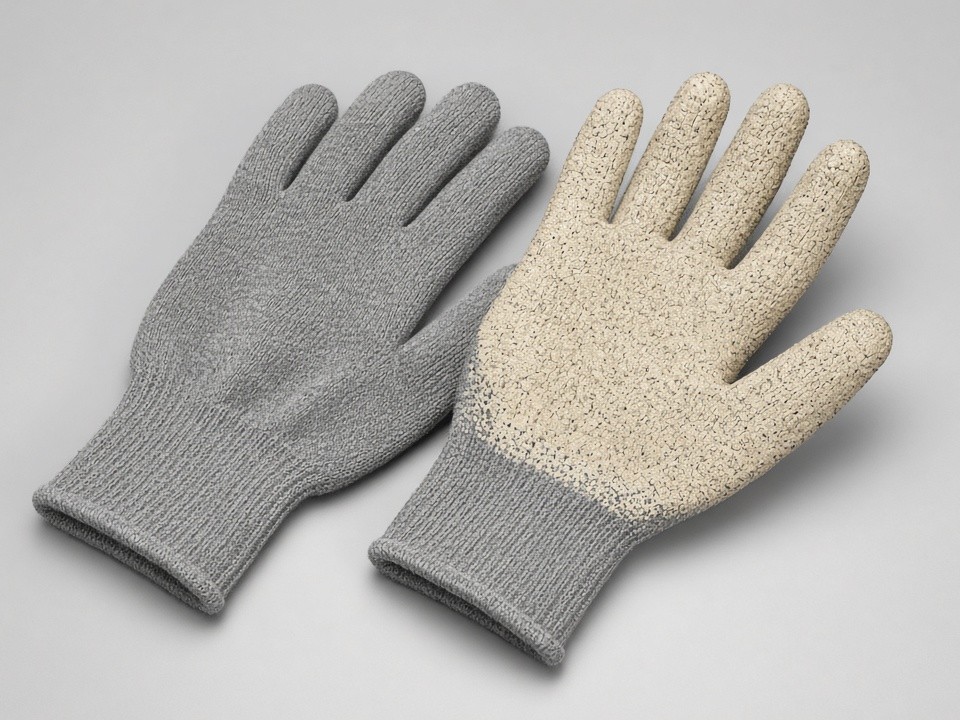
A general-purpose work glove is not a single construction. The liner controls comfort, fit, and mechanical support, while the coating influences grip, durability, and resistance to workplace liquids.
Substrates
Fit & dexterityHigh-tenacity nylon, polyester, and seamless knit liners support breathability and hand movement. HPPE or glass-fiber blends may be considered when greater cut resistance is required.
Nitrile
Oil & durabilityNitrile is commonly evaluated for mechanical durability and oil-related handling. Foam, smooth, and textured options affect tactile response and grip behavior.
PU or latex
Task dependentPU supports precision handling and tactile sensitivity in suitable clean environments. Latex can provide elasticity and grip, subject to site requirements and material compatibility.
Parameter Table
A practical specification framework for your RFQ
Use these fields to compare a General-Purpose Work Gloves supplier, manufacturer, or wholesale program. Model-specific ratings, tolerances, and reports remain subject to technical confirmation.
| Parameter | Specification options / status |
|---|---|
| Liner / substrate | Nylon, polyester, HPPE, cotton blend, or custom construction |
| Coating material | Nitrile, PU, latex; final choice depends on task and compatibility |
| Coating position | Palm-coated, fingertip-coated, or full-coated |
| Abrasion / cut / tear / puncture | EN 388 or ANSI/ISEA 105 rating: To Be Confirmed by model |
| Oil / chemical performance | Oil-repellent, splash-resistant, or dry-use only; chemical compatibility Available on Request |
| Temperature range | Depends on Model; confirm operating and contact temperature during RFQ |
| Grip type | Smooth, sandy, micro-foam, or textured grip |
| Length | Standard glove length or Custom; final dimension To Be Confirmed |
| Sizes | XS to XXL; custom sizing Available on Request |
| Applicable standards | EN 420, EN 388, ANSI/ISEA 105, ISO or destination-market requirements; documentation To Be Confirmed |
Do not treat category-level options as certification claims. Test reports, performance levels, dimensional tolerances, and conformity documents should be reviewed for the selected model.
Construction Details
Small construction choices shape daily compliance
Seamless construction can reduce pressure points during extended wear, while a secure cuff can help limit debris entry and support easy removal. Consistent coating thickness and controlled knitting are important to protective integrity and lifecycle cost.
Liner architecture
Choose breathability and dexterity for repetitive work, or reinforce the liner when mechanical exposure rises.
Coating coverage
Palm, fingertip, and full coverage create different balances between grip, flexibility, and liquid exposure.
Cuff security
A stable wrist fit supports consistent wear without making removal unnecessarily difficult.
Process consistency
Stitching, coating thickness, sizing, and sampling should be included in the quality plan.
Performance Consequences
The wrong specification creates operational risk
Under-protection
A low-abrasion or low-cut construction used in a more demanding task can increase replacement frequency and exposure to hand injury.
Over-protection
A heavy chemical or high-mechanical glove in precision assembly may reduce dexterity, throughput, and handling accuracy.
Compliance exposure
Using unverified materials or undocumented ratings in regulated environments can create audit and acceptance problems.
General-purpose is a range, not a universal claim
For light-to-moderate handling, these gloves can provide a balanced solution. High heat, continuous chemical immersion, severe impact, or specialized cleanroom controls may require a dedicated glove category and separate validation.
Applications & Configuration Guidance
Match the model to the work zone
Electronics and clean environments
Evaluate low-linting liners and PU coatings where particulate shedding, tactile response, and controlled handling matter. Required cleanroom or contamination specifications must be confirmed for the facility.
Precision / lower exposureLight manufacturing
Palm-coated nitrile can be evaluated for a balance of grip, oil handling, and mechanical durability. Confirm whether the task includes sharp edges or only routine part handling.
Balanced protectionLogistics and repetitive handling
Prioritize abrasion behavior, ergonomic fit, cuff stability, and grip under the actual carton or component surface conditions. Confirm expected wear cycles during sampling.
Repetition / frictionBoundary with specialized gloves
General-purpose work gloves are not automatically substitutes for high-heat gloves, full-chemical-immersion gloves, impact gloves, or application-specific cleanroom products. Share the hazard and exposure duration so the recommendation does not exceed or fall short of the required protection.
FAQ
Questions procurement and quality teams ask
How do we determine the required cut-resistance level?+
Begin with a site risk assessment covering sharp edges, force, contact duration, and handling method. Share your current glove data or task details so an equivalent or upgraded option can be assessed against EN 388 or ANSI/ISEA 105.
Can these gloves support cleanroom or controlled-area use?+
Some low-linting liner and PU configurations may be considered, but cleanroom class, particle limits, packaging, and required validation must be specified and confirmed for the selected model.
Which specification tolerances should be included in the RFQ?+
Include size, length, coating coverage, coating consistency, cuff dimensions, packaging, labeling, and acceptable defect limits. Final tolerances are To Be Confirmed according to the selected construction and inspection plan.
How is quality verification handled?+
A quality plan can include specification review, sample approval, production checks, and pre-shipment sampling. Required reports and acceptance criteria should be agreed before order confirmation.
Can you provide custom branding or wholesale supply?+
Custom branding, sizing, packaging, and wholesale programs are available depending on construction and volume. MOQ and lead time are To Be Confirmed from annual demand and branding requirements.
Can you provide CE, ISO, or destination-market documentation?+
Specify the destination market and required standards in your inquiry. Relevant test reports and conformity documents are Available on Request and must be verified for the selected product.
Request Material Recommendation
Ask for Technical Datasheet & Pricing
Send your task conditions, target market, current glove specification, required standards, sizes, annual volume, and branding needs. CleanroomLink will help you compare material choices, clarify acceptance parameters, and identify a suitable supply route.
Technical inquiry
Include the following wherever available:
- ✓Workplace hazard and exposure duration
- ✓Required standards, ratings, or destination market
- ✓Material, coating, size, length, and packaging preferences
- ✓Forecast volume, MOQ expectations, and delivery schedule