
Industrial Finger Cots for Controlled Environments
Shorten Your Finger Cots RFQ Cycle
Stop losing time to supplier back-and-forth. CleanroomLink helps overseas procurement teams, engineers, quality specialists, and factory managers define the right finger cot specifications for precision assembly, cleanroom handling, and ESD-sensitive production.
Send these details for a faster, more accurate quote
- 01Target application: semiconductor assembly, optical lens handling, pharmaceutical laboratory, or another use case.
- 02ESD requirement: dissipative, conductive, anti-static, or standard insulating protection.
- 03Volume: quantity per batch, monthly demand, or annual usage.
- 04Compliance needs: cleanroom class, ASTM, EN, ISO, or internal quality requirements.
RFQ-ready
Specification-led sourcing
B2B focused
Samples, validation, and supply planning
01 · Compliance Path
Define the control path before selecting the product
A suitable finger cots supplier should first understand the contamination, ESD, material, and traceability risks in your process. CleanroomLink maps your application to a product grade, evidence package, sampling plan, and delivery requirement instead of treating every order as a standard commodity purchase.
Classify the process
Identify the component sensitivity, contact points, replacement frequency, chemical exposure, and cleanroom or ESD controls.
Lock the specification
Confirm material, dimensions, surface finish, resistance range, cleanliness targets, packaging, and sample approval criteria.
Verify and scale
Use agreed evidence and batch controls to support pilot approval, wholesale purchasing, and continued supply.
02 · Required Evidence
Build the evidence package around your risk profile
Product documentation depends on the selected model, manufacturing grade, and destination requirements. The items below should be requested and confirmed during the RFQ rather than assumed.
Material evidence
Material declaration, latex protein information where applicable, chemical purity data, and lot traceability are available on request or to be confirmed.
ESD evidence
Surface resistivity targets and test method, including ANSI/ESD S11.11 where required, must be confirmed for the selected grade.
Cleanliness evidence
Particle, NVR, ionic residue, and cleanroom classification records are available on request where applicable to the selected model.
Market compliance
ASTM, EN, ISO, or customer-specific declarations should be mapped to the destination market and confirmed before purchase order release.
03 · Parameter Table
Finger Cots specifications to confirm in the RFQ
Use this matrix to turn an initial inquiry into a measurable purchasing specification. Any item marked for confirmation should be finalized before sample approval or mass production.
| Parameter | Specification options | RFQ status |
|---|---|---|
| Primary material | Natural latex, nitrile synthetic, or ESD-safe blend | Confirm by application |
| Thickness | 0.08 mm–0.12 mm or custom | Custom / to be confirmed |
| Length | Standard 60 mm–70 mm or extended | Depends on model |
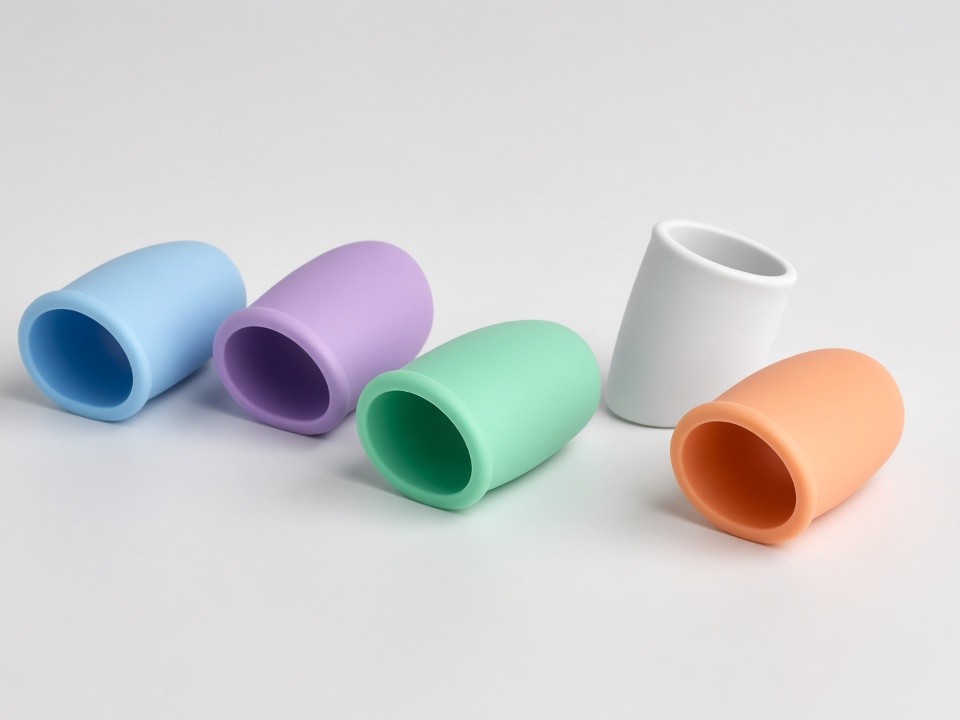
| Color | Available color options depend on material and model | Available on request |
| Surface texture | Smooth, full textured, or tip textured | Confirm handling need |
| Surface resistivity | ESD-safe range such as 106–109 Ω, or standard insulative | Test range to be confirmed |
| Dust control | Powder-free; chlorinated or polymer-coated options | Confirm process limit |
| Ionic residue | Acceptance limit and test method required for the application | To be confirmed |
| Cleanroom level | ISO Class 4 to ISO Class 7, subject to product grade | Grade dependent |
| Powder-free status | Powder-free standard; treatment method to be specified | Confirm in specification |
| Sterility | Non-sterile standard or sterile option | Available on request |
| Packaging | Vacuum-packed, anti-static bag, 500 or 1,000 pieces per bag | Confirm pack size |
04 · Performance Match
Match the finger cot to the process, not just the price
After the parameter table is defined, the quality review can focus on the performance that matters at the point of use.
Precision and tactile control
Thin, flexible constructions and suitable tip texture can support microscope work, optical component placement, and frequent part handling. Final thickness and texture require application confirmation.
ESD and contamination control
For electronics and semiconductor assembly, specify the required dissipative or conductive behavior rather than relying on a standard finger cot. Powder-free and residue limits should be documented.
High-frequency replacement
Packaging, pack size, replenishment cadence, and batch consistency are as important as unit price when operators replace protection frequently.
05 · Application Boundaries
Know when finger cots are the right protection
The correct product depends on exposure, dexterity, and the portion of the operator’s hand that must be controlled.
Nitrile versus latex
Nitrile is the usual direction when chemical resistance or avoidance of natural latex proteins is important. Latex can offer elasticity and tactile sensitivity in lower-risk handling. Confirm compatibility with your process.
ESD-safe versus standard
Standard insulating cots may not meet sensitive electronics requirements. Specify dissipative or conductive performance for semiconductor, PCB, and precision electronic assembly.
Finger cots versus gloves
Finger cots suit localized, high-frequency precision work. Choose full or integrated glove solutions when the entire hand is exposed or broader contamination control is required.
Selection boundary: Do not approve a model solely from a catalog description. Material compatibility, ESD behavior, cleanliness, and operator replacement practice should be checked against the actual process.
06 · Documentation Checklist
Prepare a review package your quality team can use
Use this checklist to align purchasing, engineering, and compliance before a purchase order is released.
- ✓Approved material and allergen requirements
- ✓Dimensional tolerances, thickness, length, and texture
- ✓Surface resistivity target and agreed test method
- ✓Particle, ionic residue, NVR, powder-free, and cleanroom requirements
- ✓Sample approval protocol and acceptance criteria
- ✓Packaging, lot identification, shelf-life, and replenishment plan
- ✓Requested ASTM, EN, ISO, or internal customer standards
07 · FAQ
Project procurement questions
How do we lock the specification before ordering?
Share the application, material preference, dimensions, ESD target, cleanliness limits, packaging, volume, and destination standards. We can then map the requirement to an available model or identify which items need custom confirmation.
Can our QA team approve samples first?
Yes. Sample evaluation can be arranged for material compatibility, fit, tactile performance, cleanliness, and ESD behavior. Approval criteria should be agreed before the sample is shipped.
How is batch consistency managed for wholesale orders?
Batch-level quality requirements, lot identification, packaging, and documentation should be included in the commercial specification. Repeated orders can then be reviewed against the approved sample and agreed evidence.
What is the lead time for custom finger cots?
Standard availability and custom production timing depend on the model, thickness, packaging, testing, and order volume. Custom requirements and the expected lead time are to be confirmed during the RFQ.
Can you support ongoing supply across multiple production sites?
Supply planning can cover approved specifications, forecast volume, packaging formats, replenishment cadence, and documentation requirements. Multi-site delivery terms and continuity plans are available for discussion.
08 · Compliance-Focused RFQ
Discuss Your Application
Complex cleanroom, ESD, or precision-handling conditions rarely fit a one-size-fits-all product. Send your process details and let us help define the evidence, sample plan, and supply route before you commit to volume.
Tell us what your line requires
Include the application, target material, dimensions, ESD and cleanliness requirements, estimated volume, destination market, and requested standards.