
Industrial Glass Cleaners for Controlled Environments
Select the cleaning chemistry from your process risk, not from a generic label.
In pharmaceutical production, high-precision manufacturing, and cleanroom operations, glass surfaces must be matched to the contamination profile, substrate, cleaning frequency, and target standard. Pass-through windows, inspection panels, and diagnostic equipment may require very different controls from ordinary commercial glass.
CleanroomLink helps overseas procurement teams, engineers, QA and compliance professionals, and factory managers source industrial glass cleaners with controlled residue, documented compatibility, and packaging aligned with site SOPs.
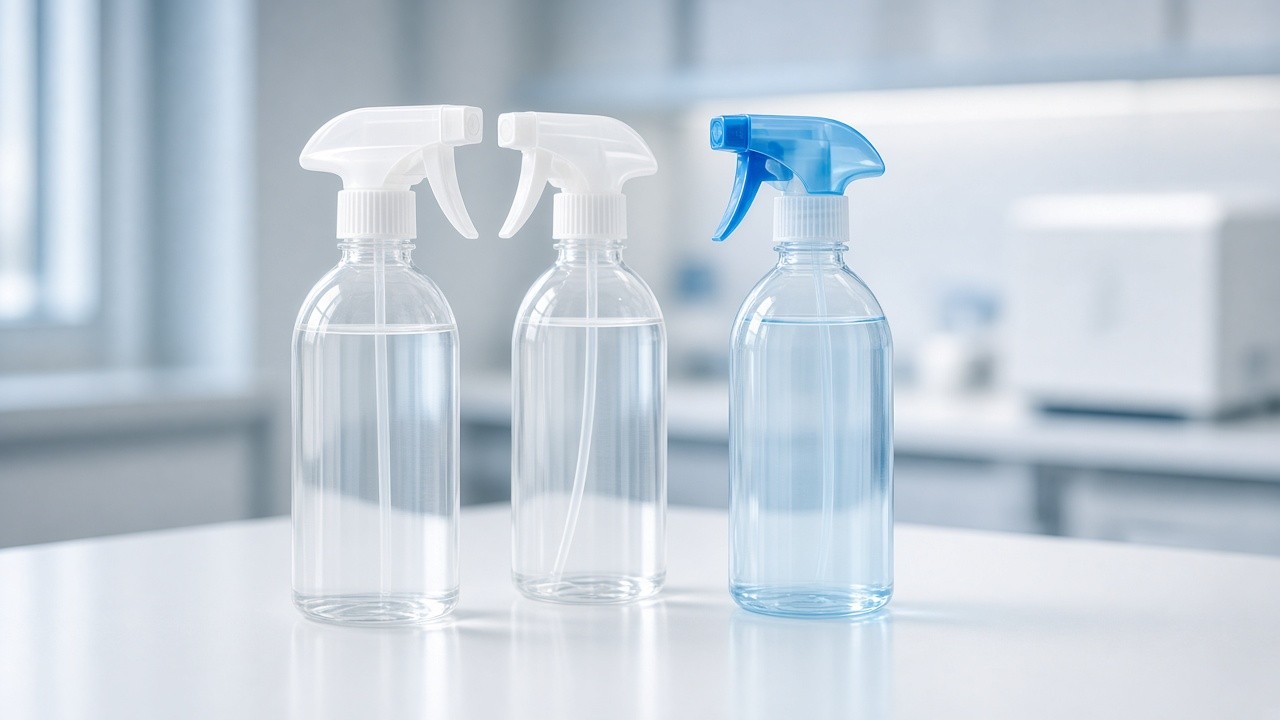
RTU
or concentrated formats
ISO 5–8
application suitability
01 / Environment
Control the contamination pathway
Define whether the process involves fingerprints, dust, organic residues, chemical films, or recurring particulate exposure.
02 / Material
Protect the substrate and coating
Confirm whether the surface is tempered glass, coated glass, acrylic, polycarbonate, stainless steel, or a composite assembly.
03 / Standard
Align evidence with your audit
Set the required ISO class, GMP controls, regional chemical rules, and documentation before selecting a supply model.
Parameter Table
Technical specification matrix for RFQ alignment
Use the matrix below to compare candidate formulations with your SOPs and compliance requirements. Exact concentrations, certificates, and regional documentation should be confirmed during the RFQ stage.
| Parameter | Specification details | RFQ confirmation |
|---|---|---|
| Product type | Ready-to-use (RTU) or concentrated | Depends on model |
| Primary ingredients / material | Deionized water, IPA blend, or specialized surfactants | Exact formulation to be confirmed |
| Concentration or formula | Model-specific solvent and surfactant balance | Available on request with SDS |
| Suitable surfaces | Glass, stainless steel, acrylic, and polycarbonate | Compatibility test required for coated surfaces |
| Contact time | 30 seconds to 5 minutes, application dependent | To be confirmed by application |
| Residue profile | Low-residue or residue-free evaporation options | Depends on model and surface |
| Sterility | Non-sterile; sterile options available | Confirm project requirement |
| Cleanroom grade | Suitable options for ISO Class 5–8 environments | Validate with site protocol |
| Packaging | 500 ml trigger spray, 1 L, or 5 L bulk containers | Custom pack sizes available on request |
| Compatibility | Glass and selected metal or polymer substrates | Sample approval required |
| Storage conditions | 5°C to 30°C, away from direct sunlight | Confirm model-specific requirements |
| Typical uses | Pass-through windows, inspection panels, diagnostic equipment, and cleanroom glass | Define use in RFQ |
Project Planning
Start with design inputs, not a catalog number
A suitable Glass Cleaners supplier should understand the operating environment before recommending a formula. These inputs determine whether a low-residue RTU product, an IPA blend, or a custom specification is appropriate.
-
1
Contamination target
Identify fingerprints, dust, organic residues, chemical films, or other soils.
-
2
Surface and coating
List tempered glass, anti-reflective coatings, acrylic, polycarbonate, or mixed assemblies.
-
3
Action frequency
Separate daily routine maintenance from periodic deep-cleaning procedures.
-
4
Target standards
Specify ISO class, GMP expectations, and CE, EN, USP/FDA, REACH, or other regional requirements.
Application Boundary
Cleaning is not disinfection, and disinfection is not sporicidal treatment
Selecting the wrong chemistry can add residue, create an unnecessary rinse step, or damage a sensitive surface. Define the intended action before approving a product.
Glass cleaners
Primarily remove soil and support streak-free visibility. Low-residue or fast-evaporating options are selected for controlled environments.
Disinfectants
Target microbial control and may contain active biocides that require a compatible wipe-down or rinse step.
Sporicides
Are intended for specific sporicidal claims and should not be substituted for routine glass cleaning without process validation.
Procurement & Supply Chain
A controlled path from specification freeze to mass supply
01
Specification Freeze
Lock pH, solvent content, residue expectations, packaging, documentation, and delivery conditions against your internal SOP.
02
Sample Approval
Test samples on the actual surface to check haze, etching, streaking, residue, and process compatibility before release.
03
Mass Supply
Coordinate certified manufacturing, batch consistency, CoA availability, traceability, scheduled delivery, and long-term replenishment.
FAQ
Answers for project procurement teams
The right product decision usually depends on validation, documentation, and continuity of supply rather than a single headline feature.
Can these cleaners be used in an ISO Class 5 environment? +
Suitable low-particulate, low-residue options are available for ISO Class 5–8 applications. Final approval should follow your site protocol and sample testing.
How are specifications locked before purchase? +
The RFQ should define surface materials, contamination, frequency, contact time, packaging, target standards, and required SDS, technical data, CoA, or batch reports.
Can you provide samples for approval? +
Yes. Samples can be evaluated on your actual glass, coatings, polymers, or equipment surfaces to identify haze, etching, residue, or other compatibility risks.
Can you support wholesale and scheduled production supply? +
Yes. CleanroomLink supports bulk purchasing, flexible volume planning, scheduled delivery, batch consistency, and documentation for ongoing manufacturing requirements.
What if chemical regulations differ by region? +
Regional requirements such as REACH in Europe or applicable EPA and FDA guidance in the United States should be identified during sourcing so the documentation package can be confirmed.
Start a Project
Receive a quote based on your actual cleaning process
For a precise recommendation from a Glass Cleaners manufacturer and supplier, submit the environment, target standard, required specifications, expected quantity, and delivery timing. We will use these inputs to identify the appropriate model, compatibility checks, and documentation path.
- ✓ Application environment
- ✓ Target ISO or GMP standards
- ✓ Surface materials and specifications
- ✓ Estimated quantity and required delivery date
Project inquiry
Include your SOP requirements, target standards, documentation needs, and regional compliance conditions.