
Cleanroom transition equipment
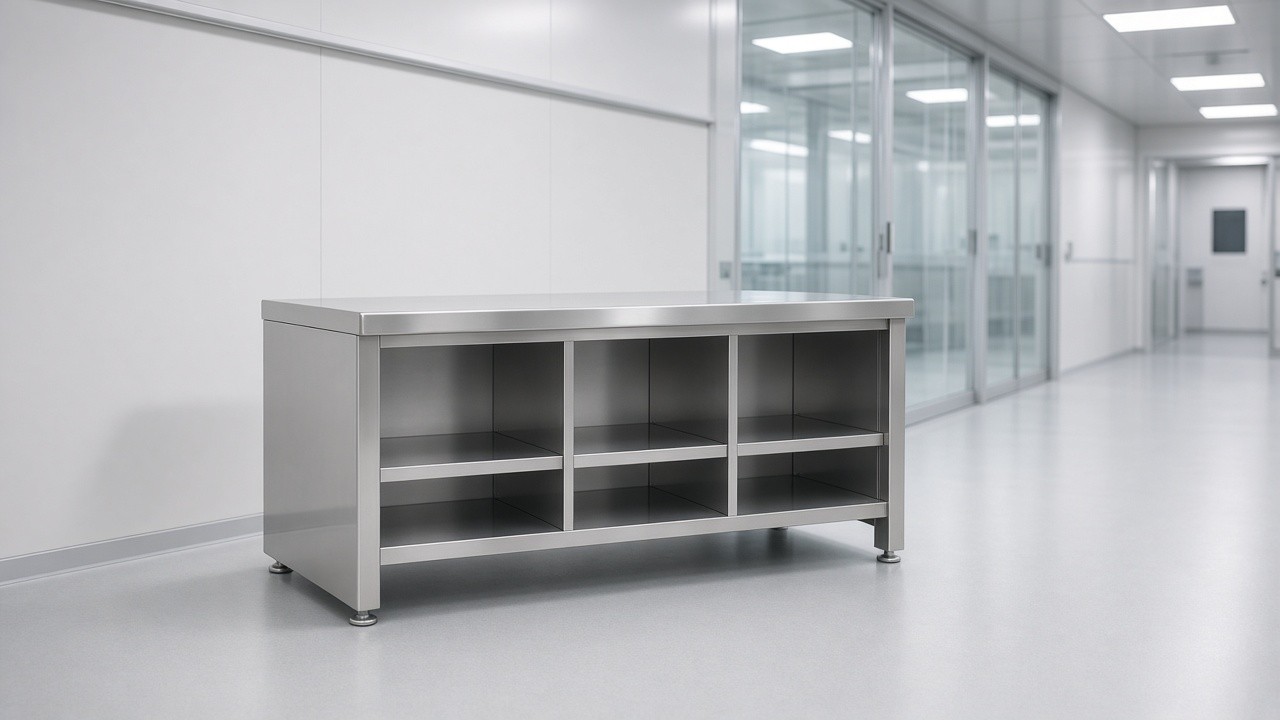
Industrial Shoe-Changing Benches for Controlled Environments
A shoe-changing bench is the physical control point between uncontrolled and controlled zones. The right specification supports your gowning SOP, protects cleanroom zoning, and reduces avoidable lifecycle cost.
Lifecycle cost first
The lowest unit price may not be the lowest procurement cost
For a factory or cleanroom contractor, the real cost of a bench includes replacement frequency, cleaning labor, corrosion, consumables, downtime, and disposal. A poorly matched material or unstable structure can interrupt gowning flow and create contamination risks long after the original purchase order is closed.
CleanroomLink evaluates material selection, cleanability, load stability, and maintenance access together. This total-cost approach helps procurement teams compare a durable industrial solution with standard furniture on operational value rather than price alone.
Product Role in the System
A physical boundary inside the gowning SOP
The bench defines the clean and dirty sides of a gowning area. It enables personnel to sit, rotate, change footwear, and apply shoe covers without allowing their feet to touch the controlled-side floor.
Control the transition
Place the bench at the boundary where personnel must complete the footwear change before entering the clean zone.
Support repeatable movement
The seating height and access direction should support the facility’s defined gowning sequence without bending, stepping over barriers, or reversing flow.
Protect the surrounding zone
Open, smooth, cleanable structures help reduce particulate traps around air showers, anterooms, storage lockers, and gowning racks.
Upstream / Downstream Interfaces
Fit the bench into the complete personnel route
A supplier should review the bench as part of the room layout, not as an isolated item. Share the surrounding equipment and floor conditions during RFQ so the access direction and mounting method can be evaluated together.
Upstream interfaces
Epoxy, vinyl, or raised floors; air shower entries; dirty-side footwear storage; and the approach route used before personnel sit down.
Downstream interfaces
Shoe storage lockers, gowning racks, pass-through boxes, clean-side flooring, and the next step in the gowning sequence.
Flow choice
Single-sided access supports linear flow. Double-sided benches can serve higher-traffic gowning rooms when the room width and SOP allow it.
Procurement specification guide
Configure the right Shoe-Changing Benches for your facility
Each field can change fabrication, inspection, packaging, lead time, or installation cost. Use these specifications to prepare an RFQ; dimensions, load requirements, finish, cleanroom grade, documentation, and ESD needs must be confirmed at the RFQ stage.
| Parameter | Options / specification status |
|---|---|
| Product type | Standard bench, bench with shoe rack, or bench with compartment storage |
| Material | SUS 304, SUS 316L, or powder-coated cold-rolled steel; confirm grade and certificates at RFQ |
| Dimensions | Custom length; typical width range 300 mm–500 mm; final dimensions to be confirmed |
| Capacity | Depends on length and storage compartment count; load requirement to be confirmed |
| Layers / compartments | Single-tier or double-tier shoe storage; compartment quantity is custom |
| Locking method | Open, magnetic latch, or keyed cam lock |
| Casters / fixing | Floor-mounted, wall-anchored, or mobile with casters |
| Surface treatment | Brushed hairline, mirror polish, or anti-static coating |
| Cleanroom grade | ISO Class 5 to ISO Class 9 applications; room validation requirements to be confirmed |
| ESD option | Conductive leg caps or grounding straps available; documentation available on request |
| Installation method | Floor installation, wall anchoring, or mobile placement; floor condition to be confirmed |
| Customization | Custom footrest height, load requirements, layout, finish, and storage configuration available on request |
Material certifications such as 316L mill test reports and ESD compliance documentation should be requested with the RFQ rather than assumed.
Integration Considerations
Specification decisions that affect compliance and maintenance
Cleaning chemistry and corrosion
For aggressive cleaning agents, VHP exposure, or heavy-duty disinfectants, SUS 316L may be required to reduce pitting and premature replacement. Confirm the sanitization protocol before selecting the material.
Airflow and cleanability
In higher-grade environments such as ISO 5 or ISO 6 areas, perforated surfaces or open-frame structures can help limit obstruction to unidirectional airflow. The final design should follow the room’s validation requirements.
Ergonomics and throughput
Bench height, depth, and access direction should align with gowning racks and footwear storage. A mismatch can slow each transition and create avoidable congestion during shift changes.
Where the boundary ends
A shoe-changing bench is not a substitute for an air shower, locker, gowning rack, or pass-through box. It provides the seated transition point and should be selected as part of that system.
Application Examples
Match the construction to the operating environment
Pharmaceutical and biotech
High-polish SUS 316L benches for sterile gowning rooms where cleaning chemistry and surface condition are critical.
Electronics and semiconductor
ESD-safe configurations with conductive grounding points for controlled personnel transitions.
Food processing
Solid-top, easy-clean stainless steel designs intended to reduce debris traps around footwear-changing areas.
Inspection & Acceptance
Create an approval path before batch production
CleanroomLink can support project verification against approved drawings and agreed documentation. Define the acceptance criteria with your QA and engineering teams before release.
- 1
Material verification
PMI testing for stainless steel grades and requested mill test reports where applicable.
- 2
Visual inspection
Review weld quality, rounded corners, surface finish, and crevice-free areas that could trap particles.
- 3
Dimensional check
Compare delivered units with approved shop drawings, room clearances, and access requirements.
- 4
Performance test
Verify stability, fixing, caster or leveling-foot operation, and load-bearing performance.
Replacement Cycle
Plan component audits, not just full-unit replacement
A quality bench should support the useful life of the facility, but casters, leveling feet, and magnetic latches are wear items. A biennial audit of these components helps maintain safe, stable, and clean gowning conditions.
If benches are being replaced every one to two years because of corrosion or structural fatigue, review whether the material, finish, cleaning protocol, or load specification is mismatched with the application.
FAQ
Questions procurement and QA teams ask
What is the difference between cleanroom bench grades?
The practical difference is usually the material, surface finish, weld treatment, cleanability, airflow profile, ESD provision, and documentation required for the room. ISO 5–6 applications may require more open, low-shedding designs than general controlled areas. Confirm the room standard and validation criteria at RFQ.
Can you match or replace an existing brand?
Often, yes. Provide the current model number, technical drawing, photos, dimensions, material grade, and fixing details so an equivalent or improved custom specification can be reviewed.
How can we verify a sample before a large order?
Request a sample unit, approved shop drawings, material documentation, finish samples, and any available ESD records. Your QA team can then check dimensions, welds, cleanability, stability, and the intended gowning sequence before batch production.
How do we request a wholesale or project quote?
Send quantity, dimensions, product type, material grade, storage layout, mounting preference, cleanroom class, ESD requirements, destination, and required documentation. This allows a Shoe-Changing Benches supplier and manufacturer to prepare accurate batch pricing.
Project Inquiry
Request Batch Pricing
For distributors, cleanroom contractors, factory managers, and long-term procurement teams, CleanroomLink provides custom Shoe-Changing Benches with a specification-led quotation process.
Share your layout, target quantity, material preference, cleanroom requirements, and acceptance documentation needs. We will help define the appropriate configuration for your personnel flow and total cost objectives.
Start Your RFQSend your project requirements
Include dimensions, quantity, material grade, application, and target delivery schedule where available.