Industrial PPE sourcing and compliance support
Industrial Face Shields: Integrated Supply & Compliance Solutions
For overseas procurement teams, engineers, quality leaders, and plant managers, CleanroomLink helps translate operational hazards, target standards, and delivery requirements into a dependable Face Shields supply program.
The questions buyers ask first
Three decisions shape a successful face shield program
How do we match protection to our facility?
Confirm the impact, splash, cleanroom, and market-specific requirements instead of relying on a generic product description.
Can we control cost without reducing protection?
Compare material, coatings, replacement frequency, cleaning needs, and certification scope—not only the initial unit price.
How do we consolidate supply?
Use one technical sourcing partner to coordinate supplier checks, documentation, batch consistency, OEM needs, and delivery planning.
CleanroomLink acts as a technical sourcing partner rather than a simple distributor. We connect your operational requirements with the appropriate Face Shields manufacturer, specifications, standards, and supply plan.
Lifecycle Cost
Initial cost is only one part of the buying decision
A lower purchase price may not deliver a lower operating cost if the visor clouds, scratches, degrades under chemical exposure, or causes users to work around the PPE. We help procurement teams evaluate total cost of ownership before committing to a wholesale order.
Initial acquisition
Unit price varies by certification level, construction, coatings, volume, and target market requirements.
Replacement cycle
Assess how quickly clarity or material performance changes in your actual work environment.
Cleaning cost
Check compatibility with current sanitization protocols, approved chemicals, and labor processes.
User productivity
Ergonomics and weight distribution affect consistent wear and the risk of non-compliance.
Replacement and cleaning cost
The right choice depends on exposure, frequency of use, cleaning method, and whether the visor is treated as reusable or replaceable. These assumptions should be confirmed during the RFQ.
Downtime factors
Certification documentation, inconsistent visor material, and poor stock planning can interrupt production. We support test-report verification, batch checks, and buffer-stock planning.
Supply stability
A consolidated sourcing route can reduce vendor management while protecting consistency across bulk orders and future replenishment.
Application fit before product selection
Separate impact, splash, and full-face risk
Face shields should be selected according to the hazard profile. They are not a universal replacement for goggles, respirators, or other protective equipment.
Impact risk
Consider face shields for large-particle or high-volume impact scenarios, subject to the selected model and confirmed impact standard.
Splash risk
Chemical or liquid splash performance must be checked against the substance, concentration, exposure pattern, and applicable SDS.
Fine dust and vapor risk
A face shield does not provide a hermetic seal against fine dust or chemical vapors. A different or layered solution may be required.
Face shields versus safety goggles
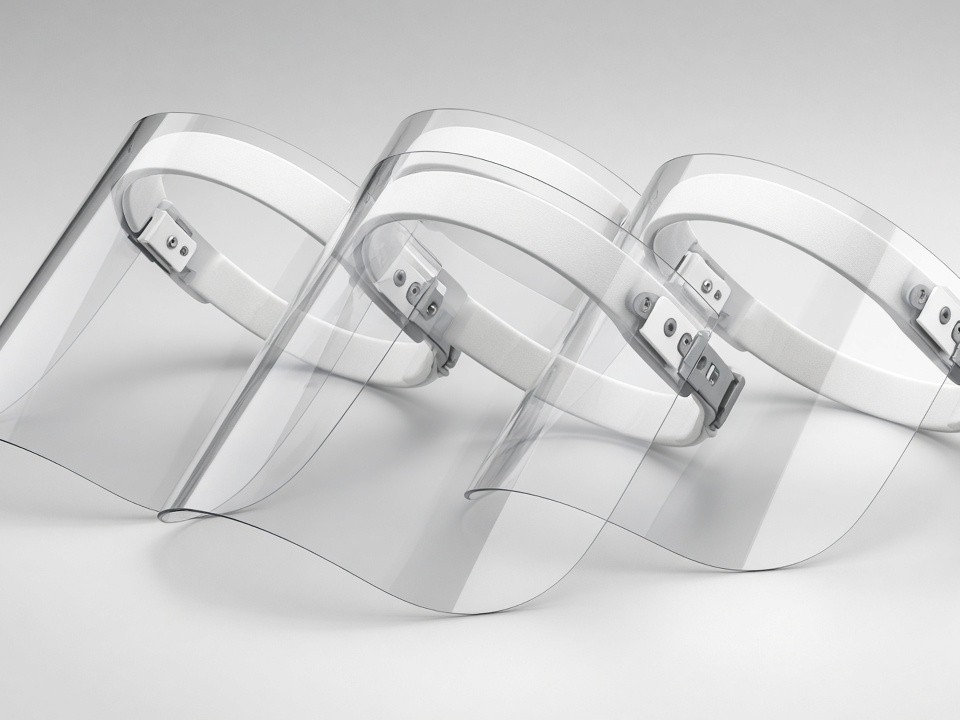
Face Shields
Cover the face and can support protection against high-volume liquid splashes and large particle impacts, depending on the model. They do not fully seal the orbital area.
Safety Goggles
Provide an orbital seal against fine particulates and chemical mists, but do not protect the skin of the face or neck. When hazards overlap, under-mask goggles combined with a full-face shield may be appropriate.
Technical specification matrix
Build the RFQ around the parameters that matter
The entries below are sourcing checkpoints, not blanket claims for every model. Exact values, certificates, test reports, and cleanroom suitability must be confirmed during RFQ and sample approval.
| Parameter | Specification / requirement |
|---|---|
| Lens / visor material | Polycarbonate / PET / Custom; confirm model selection |
| Impact rating | ANSI Z87.1 / EN 166; confirm exact rating per RFQ |
| Anti-fog / anti-scratch | Available on Request; coating details to be confirmed |
| Chemical splash | High / Medium / Low; verify against SDS and exposure conditions |
| Sealing method | Foam padding / Silicone / Open-air; depends on model |
| Ventilation | Indirect / Direct / Sealed; depends on model |
| Field of view | Full Peripheral / Standard; confirm geometry during sample review |
| Lens color | Clear / Tinted (Custom) |
| Wear compatibility | Hard hats / Respirators / Prescription glasses; confirm fit |
| Cleanroom suitability | Non-shedding / Autoclavable; To be confirmed |
| Applicable standards | CE, ISO, ANSI, GB; specify target market and documentation in RFQ |
Configuration guidance
Recommended next steps by project type
A Face Shields supplier should help you lock the use case before presenting a model. We can coordinate sample evaluation, TDS review, private labeling, and wholesale supply planning.
Impact-focused work zones
Confirm the required impact rating, visor material, field of view, and compatibility with hard hats or prescription glasses.
Splash-control applications
Provide the SDS and exposure details so chemical splash performance, sealing, ventilation, and cleaning requirements can be reviewed.
Cleanroom or controlled environments
Confirm non-shedding construction, autoclavability, cleaning protocol, and the exact cleanroom classification during RFQ.
Project procurement support
Reduce certification and delivery surprises
We help verify that reports match the target market, review material consistency across batches, and plan buffer stock to reduce production interruptions caused by PPE shortages.
Certification review
Match documentation to CE/EN, ANSI, GB, ISO, or another requirement specified in the RFQ.
Batch consistency
Audit supplier controls so visor material and finished construction remain consistent across bulk orders.
Continuity planning
Coordinate replenishment and strategic buffer stock around your production requirements.
Frequently asked questions
Answers for project and ongoing supply decisions
How do we lock specifications for a large project?
We prepare a Technical Data Sheet and Sample Approval Form for your QA team to review and sign off before bulk production begins. Target standards, material, fit, coatings, and documentation should be confirmed in the RFQ.
Can we receive a sample before a bulk order?
Yes. A sample helps validate fit, optical clarity, compatibility with existing PPE, cleaning expectations, and the practical application boundary before a wholesale commitment.
Can you support OEM or private-label Face Shields?
Yes. OEM and private-label requirements can be reviewed for distributors and industrial users seeking consistent branding and a consolidated supply chain.
How do you support batch delivery and continuous supply?
We coordinate supplier verification, batch consistency checks, documentation review, volume planning, and buffer-stock discussions around your delivery schedule. Lead times and quantities are confirmed for each project.
Calculate Total Cost
Start with a sample, then build the right quote
Share your target certification level, volume, logistics requirements, application hazards, and current cleaning process. We will help structure a cost breakdown that considers acquisition, replacement, maintenance, user productivity, and supply continuity.
Include these details in your RFQ
- ✓Target market and applicable standards
- ✓Impact, splash, dust, vapor, or biological risk profile
- ✓Material, coatings, fit, ventilation, and PPE compatibility
- ✓Sample quantity, forecast volume, delivery schedule, and OEM needs
Request a Sample + Quote
Validate the product before scaling procurement
Whether you need one sample for QA approval or a long-term Face Shields manufacturer and supplier for wholesale delivery, send your requirements for a technical review.
Available support includes specification review, sample coordination, TDS and certification discussion, OEM/private-label assessment, and supply planning.