Cleanroom and industrial surface protection
Surface Protection Films for Cleanroom & Industrial Environments
A display panel moving through a precision assembly line may fail because of one micro-scratch. In a pharmaceutical packaging zone, residue from an incompatible adhesive may cause a batch rejection. The right protection film preserves the surface without creating a new quality risk.
3
primary failure modes to control
ISO 5–8
cleanroom compatibility range
Scenario A
Controlled production
A low-tack, residue-free film may be required for optical glass or finished surfaces that are peeled inside a cleanroom. Particulate release, adhesive transfer, and static during removal become critical.
Scenario B
Storage and international transit
A shipment exposed to longer dwell times, handling, or outdoor conditions may need a different adhesion level, UV resistance, thickness, and barrier strategy than a short factory operation.
The procurement point
Specifications must follow the risk
Surface energy, exposure duration, removal environment, moisture, and static sensitivity determine the appropriate film construction. A surface protection films supplier should validate these variables before recommending a model.
Risk first
When protection fails, quality control absorbs the cost
Protecting critical surfaces during manufacturing, storage, and transit is part of the quality system. The wrong construction can create rework, contamination concerns, delayed release, or avoidable logistics claims.
Adhesive transfer
Residue on optical glass, polished metal, or finished substrates can require secondary cleaning and extend cycle time.
Outgassing
Volatile organic compounds may migrate from an unsuitable film into the cleanroom atmosphere and affect sensitive processes or environmental sensors.
Static discharge
A film that charges during peeling can threaten sensitive electronic components or attract dust to the protected surface.
Product design
Built around the substrate, process, and journey
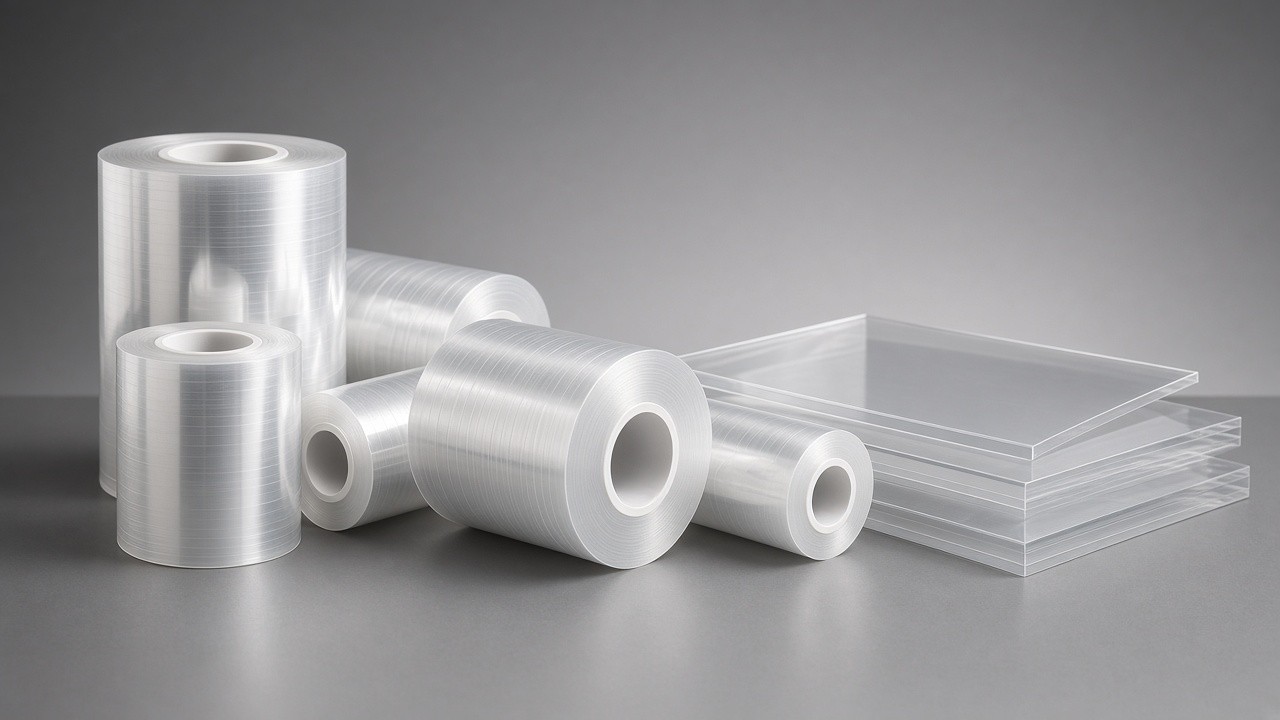
CleanroomLink sources and validates surface protection films according to the protected material and the conditions it will face. Construction may combine a PE or PET base with a pressure-sensitive adhesive selected for controlled adhesion and clean removal.
Material and structure
PE, PET, single-layer, or multi-layer co-extruded options depending on model and performance needs.
Adhesive behavior
Low, medium, or high adhesion must be matched to surface energy, texture, dwell time, and removal conditions.
Packaging and handling
Clean-room packing, controlled slitting, rewinding, and batch traceability help reduce edge dust and transport risk.
Technical specifications for RFQ review
Values marked as model-dependent must be confirmed against the substrate and process.
| Parameter | Specification details | RFQ confirmation |
|---|---|---|
| Material base | PE / PET / Custom | Depends on Model |
| Structure layers | Single-layer / Multi-layer co-extruded | Available on Request |
| Thickness | 30 µm–100 µm | Customizable |
| Surface resistance / shielding | Standard / Anti-static; shielding performance depends on model | To Be Confirmed |
| Moisture / barrier performance | Barrier requirement depends on storage and transit conditions | To Be Confirmed |
| Dimensions | Custom-converted widths and lengths | Available on Request |
| Sealing / closure method | Film application and closure method depend on line design | To Be Confirmed |
| Cleanroom grade | Compatible with ISO Class 5–8 | Process-specific confirmation |
| Sterility | Not stated as a standard feature | To Be Confirmed |
| Transparency / color | Transparent / Blue-tinted / Opaque | Depends on Model |
| Packaging | Inner PE bag + outer carton; clean-room packed | Confirm pack quantity |
| Typical applications | Optical glass, finished metals, electronics, PCB and precision assembly surfaces | Substrate validation required |
Adhesion force in N/25 mm, elongation at break, exact barrier properties, and other release criteria are confirmed during the RFQ process rather than assumed from a generic film description.
Application matrix
Match the film to the surface and exposure
The same surface protection films specifications should not be applied blindly across different substrates or supply-chain routes.
Optical glass
Low-tack, residue-free adhesion helps prevent ghosting and reduces the need for secondary cleaning.
Finished stainless steel or aluminum
Medium-tack and, where required, UV-resistant protection can help manage abrasion during assembly and transit.
Electronics and PCBs
Anti-static or ESD-safe film selection is essential where peeling could create charge or attract particulate.
Selection rules
Three questions before purchase approval
What is the substrate?
Identify material and surface energy, such as polished steel versus textured plastic.
How long will it remain applied?
A few hours in production is a different requirement from months of international shipping.
Where will removal happen?
Peeling inside a cleanroom requires attention to low-particulate release and static generation.
Boundary with adjacent products
Protection film is not structural industrial tape
Surface protection films are engineered for broad coverage, surface preservation, and clean, low-residue removal. They are not intended for structural bonding.
Industrial tapes are designed for high-strength holding or sealing. Using tape where a removable protection film is required may leave heavy residue or damage the substrate.
Quality evidence
Documentation that supports technical review
CleanroomLink works with suppliers using controlled slitting and rewinding processes to minimize edge dust and static generation. Evidence is matched to the selected model and project requirements.
Technical Data Sheets
Material composition and available performance data for the selected film.
Batch traceability
Batch-coded supply with COA available where applicable.
Standards support
Compliance reports for applicable international standards, including RoHS and REACH.
Line validation samples
Testing samples for approval on the customer’s substrate and production line.
Frequently asked questions
Answers for project procurement teams
Can you provide samples for testing on our substrate?
Yes. Sample testing is prioritized to confirm adhesion, removal behavior, residue, and compatibility before large-scale deployment.
How are specifications locked before purchase?
The substrate, surface texture, exposure duration, removal environment, dimensions, packaging, and required documentation are reviewed during the RFQ. Adhesion force and other model-specific values are confirmed against the test result.
Can you supply custom widths and lengths?
Yes. Custom-converted rolls can be prepared to fit production-line machinery and reduce material waste. Exact dimensions are available on request.
What is the lead time for custom specifications?
Standard specifications may be available for rapid dispatch. Custom-engineered films require a lead time based on the base material, conversion requirements, and order volume.
How do you support batch delivery and continuous supply?
Batch coding, agreed packaging, validated specifications, and forecast-based planning can be reviewed for repeat programs. Ongoing supply terms are confirmed according to volume and model availability.
Request a sample / quote
Build Your RFQ
Share the five details below so the technical team can recommend a suitable surface protection film, prepare validation samples, and confirm commercial availability.
- 1Substrate to be protected: for example, 304 stainless steel, acrylic, optical glass, or PCB.
- 2Required adhesion level: or a description of the surface texture and energy.
- 3Application environment: such as an ISO Class 7 cleanroom, factory floor, warehouse, or outdoor transit.
- 4Volume requirements: annual usage, per-shipment quantity, roll dimensions, and target delivery schedule.
- 5Certification requirements: such as RoHS, REACH, COA, or specific ISO-related documentation.
Ready to secure your production line?