
ESD compliance measurement for production environments
Surface Resistance Testers for ESD Compliance and Audit
When selecting a surface resistance tester supplier for a cleanroom, electronics line, or quality laboratory, the right questions start with measurement tasks, documentation, and audit readiness.
01
Will the equipment generate documentation suitable for ISO, ANSI, and IEC ESD audits?
02
Can operators move reliably between point-to-point and point-to-ground testing?
03
Does the unit support the 10V and 100V test voltages required for material characterization?
10V / 100V
Test voltage selection to confirm at RFQ stage
RTT / RTG
Point-to-point and point-to-ground workflows
Product role in the system
Turn ESD control assets into verified measurement records
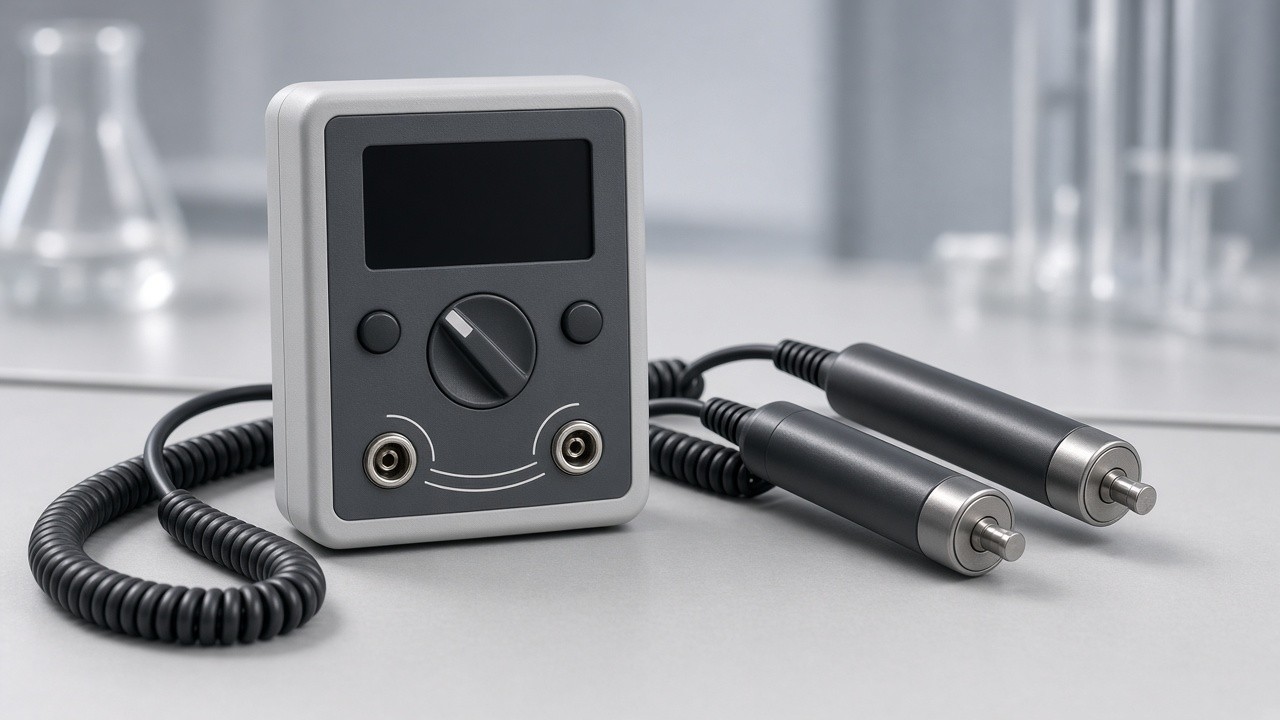
CleanroomLink provides industrial-grade surface resistance test solutions for ESD control, quality assurance, and ongoing facility maintenance. The tester is the primary diagnostic tool used to validate whether work surfaces, flooring, packaging materials, and personnel grounding systems are performing within specified resistance limits.
Reliable resistance data helps protect ESD-sensitive components during manufacturing, handling, and storage while giving quality and compliance teams evidence for internal reviews and external audits.
Upstream inputs
ESD-safe flooring, anti-static workbenches, conductive mats, and ionization equipment. The tester verifies the installation and maintenance condition of these physical assets.
Downstream outputs
Audit reports, GMP/ISO certification documentation, and internal quality control logs. Stored readings support evidence of protected-area integrity for auditors.
Application examples
Match the measurement workflow to the production risk
Electronics assembly line
Verify workbench and floor grounding paths
Perform periodic checks on workbench matting and flooring after heavy machinery vibration, maintenance, or layout changes.
Typical task: RTT and RTG verification
Medical device packaging
Confirm packaging material behavior
Test anti-static pouches and trays against internal material requirements and applicable contamination and ESD controls.
Typical task: controlled material characterization
Cleanroom floor audit
Map conductive flooring performance
Measure multiple points to identify dead zones or changes that could allow charge accumulation across the protected area.
Typical task: repeatable point mapping and records
Parameter table
Convert the use case into quotable specifications
The following surface resistance tester specifications are selection fields rather than universal claims. Final values, accessories, calibration documentation, and communications options should be confirmed during the RFQ stage.
| Measurement requirement | Specification or RFQ status |
|---|---|
| Measurement item | Point-to-Point (RTT), Point-to-Ground (RTG), Volume Resistance |
| Measurement range | 10³ to 10¹² Ω, depends on model |
| Accuracy | ±0.5 decade typical; confirm by model and application |
| Resolution | 0.1 decade |
| Sampling flow / mode | Continuous or single-button trigger; confirm required workflow |
| Response time | Less than 5 seconds, depends on model |
| Display | Digital LCD or LED, depends on model |
| Data storage | Available on request; internal memory or USB options to be confirmed |
| Communication interface | USB / RS232, to be confirmed during RFQ |
| Alarm | Visual and audible limit indicators |
| Calibration requirement | Annual calibration recommended for compliance control; NIST-traceable certificate available |
| Power | Battery or external power supply, depends on model |
| Applicable standards | ANSI/ESD S4.1, S7.1, S20.20; IEC 61340; confirm project standard in RFQ |
Integration considerations
Plan for measurement quality, not only meter delivery
Calibration control
Maintain an annual calibration cycle and retain traceable documentation. Field calibration verification support can be included depending on the selected unit.
Environmental conditions
Temperature and humidity can affect resistance readings. If climate control is limited, confirm whether ambient condition monitoring is required.
Operator technique
Train users on electrode placement, consistent pressure, and contact-surface cleaning to reduce false high-resistance readings.
Selection boundary
Specialized tester versus standard multimeter
A standard handheld multimeter is not a substitute for a specialized surface resistance tester in ESD material characterization. It typically provides a low test voltage and may not accurately measure high-resistance materials above 10⁶ Ω.
A dedicated tester applies controlled 10V or 100V potentials, helping the operator produce a more relevant and standard-aligned reading for conductive and dissipative materials. Confirm the required voltage configuration and resistance range before purchase.
Inspection and acceptance
Verify the instrument before it enters the audit process
-
1
Review the calibration certificate
Confirm that the certificate is current and traceable to national standards.
-
2
Inspect leads and electrodes
Check for fraying, stable connectivity, and suitable conductive rubber contact points.
-
3
Run a functional baseline test
Use a known resistance standard or check box to confirm readings are within the expected range.
Replacement cycle
Budget for wear parts and service life
Electrodes and probes
Replace every 12–24 months depending on use frequency and physical wear on conductive rubber contact points.
Main unit
Typically 5+ years of service when kept in a clean environment and calibrated annually.
Frequently asked questions
Answers for engineering, quality, and procurement teams
Can one surface resistance tester cover all material testing?
Most testers cover a wide range, but confirm that the selected unit supports both 10V for conductive materials and 100V for dissipative materials where required by your standards and internal method.
How should I manage calibration for auditors?
Request a current NIST-traceable calibration certificate and establish a recurring calibration schedule so the instrument remains audit-ready.
What storage conditions help protect the tester?
Store the unit in a low-humidity, temperature-controlled environment. Avoid direct contact with heavy chemicals or solvents that could degrade electrode rubber.
What performance trade-offs should be reviewed before purchase?
Compare the required resistance range, 10V/100V configuration, response time, electrode arrangement, data storage, communication interface, and calibration documentation. The best specification depends on the measurement method and audit workflow.
Can you provide a sample or demo unit for validation?
Yes. For qualified corporate accounts, demo units or samples can be arranged for testing against your materials, production conditions, and internal standards.
Project inquiry
Request a Sample + Quote
CleanroomLink supports calibrated, compliant ESD test equipment sourcing for cleanroom upgrades, new production lines, and ongoing facility audits.
Include your target industry, such as semiconductor or pharma.
Specify required ANSI/ESD or IEC standards, quantity, and calibration or documentation needs.
For technical consultation, contact or visit .
Send your measurement requirements
Share the material, resistance range, test voltage, probe configuration, standards, and data-recording needs you want to validate.