
ESD Tape supplier and custom sourcing support
Choose the right ESD Tape specification before it reaches your EPA
The correct tape depends on the substrate, adhesive, surface resistance, static decay target, cleanroom conditions, and how the tape will connect to your grounding strategy. CleanroomLink helps procurement teams and engineers match those requirements to a practical ESD tape configuration.
EPA role
Charge control for defined assembly, masking, sealing, and marking tasks.
Selection basis
Material, adhesive, resistance, decay, and contamination requirements.
RFQ support
Samples, custom slitting, documentation, and model comparison.
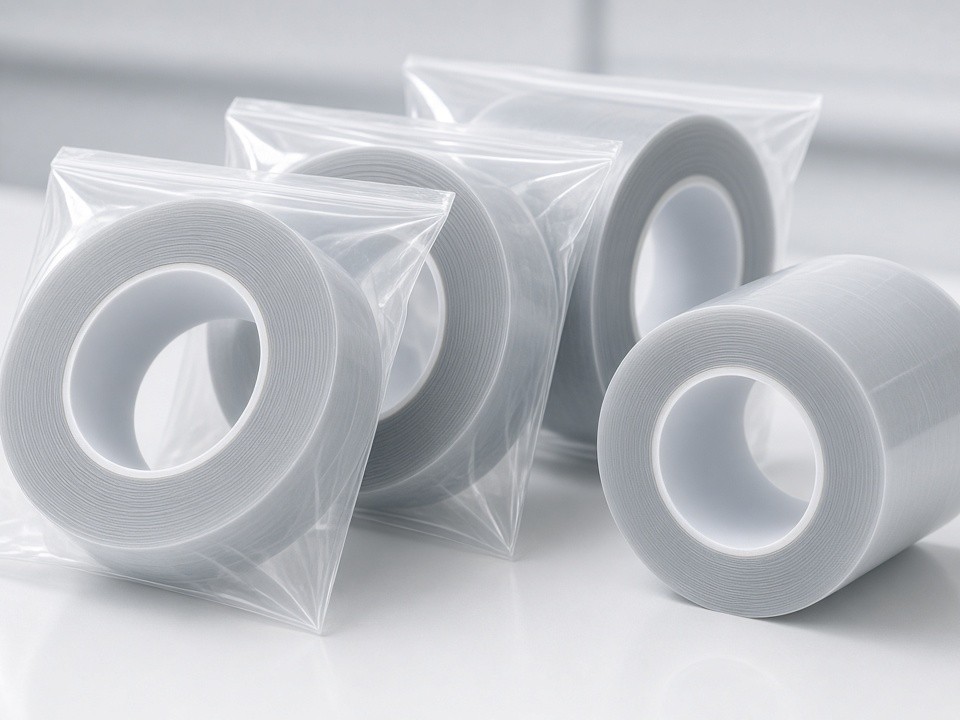
Selection principle
Do not buy on “anti-static” wording alone.
Confirm how the tape dissipates charge, how it behaves on your surface, and whether its adhesive is appropriate for your process and cleanroom class.
Use Case Story
Protect the process, not just the package
In a high-precision electronics or semiconductor facility, ESD tape may be used for PCB masking, bag sealing, component protection, temporary fixing, or EPA floor and workstation marking. Each use places a different demand on the tape. A material suitable for a short masking operation may be unsuitable for cleanroom packaging, repeated handling, or direct contact with sensitive sensors.
The tape is one element in the EPA system. Its electrical behavior should support your grounding and personnel-control procedures rather than introduce a charged surface, residue, or contamination source. That is why the selection process starts with the application and environment, then works backward to the roll specification.
Why the Standard Product Failed
Basic anti-static claims do not define process suitability
Teams often select by price per roll or a generic “anti-static” label. The result can be a tape that looks acceptable during incoming inspection but fails when exposed to the actual humidity, substrate, cleanroom controls, or handling cycle.
Adhesive outgassing
Standard adhesives may release volatile organic compounds that contaminate sensitive sensors, wafers, or cleanroom surfaces.
Resistance drift
Humidity-dependent anti-static agents can wear off, leaving the tape outside the intended dissipative range after weeks of use.
Surface charging
An unbalanced tape can generate high voltage during unwinding, creating a risk for nearby components even when the label says “anti-static.”
Engineering Specifications
Build the specification around the application
The values below are a technical starting point, not a substitute for model confirmation. Model-specific resistance, adhesion, thermal performance, and documentation should be confirmed during the RFQ stage.
| Parameter | Technical requirement or status |
|---|---|
| Material / substrate | PET, polyimide, or paper; application dependent |
| Surface resistance range | 106–109 Ω target range; confirm by model and test method |
| Volume resistance range | To Be Confirmed by model and construction |
| Static decay time | < 2.0 seconds from +1000V to +100V; confirm test conditions |
| Adhesive / grounding behavior | Low-outgassing acrylic; conductive or dissipative option; grounding method depends on EPA setup |
| Dimensions | Custom widths and lengths available; confirm core, roll diameter, and tolerance |
| Color | Clear, amber, or custom printing |
| Load / wear performance | Depends on model; confirm peel strength, heat resistance, abrasion, and duty cycle |
| Test methods | Surface resistance per ANSI/ESD S11.11; static decay conditions and adhesion tests to be confirmed |
| EPA applicability | Suitable only when selected for the defined EPA process, grounding path, substrate, and contamination controls |
| Usage life | Verified through accelerated aging tests; duration depends on model and environment |
| Applicable standards | ANSI/ESD S20.20 and IEC 61340-5-1 requirements to be matched and documented per project |
Improved Configuration
Go beyond the roll with a controlled tape configuration
A reliable ESD tape solution combines the substrate, adhesive, electrical behavior, packaging, and verification record. The right configuration should fit the EPA procedure in which it will be used.
1. Match the material pair
Select the adhesive and backing for bags, PCB masking, component protection, or floor-zone marking rather than using one general-purpose grade.
2. Control contamination risk
For ISO Class 5 and cleaner environments, request low-particle and low-outgassing variants where the process requires them.
3. Match the documentation
Request available test reports, certificates of conformance, and standard references that align with your internal audit trail.
Verification Steps
Verify the tape before production release
A sample evaluation should reproduce the conditions that matter in your EPA. This creates a more useful acceptance record than relying on a generic product label.
01
Initial resistance
Measure performance in a controlled environment and compare results with the selected specification.
02
Adhesion consistency
Check peel behavior, holding performance, and whether residue remains on glass, metal, PCB, or other target surfaces.
03
Environmental stability
Evaluate humidity and relevant temperature conditions to determine whether the tape remains functional in your climate.
Ordering Notes
Know the boundary: ESD Tape is not standard masking tape
Standard masking tape is generally an insulator and can generate substantial voltage when pulled from a roll. ESD tape is engineered with a conductive or dissipative layer that allows charge to bleed toward an appropriate ground path and helps reduce triboelectric risk.
If the tape will contact PCBs, sensors, wafers, or other static-sensitive parts, do not substitute standard masking tape. Confirm the tape’s electrical behavior, adhesive residue, and process suitability. For wholesale or custom orders, request samples first when the substrate, cleanroom class, or temperature exposure is critical.
Lead-time guidance
Standard rolls may be available from stock. Custom slitting and length requirements typically add 3–5 business days, subject to model and order confirmation.
Frequently Asked Questions
ESD tape sourcing questions
How do I choose the right specification?
Start with the application, substrate, EPA conditions, resistance target, static decay requirement, adhesive behavior, and contamination limits. Lower resistance may be needed for high-sensitivity electronics, but the final range must be confirmed for the selected model and grounding method.
What is the minimum order quantity?
MOQ depends on the tape model, roll dimensions, slitting requirement, printing, and customization. Confirm the applicable MOQ during the RFQ stage.
Can I request samples?
Yes. Samples can be requested for evaluation of peel strength, residue, resistance, and compatibility with your specific materials before a bulk purchase.
Do you offer custom widths, lengths, colors, or printing?
Custom widths and lengths are available subject to model and production requirements. Clear, amber, and custom printing options should be confirmed with your requested construction.
What certification or audit documents are available?
Available test reports and certificates of conformance can be matched to the requested standards and model. Specify your ANSI/ESD, IEC, ASTM, or internal documentation requirements in the RFQ.
What is the expected delivery time?
Stock availability varies by model. Custom slitting and length requirements typically add 3–5 business days, while custom constructions and documentation requirements are to be confirmed.
Discuss Your Application
Build Your RFQ
Share five details so the technical team can recommend a suitable ESD tape configuration and identify which specifications require confirmation.
- 01Application: PCB masking, floor marking, bag sealing, fixing, or another use.
- 02Environment: cleanroom class, temperature, humidity, and process exposure.
- 03Required standards: ANSI/ESD S20.20, IEC 61340-5-1, ASTM, or internal requirements.
- 04Volume: annual usage, roll quantity, MOQ expectations, and target delivery.
- 05Technical constraints: residue limits, substrate, width, length, color, adhesion, or heat resistance.
Request a technical recommendation
Send your application details to start a specification review, sample request, or custom ESD tape quotation.