Cleaning & Maintenance Systems for Controlled Environments
Maintaining ISO-certified environments requires more than high-quality consumables. CleanroomLink integrates the tools, chemicals, documentation, and supply planning needed to keep your facility within particulate and microbial limits.
ISO-aligned
Product selection by cleanroom classification
Batch-backed
COA and COC documentation support
Consolidated
One coordinated maintenance supply stream
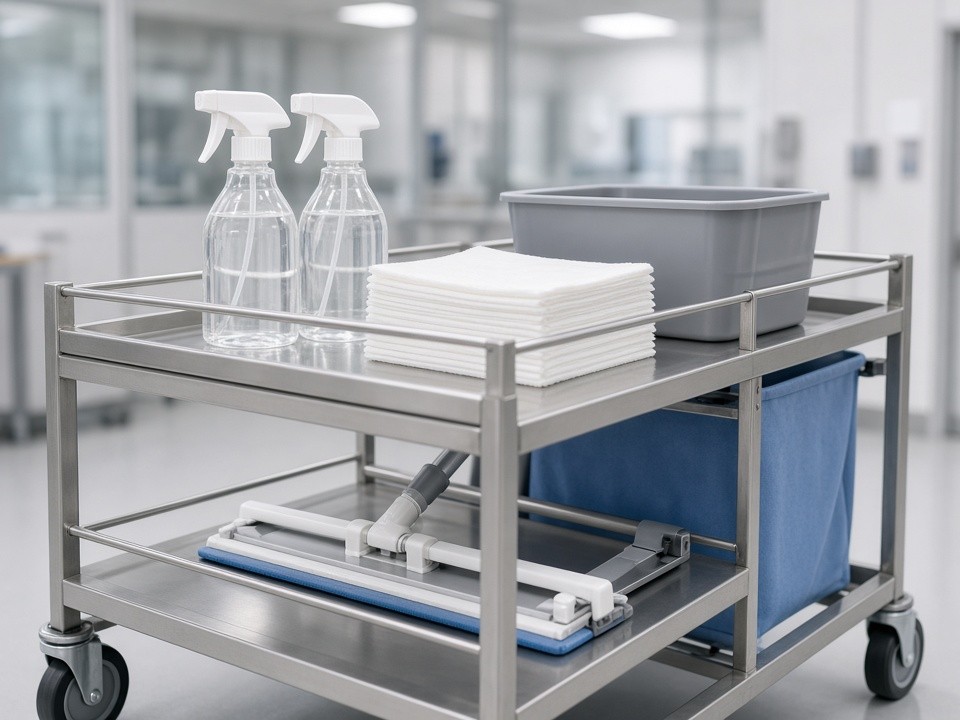
Designed for operational consistency
Align wiping media, chemicals, tools, cleaning frequency, and validation requirements in one practical procurement plan.
Control the maintenance chain before it becomes a compliance risk
Sourcing wiping media, specialized detergents, and filtration-rated tools from multiple vendors creates unnecessary complexity for QA and procurement teams.
Different lead times, varying certification documentation, and fragmented shipping can increase the risk of supply gaps in your contamination control program.
CleanroomLink consolidates your cleanroom maintenance requirements into a documentation-backed supply stream. We map your facility’s ISO class and process needs to the correct technical specifications, helping every mop, wipe, and disinfectant arrive with the required test reports and compliance certificates.
The consumables and infrastructure behind a controlled cleaning program
Select each category according to particulate sensitivity, microbial risk, residue tolerance, and the validation requirements of your production environment.
Wiping materials
Polyester, microfiber, and non-woven wipes processed for low linting and high sorbency across critical surface cleaning tasks.
Chemicals and agents
IPA and DI-water blends, surfactants, neutral detergents, and specialized surface cleaners selected for residue-free performance.
Disinfection control
Validated disinfectants and sporicides, including rotary-use options to support microbial control and reduce resistance risk.
Tools and infrastructure
Electropolished stainless steel or autoclavable plastic mops and buckets, cleanroom brushes, squeegees, carts, containment systems, and HEPA-filtered vacuums.
A repeatable program for daily cleaning, deep cleaning, maintenance, and recovery
Cleaning frequency and material selection should follow the room classification, production activity, contamination type, and approved validation protocol.
Daily routine cleaning
Use defined wipe and mop patterns for floors, walls, work surfaces, pass-throughs, and frequently touched points. Apply the approved chemical in the correct sequence and record completion against the room schedule.
Periodic deep cleaning
Address accumulated soil, difficult-to-reach surfaces, equipment exteriors, corners, and residues that routine cleaning may not remove. Select detergents and tools that support effective recovery without introducing additional particles or chemical buildup.
Equipment and tool maintenance
Inspect mop heads, buckets, brushes, squeegees, carts, vacuum systems, and storage areas. Replace worn or shedding components, control clean-to-dirty movement, and keep supplies protected during transport.
Contamination recovery
For a particulate, microbial, or process-residue event, isolate the affected area, identify the contaminant, select validated wipes and chemistry, complete the recovery sequence, and verify the area before release.
Match the cleaning method to the room, risk, and validation requirement
The matrix below provides a starting framework. Final selection should follow your approved cleaning validation, chemical compatibility assessment, and site-specific SOPs.
| Cleaning area | Frequency | Contamination type | Recommended wiping material | Cleaner | Disinfectant | Tools | Sterile product | Recommended workflow |
|---|---|---|---|---|---|---|---|---|
| ISO 5 / Class 100 | Daily and as defined by SOP | Particles and fibers | Laser-cut polyester wipes | Validated low-residue cleaner or DI-water-compatible process | 70% IPA / DI water | Cleanroom mop, bucket, sterile wipes | Mandatory | Remove visible particles, clean from clean-to-dirty, disinfect, then verify against the approved release criteria. |
| ISO 7 / Class 10,000 | Daily and weekly deep clean | Particles and bioburden | Microfiber mops and wipes | Neutral detergent or validated surface cleaner | Quaternary ammonium option | Mop system, bucket, squeegee, dedicated brushes | Recommended | Detergent clean, rinse or remove residue as specified, apply disinfectant, and document the cycle. |
| ISO 8 / Class 100,000 | Weekly and according to site schedule | Dust and general soil | Low-lint non-woven wipes | Neutral detergent | Site-approved disinfectant where required | General cleanroom mop, bucket, cart | Optional | Remove dust and soil, clean high-to-low, manage used materials, and inspect the area before closeout. |
| Equipment interior | Per batch or approved intervention | Process residue and product carryover | Validated swabs and specialized wipes | Validated solvent or process-specific cleaner | As required by the validated procedure | Swabs, brushes, controlled containers | Mandatory | Disassemble as approved, clean contact surfaces, control residue, inspect, and release only after documented verification. |
| Contamination recovery zone | After event and before release | Particles, microbes, or unknown contamination | Sterile polyester wipes and absorbent materials | Validated detergent or residue-compatible cleaner | Disinfectant or sporicide selected by risk assessment | Dedicated mop, bucket, brushes, HEPA-filtered vacuum | Mandatory where required by classification | Isolate, identify, remove contamination, disinfect or sporicide-treat, control waste, verify, and document release. |
Different cleanroom grades require different evidence
A material that is suitable for a lower-grade room may not meet the sterility, particle, microbial, or residue expectations of a critical zone.
Critical environments
ISO 5 and comparable critical areas generally require tighter control of sterile products, particle shedding, chemical compatibility, and release evidence.
Controlled support areas
ISO 7 and ISO 8 areas can use different wipe and chemical specifications, but frequency, bioburden control, and residue removal must still align with site procedures.
Industry-specific controls
Pharmaceutical operations may prioritize GMP and microbial validation, while electronics production may require ESD-safe protocols and strict particulate control.
Residue management
Choosing compatible detergents, disinfectants, and rotation chemistry helps minimize buildup and reduce the need for disruptive deep-cleaning interventions.
From facility assessment to stable replenishment
STEP 01
Requirement audit
Analyze your cleanroom classifications, current protocols, contamination risks, and annual usage to identify a compliant product mix.
STEP 02
Sourcing and quality control
Source from vetted manufacturers and conduct pre-shipment checks against the required technical parameters.
STEP 03
Documentation package
Compile relevant test reports, Certificates of Analysis, Certificates of Conformance, and regulatory documents with the order.
STEP 04
Logistics coordination
Consolidate goods from multiple origins, reduce administration, and stabilize replenishment cycles across your maintenance program.
Make audit preparation part of the supply process
For QA and EHS managers, purchasing risk often comes from missing or inconsistent evidence. CleanroomLink helps connect each product specification with the documentation needed for internal review and external audits.
Certification transparency
Relevant batches can be supplied with COA and COC documentation.
Standards alignment
Product sourcing can be aligned with applicable EN, ASTM, ISO, GMP, or ESD-safe requirements.
Residue control guidance
Select chemistry that supports effective disinfection while limiting chemical buildup and avoidable deep-cleaning events.
Build a cleaner, more reliable procurement program
Whether you are scaling a new facility or optimizing current maintenance supplies, our team can help balance performance requirements, documentation, lead times, and budget constraints.
Include these details in your inquiry:
- ISO classification and cleanroom areas
- Contaminants and process residues you manage
- Current cleaning protocol or SOP requirements
- Typical annual volume and replenishment needs
Email:
Office address:
Start your consultation
Share your requirements and receive a consolidated sourcing plan for your cleanroom cleaning and maintenance program.