Controlled-environment cleaning supply
Industrial Surface Cleaners for Controlled Production Environments
Select a surface cleaning solution that supports contamination control, material compatibility, and repeatable production workflows. CleanroomLink helps procurement, engineering, quality, and compliance teams source the right formulation for cleanrooms and precision manufacturing.
Operational risk
A cleaner affects more than housekeeping
In cleanroom and precision manufacturing environments, the wrong surface cleaner can leave residues, accelerate material fatigue, or create recovery-time issues after cleaning. Those effects can undermine ISO class control, interrupt production, and increase the risk of product contamination.
The correct solution must balance chemical efficacy with the surface, process, and documentation requirements of your facility. CleanroomLink provides access to surface cleaners selected around your contamination control strategy rather than a one-size-fits-all product list.
Product structure
Match formulation, delivery format, and surface requirements
A practical sourcing decision starts with how the product is built and used. Ready-to-use solutions prioritize dosing consistency and reduce dilution errors. Concentrates can reduce shipping and storage cost when a facility has controlled dilution procedures or automated dispensing. The chemical base, residue profile, volatility, packaging, and documentation level should then be matched to the materials and standards in your process.
Product format
RTU spray formats support repeatability. Concentrates may suit high-volume operations with validated dilution SOPs.
Chemical function
Detergent, disinfectant, sporicidal, or solvent functions should be specified separately according to the contamination risk.
Material contact
Stainless steel, ESD mats, glass, epoxy, polycarbonate, and other polymers may require different compatibility evidence.
Evidence package
TDS, COA, sterility records, validation reports, and efficacy data should be confirmed against the destination market and facility standard.
Technical specifications
Parameters to confirm at RFQ stage
The values below define the selection framework. Exact composition, contact time, compatibility results, and certification status depend on the model and application. Items marked for confirmation should be included in your RFQ.
| Parameter | Technical consideration | RFQ status |
|---|---|---|
| Product type | Detergent, disinfectant, sporicide, or solvent | Depends on Model |
| Main composition / material | Alcohol-based, quaternary ammonium, peracetic acid, proprietary, or other specified base | Available on Request |
| Concentration or formulation | RTU or dilutable; dilution ratio must be defined where applicable | To be Confirmed |
| Applicable surfaces | Stainless steel, ESD mats, glass, epoxy, polycarbonate, and other polymers | Confirm surface list |
| Contact time | Set according to required cleaning or microbial reduction claim | To be Confirmed |
| Residue characteristics | Low-residue, non-rinsing, or deionized-water compatible options | Depends on Model |
| Sterility | Non-sterile or sterile, including gamma-irradiated options where specified | To be Confirmed |
| Cleanroom grade | ISO 5 to ISO 9 and GMP Grade A-D requirements may be considered | Target standard required |
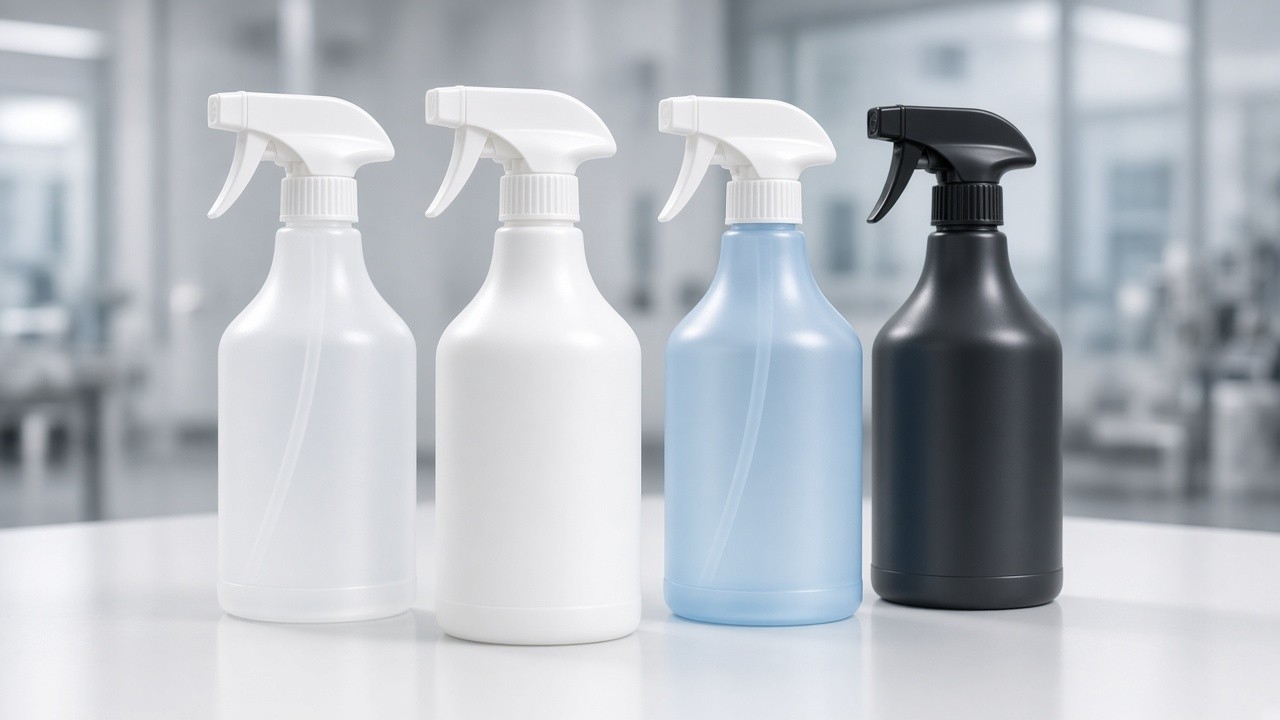
| Packaging specification | 500 ml trigger spray, 5 L jug, 20 L drum, or custom packaging | Custom / To be Confirmed |
| Compatibility | Material stress and corrosion evidence for the actual surface set | Reports Available on Request |
| Storage conditions | Ambient, controlled, or hazardous-material storage requirements | Depends on Model |
| Typical uses | Cleanroom surfaces, precision manufacturing areas, equipment exteriors, and controlled production zones | Confirm application |
Contact time, material compatibility, efficacy claims, and certification documents are supplied through the applicable technical data sheet and RFQ review. No performance value should be assumed without model-specific confirmation.
Lifecycle cost
Price per liter is only the starting point
A surface cleaner’s total lifecycle cost includes preparation labor, wiping and drying time, rinsing requirements, waste handling, replacement of affected materials, and production time lost during recovery or deep cleaning.
Material protection
Reduce avoidable replacement
A formulation matched to stainless steel, epoxy, polycarbonate, or other surfaces can help limit degradation and premature equipment replacement.
Labor efficiency
Control preparation and wiping time
RTU products can reduce dilution risk, while a suitable concentrate may lower unit and storage cost in a validated high-volume operation.
Compliance value
Buy the evidence you need
Certification and validation requirements influence price. CleanroomLink helps avoid paying for documentation that is not required while preserving the evidence your process needs.
Initial cost
Choose the supply model around your workflow
Upfront pricing is shaped by formulation, concentration, package size, order volume, certification level, and whether the product is ready to use or supplied as a concentrate.
Ready-to-use solution
Suitable where consistent application and low preparation risk are more important than minimizing shipping volume.
Concentrated solution
May suit larger facilities with controlled dilution, trained operators, and dispensing equipment. Ratio and validation must be confirmed.
Custom or private-label supply
Available for qualified bulk programs, distributors, and facilities requiring custom packaging or defined documentation.
Replacement and cleaning cost
Residue can create a recurring cost loop
A cleaner that leaves a film may attract particulates and trigger extra wiping, rinsing, or periodic deep-cleaning cycles. If the current product requires repeated rinsing or extended drying, the apparent low purchase price may be offset by labor and process interruption.
During sourcing, compare residue behavior, evaporation rate, required rinsing, packaging waste, and expected consumption—not only the price per container.
Cost review questions
- ✓How many applications are required per shift or production cycle?
- ✓Does the product require dilution, rinsing, or a second wipe?
- ✓Which surfaces or components could require earlier replacement?
- ✓What documentation is mandatory for release and audit readiness?
Downtime factors
Protect production availability after cleaning
Downtime is influenced by drying time, contact time, rinsing, residue correction, ventilation, hazardous-material procedures, and the time needed to restore the required environmental condition. These factors should be included in the supplier comparison.
Evaporation profile
Fast evaporation may reduce drying time, but the correct choice depends on surface, ventilation, and safety requirements.
Contact time
Cleaning, disinfection, and sporicidal claims can require different contact times. Confirm the applicable model data.
Rinse requirement
A non-rinsing or low-residue option may shorten recovery, subject to process validation and material compatibility.
Release procedure
Define the inspection, monitoring, and release steps required before the area returns to production.
Application fit
Select by function, not by label alone
Surface cleaners, disinfectants, and sporicides are related but not interchangeable. The required product depends on whether the task is physical soil removal, microbial reduction, or a validated sporicidal rotation.
General cleaning
Use a suitable detergent or surfactant system for particle and soil removal without damaging coatings, seals, or sensitive surfaces.
Disinfection
Choose a product with efficacy data relevant to the target organisms and the standards required by your facility or market, such as applicable EN or ASTM methods.
Sporicidal control
Where spores are part of the risk assessment, specify a sporicidal agent and rotation strategy rather than assuming a general surface cleaner provides that claim.
Compatibility boundary
Verify the effect of the chemical base on polycarbonate, ESD materials, epoxy, coatings, and stainless-steel grades. Stress-cracking, discoloration, or oxidative corrosion must be assessed before routine use.
Frequently asked questions
Clarify the model before you place an order
How do I confirm the right model if my specifications are incomplete? +
Submit your surface material list, ISO class or GMP grade, industry, current cleaning SOP, target function, and any known residue or compatibility issue. We can then cross-reference the available formulations and identify which parameters require testing or confirmation.
What information affects the quoted price? +
Volume, RTU or concentrate format, concentration, package size, hazardous-material classification, destination, required documentation, sterility, validation support, and delivery schedule can all affect pricing.
Do you support custom formulations or private labeling? +
Custom packaging, bulk supply, and private-label programs may be available for qualified applications. Final feasibility depends on the requested chemistry, volume, packaging, target standards, and documentation requirements.
Can a surface cleaner replace a disinfectant or sporicide? +
Not automatically. Cleaning removes soil and particles, while disinfection and sporicidal treatment require separate efficacy claims, contact times, and process controls. Confirm the intended function before selecting a product.
Calculate total cost
Get a precise Surface Cleaners quotation
To compare lifecycle cost and receive a formulation recommendation, submit the details below. The more complete your application data, the more accurately we can assess compatibility, documentation, packaging, consumption, and delivery.
Please include
- Application environment, industry, ISO class, or GMP grade
- Target standards, such as applicable EN, ASTM, CE, or local requirements
- Required specifications, including function, residue profile, sterility, and chemical base
- Surface materials and any known compatibility concerns
- Estimated monthly or annual quantity and required delivery timeline
Application and RFQ details
Share your environment, target standard, specifications, expected quantity, and delivery date for a tailored review.