
Cleanroom filtration procurement
HEPA Terminal Units for Controlled Environments
CleanroomLink connects certified manufacturing capacity with the terminal filtration requirements of pharmaceutical, semiconductor, food processing, and other controlled environments.
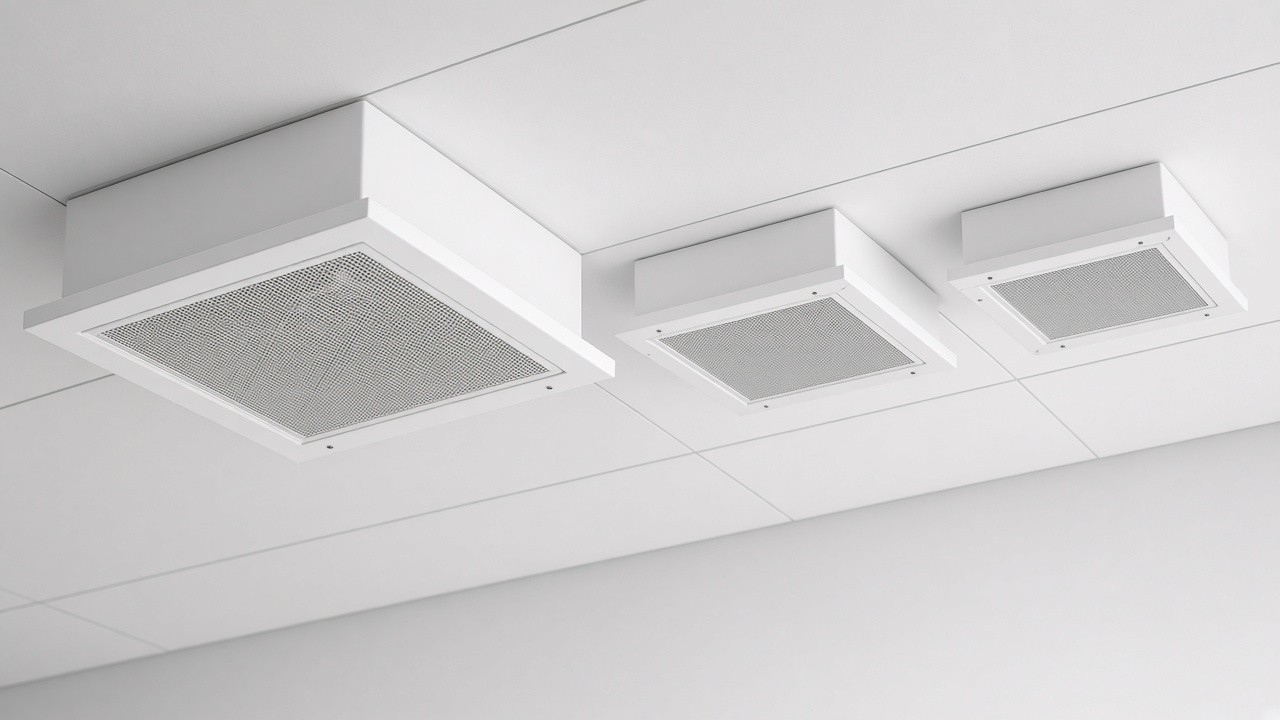
H13–U15
Efficiency range to confirm by model
80–120 Pa
Reference initial resistance range
Engineering FAQ
The specification questions that affect your purchase
Which efficiency should I specify?
H13, H14, or U15 under EN 1822 may be applicable. The final grade depends on room classification, process risk, airflow, and validation requirements.
What resistance and airflow should I allow?
Air volume and pressure drop must be balanced against the HVAC fan curve. Rated airflow, initial resistance, and recommended final resistance require RFQ confirmation.
Will the unit fit my cleanroom?
Housing dimensions, inlet diameter, ceiling grid, clamping method, and seal interface must match the installed system drawings.
Which seal is appropriate?
Gel seal is preferred where leak control is critical. Mechanical compression can be a practical choice for compatible, lower-classification installations.
01 / System Compatibility
Integrating the terminal unit with the air distribution system
A HEPA terminal unit is the final interface between the cleanroom air distribution system and the controlled space. Correct selection requires alignment between ducting, ceiling construction, filtration media, and the testing method.
CleanroomLink supports procurement for T-bar ceiling grids, hard-lid construction, and gel-seal systems. We review housing dimensions, inlet diameters, clamping mechanisms, and access requirements to reduce bypass leakage and support consistent airflow across the terminal array.
Ceiling interface
T-bar, hard-lid, or gel-seal compatibility.
Duct connection
Inlet diameter and damper requirements.
Integrity testing
PAO or DOP access for field verification.
02 / Connected Products
Build the filtration assembly, not just the housing
A dependable cleanroom installation depends on the compatibility of every connected component.
HEPA / ULPA filter elements
Media and frame configurations compatible with the selected terminal housing.
Ceiling grid components
Gaskets, T-bars, and hanging hardware for a secure, airtight installation.
Air shower and pass-box systems
Supporting equipment for maintaining pressure differentials and material flow control.
Monitoring sensors
Differential pressure gauges and particle counters for service-life monitoring.
03 / How to Select
Balance efficiency, resistance, and airflow
Higher filtration efficiency can influence pressure drop and fan energy. The correct selection is not the highest grade in isolation; it is the grade and terminal configuration that satisfy the room risk profile at the required airflow.
Efficiency
H13–U15
Select according to classification, process sensitivity, and required standard.
Airflow
Project-based
Confirm room volume, air changes, inlet size, and fan capacity.
Resistance
RFQ check
Check initial and final resistance against the available static pressure.
Selection boundary: terminal unit versus replacement filter element
Specify a complete HEPA terminal unit when the project requires a ceiling-integrated housing, duct interface, seal arrangement, and field testing access. Specify a replacement HEPA filter element when the existing housing is already confirmed compatible. Replacing only the element does not resolve an incorrect housing dimension, damaged seal channel, or unsuitable duct connection.
04 / Parameter Table
Final specification checklist for RFQ confirmation
Use this table as the final technical review tool. Model-specific values, drawings, and documentation should be confirmed before purchase order release.
| Parameter | Reference specification | RFQ confirmation |
|---|---|---|
| Filter grade | H13, H14, or U15 under EN 1822 | Confirm by room classification |
| Filter efficiency | Depends on selected grade and model | To be confirmed |
| Rated airflow | Based on room volume and HVAC design | Required in RFQ |
| Initial resistance | Reference: 80–120 Pa at rated flow | Confirm by model and airflow |
| Recommended final resistance | Reference: 2× initial resistance | Confirm with maintenance policy |
| Filter media | Glass fiber or PTFE | Depends on model |
| Housing material | Powder-coated steel or SUS304 stainless steel | Custom / To be confirmed |
| Dimensions | Matched to ceiling grid and duct interface | Drawing required |
| Seal method | Gel seal or mechanical compression | Select by application |
| Temperature / humidity | Depends on media, seal, and housing model | To be confirmed |
| Dust-holding capacity | Depends on filter media and model | Available on request |
| Leak testing | PAO/DOP scan test ports where specified | Confirm test method and report |
| Applicable system | T-bar, hard-lid, or gel-seal cleanroom systems | Confirm installation drawings |
05 / Interface Requirements
Protect the air-tight boundary at the ceiling
The interface between the terminal unit and ceiling is a common contamination-control risk. The selected assembly should support installation, balancing, and periodic integrity testing.
PAO / DOP injection ports
Support field challenge testing and documented filter integrity checks.
Gel-seal channels
Provide a high-security sealing interface where bypass control is critical.
Adjustable dampers
Allow airflow balancing across a multi-terminal cleanroom array.
06 / Application Packages
Package the unit around the industry risk profile
Pharmaceutical and GMP
Consider stainless steel construction, rounded corners for cleaning, gel sealing, and documentation suitable for validation activities.
Documentation: confirm scope at RFQ
Electronics and semiconductor
Review low-boron, anti-static, and ultra-low-outgassing material requirements alongside airflow and particle-control targets.
Materials: custom / to be confirmed
Food processing
Consider corrosion-resistant coatings, cleanable surfaces, and sealants aligned with the facility’s hygiene requirements.
Finish: confirm environmental exposure
07 / Quality Control
Traceable supply for audit-ready projects
As a HEPA terminal units supplier and sourcing partner, CleanroomLink coordinates the technical records required to evaluate each model before shipment.
Test reports
Individual efficiency or scan test reports when included in the confirmed supply scope.
Material traceability
Housing and gasket material certificates available on request, subject to model.
Standards review
Review against EN 1822, ISO 14644, GMP, CE, or applicable GB requirements.
08 / FAQ
Questions buyers ask before placing an order
How do I choose between gel seal and mechanical compression?
Gel seal is generally selected when bypass control and high-classification performance are priorities. Mechanical compression may be more cost-effective for compatible lower-grade environments. Confirm the ceiling and maintenance design before selection.
What is the minimum order quantity?
Minimum order quantity depends on the model, housing size, finish, and custom fabrication scope. MOQ is available on request and should be confirmed in the quotation.
Can you provide a sample unit?
For larger projects, a single-unit sample can be discussed for site fit-up, airflow review, and validation before bulk production. Sample availability and cost are to be confirmed.
Can you customize dimensions and materials?
Custom housing sizes, inlet arrangements, coatings, stainless steel construction, seal types, and testing provisions may be available. Send ceiling and duct drawings for a technical review.
Which certification and quality documents are available?
Depending on the selected model and supply scope, documents may include filter test reports, material certificates, and compliance information related to EN 1822, ISO 14644, GMP, CE, or GB standards. Confirm the required document pack during RFQ.
What is the lead time for standard and custom units?
Standard configurations may have shorter lead times. Custom dimensions, sheet-metal fabrication, special finishes, and documentation can extend production. Lead time is to be confirmed against the final specification and project schedule.
09 / Build a Complete Solution
Compare Options for your cleanroom project
Tell us your budget, target standard, room classification, airflow, ceiling system, and project timeline. We will return a standard option and an upgrade option matched to your technical requirements.
Premium Compliance
Higher-grade materials, international certification scope, and documentation for audit-heavy environments.
Cost-Optimized
Performance-matched alternatives that meet the confirmed specification while controlling capital cost.
Request a technical quotation
Share your drawings, target standard, airflow, filter grade, quantity, and required documents. Our team will review the fit and return the next procurement steps.