
Industrial air filtration sourcing
Industrial Filter Housings for Critical Cleanroom Environments
CleanroomLink connects engineering requirements with dependable filter housing supply for pharmaceutical, semiconductor, and precision manufacturing facilities. Select the right structure, seal, material, and airflow capacity before you request a quote.
Quick Buyer Fit
Best for
- ✓New cleanroom construction and HVAC upgrades
- ✓Projects requiring specific ISO, EN, or ASTM compliance
- ✓Procurement teams seeking consolidated supply
Not ideal for
- ×Residential or low-grade office ventilation
- ×Temporary or non-regulated DIY setups
- ×Single-unit retail or consumer replacement parts
Where It Works
Where filter housings define system performance
The housing is the structural backbone of an air purification system. It maintains the seal between the filter media and ductwork, helping prevent bypass leakage. In high-stakes environments such as ISO Class 5–8 cleanrooms, a housing failure can contribute to non-compliance, particle-count spikes, and product contamination.
Our Filter Housings supplier and sourcing team reviews airflow, pressure, leakage, maintenance access, and HVAC layout requirements before recommending a configuration.
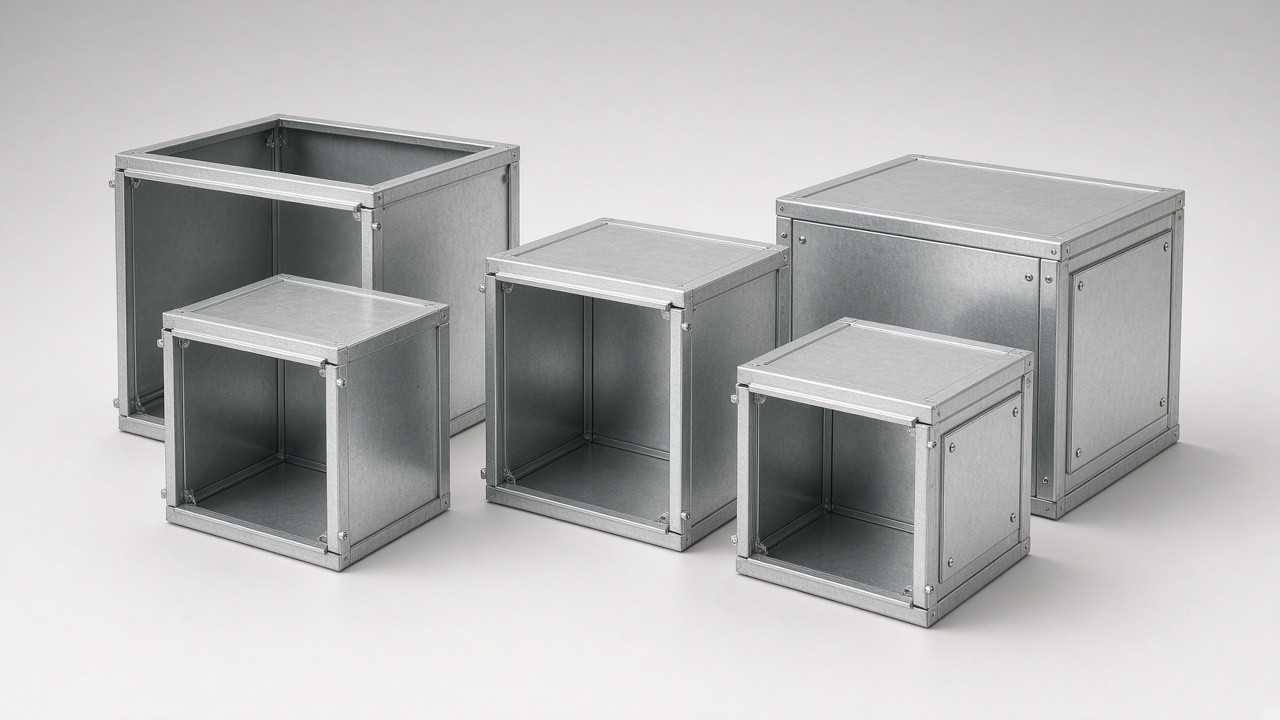
Material & Construction
Construction details that support cleanroom integration
Filter housings should be selected as part of the filtration system rather than as isolated sheet-metal components. The frame, seal interface, finish, and duct connection must work together under the required airflow and pressure conditions.
Structural rigidity
Reinforced frames help limit deformation during high-pressure operation and support stable filter seating.
Material and finish
Anodized aluminum or stainless steel options can be reviewed according to cleaning chemistry, corrosion exposure, and shedding concerns.
Seal and interface
Gel-seal or gasket-seal interfaces must match the selected filter and align precisely with the ductwork and maintenance access plan.
Parameter Table
Filter housing specifications to confirm at RFQ stage
Use these fields against your engineering drawings, existing unit, or HVAC schedule. Model-specific values must be confirmed before production.
| Parameter | Specification details | RFQ confirmation |
|---|---|---|
| Filter grade | H13/H14 under EN 1822 or MERV 17–20 | Confirm target standard and grade |
| Filter efficiency | Depends on selected filter grade and model | Required efficiency to be confirmed |
| Rated airflow | Custom per system capacity | Provide design airflow and operating range |
| Initial resistance | Depends on media density and configuration | Available on request |
| Recommended final resistance | Typically 2× initial resistance | Confirm with system designer |
| Filter media | Borosilicate glass fiber or PTFE membrane | Confirm media compatibility |
| Housing material | Anodized aluminum, stainless steel 304, or 316L | Confirm grade and finish |
| Dimensions | Custom to filter size, flange, and duct interface | Provide drawings or measured dimensions |
| Seal method | Gel seal or gasket seal | Confirm filter and housing interface |
| Temperature / humidity | Available on request | Provide operating limits |
| Dust-holding capacity | Depends on media and model | To be confirmed for selected filter |
| Leak testing | PAO/DOP scan-port availability | Confirm test method and report needs |
| Applicable systems | AHU, in-line duct systems, and cleanroom HVAC applications | Confirm installation position and access |
How to Select
Balance efficiency, resistance, and airflow
A high-efficiency filter can increase static pressure. The housing, filter, fan capacity, and seal must therefore be reviewed as one operating system.
1. Start with airflow
Provide design airflow, operating range, duct dimensions, and available fan pressure so the rated configuration can be matched to the HVAC layout.
2. Set the efficiency target
Select the required grade and standard first, then review initial resistance and final resistance limits with the system engineer.
3. Match the seal and material
Gel seals suit critical pharmaceutical and semiconductor applications, while stainless steel should be considered for VHP or chemical sterilization exposure.
Standards & Documentation
Documentation that supports approval and traceability
- Test reports: Leakage testing and pressure-drop documentation, subject to the selected configuration.
- Standards alignment: ISO 14644, EN 1822, or GB requirements can be reviewed as requested.
- Material traceability: Stainless steel material certifications are available on request.
- QA planning: Define inspection, sampling, and reporting requirements during the RFQ stage.
Application Boundary
Filter Housings vs. Terminal Filter Modules
Standard filter housings are generally installed in-line or within an AHU as primary or secondary filtration stages.
Terminal Filter Modules are ceiling-mounted units that contain the final HEPA or ULPA filter at the cleanroom air-entry point. If your project needs ceiling-level final air distribution, specify “Terminal Modules” in the RFQ to avoid a hardware mismatch.
Procurement Risk Control
Common buying mistakes to avoid
Ignoring the seal interface
A gel-seal filter paired with a gasket-seal housing can contribute to site-acceptance failures. Confirm both interfaces before ordering.
Overlooking maintenance access
Insufficient clearance for filter changes can increase long-term operation and maintenance costs.
Assuming universal compatibility
Verify flange dimensions, mounting holes, filter size, and duct interfaces against the existing installation. “Standard” is rarely universal.
FAQ
Questions from engineering and procurement teams
What is the difference between H13, H14, and MERV 17–20?
They represent different efficiency classifications under different rating systems. The applicable grade and test standard should be confirmed against your cleanroom and project requirements rather than selected by label alone.
Can you provide an alternative to my existing brand?
Yes. Provide the manufacturer, model number, drawings, dimensions, seal type, airflow, and required performance. Equivalent Filter Housings can then be reviewed against the existing technical specification.
How can I verify a sample before shipment?
Define your inspection criteria in the RFQ. Pre-shipment inspection and third-party test reports can be discussed according to the selected model and QA plan.
How should I request a quote?
Send the airflow, efficiency, material, seal type, dimensions, quantity, cleanroom class, standards, certification needs, and project timeline. The more complete the specification, the more accurate the configuration and pricing review.
What is the lead time for custom Filter Housings?
Lead time depends on material availability, dimensions, testing, and customization requirements. Include your project schedule so availability can be reviewed with the configuration.
RFQ Checklist
Get a Configuration Recommendation
Choose the right specifications first, then request pricing. CleanroomLink will review your filtration, airflow, interface, and documentation requirements before recommending a supply route.
Please include these details
- ✓Target cleanroom ISO class
- ✓Required filter efficiency
- ✓Housing material and finish
- ✓Gel or gasket seal
- ✓Quantity and dimensional limits
- ✓Airflow and resistance targets
- ✓Required standards or certification
- ✓Project timeline and QA needs
Send your specifications to:
Office Address: