
Industrial Dust Covers for Controlled Operations
Industrial Dust Covers: Protection Designed Around Your Risk
Selecting the right Dust Covers means balancing barrier performance, material durability, cleanroom requirements, and total procurement cost. CleanroomLink helps overseas buyers, engineers, QA teams, and factory managers specify practical protection for equipment, workstations, carts, and sensitive production areas.
3
Procurement tiers
Custom
Shapes and dimensions
RFQ
Validation-led specification
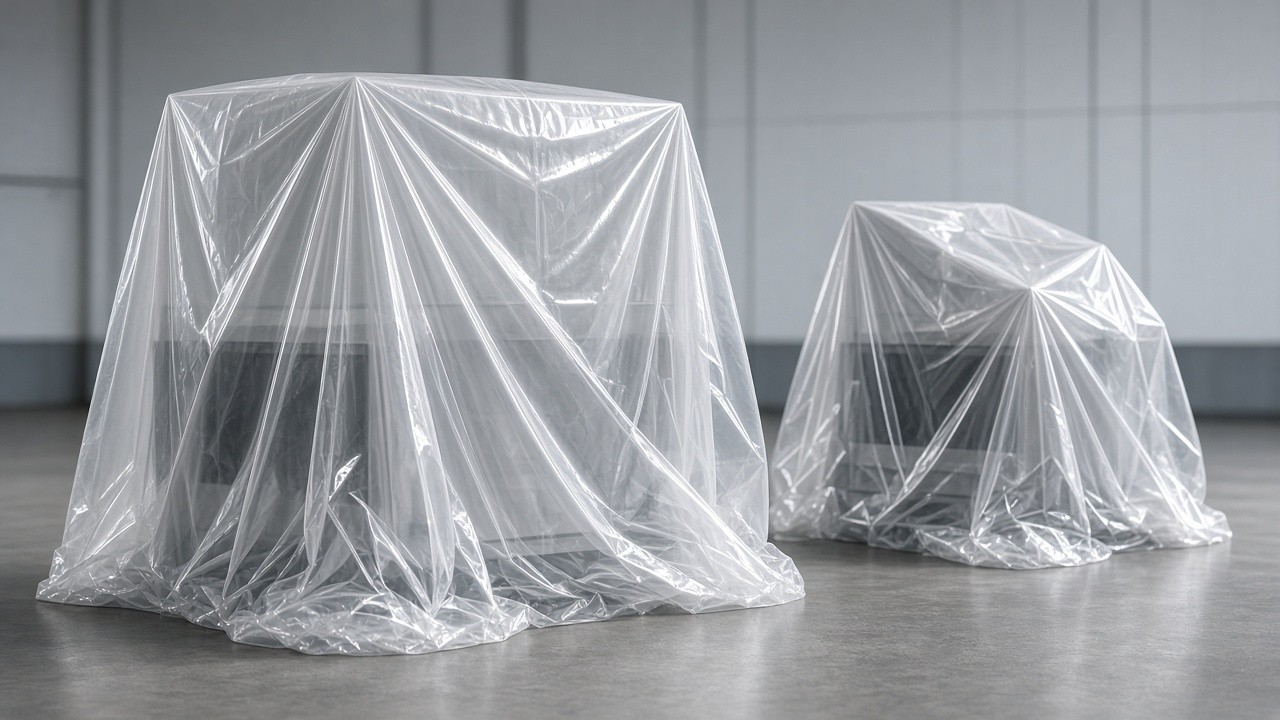
Designed for supply chain confidence
Select a cover that supports handling, storage, transport, and contamination-control goals without paying for performance your application does not need.
From Application to Spec
Start with the failure you need to prevent
A Dust Covers supplier should begin with the operating risk, not a generic film thickness. Identify whether the cover must control airborne particles, moisture exposure, static discharge, handling wear, or transport contamination.
01 / Cost-Optimized
Basic barrier
For short-term protection, low-risk storage, and areas where dust and debris control are the primary objectives.
02 / Standard Compliance
Routine control
For recurring cleanroom workflows, equipment maintenance, and general shielding where material and cleanliness controls matter.
03 / Performance-Reinforced
Higher consequence
For ESD-sensitive, high-abrasion, chemical-exposure, or high-value applications where cover failure creates significant risk.
Upgrade when repeated handling, static sensitivity, moisture exposure, long storage, or line downtime makes a basic cover more expensive over its service life.
Environment Inputs
Inputs that define the right construction
Share these operating conditions with your Dust Covers manufacturer so the proposed material, closure, and packaging format match the actual workflow.
Particulate and barrier sensitivity
Define whether the cover controls dust only, moisture, vapor exposure, or a broader contamination pathway during storage and transport.
Static sensitivity
Confirm whether anti-static or ESD-safe performance is required to reduce discharge risk around electronics, wafers, PCBs, or sensitive equipment.
Physical stress and reuse
Explain how often the cover is removed, folded, cleaned, moved, or exposed to abrasion. Frequent handling may justify reinforced construction.
Cleanroom and process controls
Identify the target cleanroom class, outgassing expectations, non-shedding requirements, cleaning agents, and whether sterile supply is needed.
Parameter Table
Dust Covers specifications mapped to the structure
The following fields should be confirmed during the RFQ. Final values depend on the model, application, testing method, and required packaging.
| Parameter | Available direction | RFQ confirmation |
|---|---|---|
| Primary material | PE, anti-static PE, PVC, or ESD-safe conductive film | Depends on model |
| Structure and layers | Single-layer, multi-layer reinforced, or laminated | To Be Confirmed |
| Thickness | Application-specific film thickness | Custom |
| Surface resistance / shielding | Standard, anti-static, or ESD-safe performance | Test level and method available on request |
| Moisture and barrier performance | Material-dependent moisture vapor and contamination barrier | Test data available on request |
| Dimensions | Custom-fit 2D or 3D shape, roll, or sheet | Drawing or measurements required |
| Sealing method | Heat seal, ultrasonic welding, or elastic edge | Depends on design |
| Cleanroom grade | Target ISO cleanroom use subject to material and process validation | Class and cleanliness tests to be confirmed |
| Sterility | Non-sterile or sterile supply options | Gamma, EO, or other method available on request |
| Transparency and color | Clear, opaque, anti-UV, or custom color | Custom |
| Packaging format | Individual bag, bulk pack, or cleanroom-packed | To Be Confirmed |
| Typical application | Equipment, workstation, cart, and material-handling protection | Application details required |
Specific resistance, barrier, cleanliness, and conformity information should be reviewed in the technical data sheet and applicable test reports accompanying the order.
Configuration Logic
Choose the lightest specification that controls the risk
Cost-Optimized Tier
Short-term or low-risk protection
A practical polyethylene solution for general dust and debris control, low-traffic areas, and early-stage projects where stringent ESD or outgassing requirements do not apply.
Standard Compliance Tier
Routine cleanroom workflows
A benchmark option using controlled materials and suitable cleanliness or anti-static requirements, subject to confirmation for the target ISO environment and process.
Performance-Reinforced Tier
High-consequence applications
Consider ESD-safe films, high-tear-strength laminates, chemical compatibility, or specialized cleanliness testing for semiconductor, pharmaceutical, and medical device environments.
Typical Industries
Protection where contamination and handling risk intersect
Pharmaceutical & Biotech
Covers for sterile filling equipment, transfer carts, and controlled storage, with cleanliness and sterility requirements confirmed during specification.
Electronics & Semiconductor
ESD-oriented protection for sensitive machinery, wafer handling areas, PCBs, and production assets.
Medical Device Manufacturing
Shrouds and covers for assembly equipment where packaging, cleanliness, and traceability support quality controls.
Precision Manufacturing
Longer-term protection for high-value components, machinery, and material-handling equipment during storage or transfer.
Validation Points
Evidence for QA, compliance, and receiving teams
A dependable supply chain combines the physical cover with documentation that supports incoming inspection and batch traceability.
- 01
Material certification
Certificate of Conformance and material composition documentation are available according to the agreed order requirements.
- 02
ESD verification
For anti-static products, request applicable surface-resistance test reports and test conditions during the RFQ stage.
- 03
Cleanliness testing
Particulate or non-volatile residue testing may be requested for critical cleanroom applications, subject to model and process.
- 04
Batch traceability
Confirm raw-material batch, manufacturing date, packaging identification, and receiving records required by your quality system.
Alternative Options
Know when Dust Covers are not the right product
Dust Covers vs. rigid housings
Dust Covers are flexible, removable, and suited to temporary or recurring protection. Choose acrylic, polycarbonate, or another rigid housing when permanent enclosure, impact protection, or structural guarding is required.
Dust Covers vs. ESD bags
Dust Covers protect equipment, carts, workstations, and machinery. ESD bags are designed for components such as circuit boards and chips during handling or transport, with different closure and barrier requirements.
FAQ
Questions procurement teams ask
Can you make custom shapes for complex machinery?
Yes. Custom patterns can be reviewed from equipment dimensions, drawings, photos, or technical requirements. The final fit and closure method should be confirmed before production.
Which cleanroom or risk level is appropriate?
The appropriate material depends on particulate sensitivity, outgassing, non-shedding expectations, ESD risk, cleaning process, and target ISO environment. Cleanroom suitability and test requirements should be confirmed for the selected model.
What tolerances apply to custom-sized covers?
A positive allowance is commonly considered for ease of application, but the required tolerance depends on the equipment geometry and workflow. State whether the design needs a loose, serviceable fit or a controlled close fit during the RFQ.
Can the covers be used with IPA or other cleaning agents?
Compatibility depends on the selected polymer, concentration, exposure time, and wipe-down method. Provide the cleaning agents used at your facility so material compatibility can be reviewed.
How are specifications and quality acceptance handled?
Confirm dimensions, material, thickness, closure, packaging, cleanliness, resistance testing, visual criteria, and sampling requirements before order release. Applicable CoC and test documentation can be aligned to the agreed inspection plan.
Build Your RFQ
Turn your application into a clear Dust Covers specification
Send five essential inputs so CleanroomLink can recommend a cost-effective configuration, identify validation needs, and assess transport or storage risks.
Need technical data before quoting?
Request the relevant material, resistance, barrier, cleanliness, and packaging information for your proposed model.
- 1
Application
What are you covering: a machine, cart, workstation, equipment, or another asset?
- 2
Environment
Provide the cleanroom target, ESD requirement, moisture exposure, cleaning agents, and handling conditions.
- 3
Dimensions
Share length, width, height, drawings, photos, openings, and any fit or tolerance expectations.
- 4
Quantity
Include trial quantity, expected annual volume, delivery schedule, and destination market.
- 5
Compliance
List required standards, certificates, sterility, inspection criteria, packaging, and traceability expectations.